BMX Buying Guide: How to Choose the Right Bike in 2026
The global BMX sector is small in absolute terms yet remarkably resilient, and demand keeps climbing as youth participation and online sales expand. Before you compare specifications, one truth matters most: the right bike depends on how and where you intend to ride. A dirt-track racer and a street rider need very different machines, even though both are called BMX. If you would like a foundational overview, our guide to a BMX done right is a useful starting point.
Understanding these differences is exactly what this BMX buying guide is designed to deliver. According to Fortune Business Insights, the market is projected to grow from about USD 362.59 million in 2026 at a 5.2% compound annual rate through 2034, with North America holding roughly 39.46% of value in 2025. That momentum has widened the choice of frames, wheels and complete builds, which makes an informed decision more valuable than ever.
What a BMX bike actually is in 2026
A BMX is defined less by a single spec sheet and more by its purpose. Bicycle motocross bikes are compact, single-speed machines built either for explosive racing or for absorbing the impact of tricks. The category remains overwhelmingly youth-driven. Industry figures from Business Research Insights point to a global rider base above 45 million and note that roughly 62% of buyers fall within the 8 to 25 age bracket, which shapes how bikes are sized and priced.
That youth skew does not mean the equipment is simple. Frame material, hub type, crank construction and gearing all influence how a bike performs and how long it lasts. The most common mistake is buying on wheel size or color alone. A considered purchase begins with your riding discipline and works down to the individual components.
Racing versus freestyle: define your discipline first
Ask yourself a single question: do you want speed or tricks? Race BMX bikes are optimized for acceleration and stability at pace, so they use lighter materials, a slacker head angle and a longer wheelbase that place the rider further back. Aluminium is the material of choice, and carbon fibre appears among elite competitors seeking further weight savings and vibration damping.
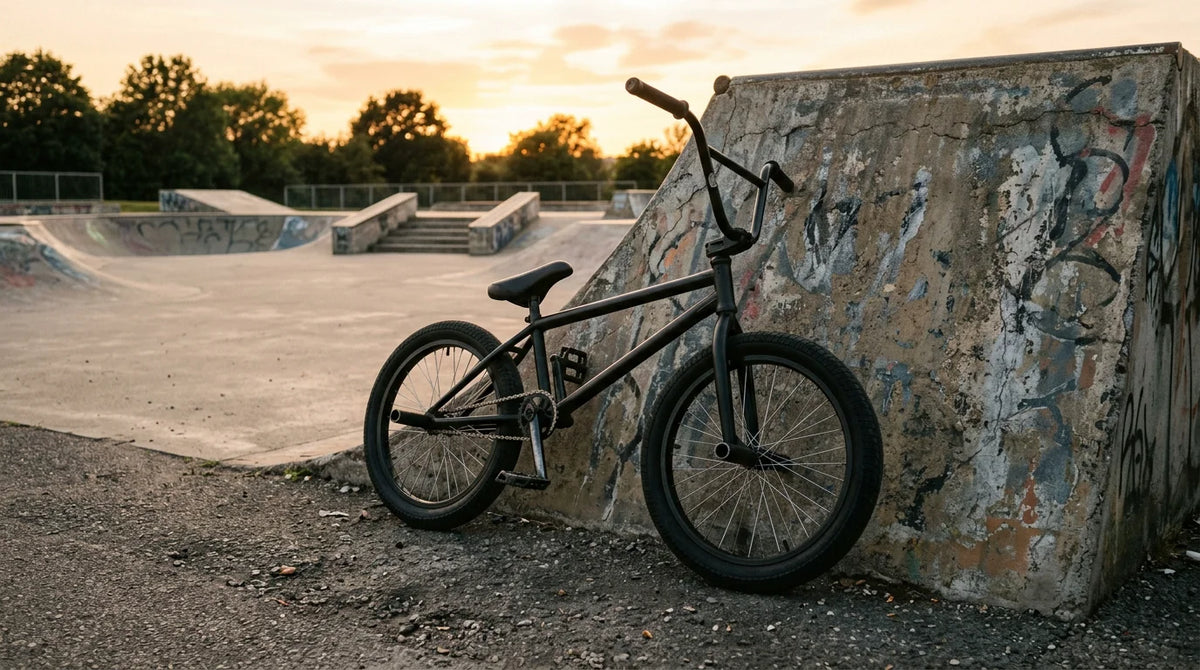
Freestyle BMX bikes are built to survive stunts on street features, dirt jumps and skate parks, so strength and maneuverability come first. Within freestyle there are several sub-disciplines: park, street, flatland and trails. Except for flatland, there is significant crossover between them, which is why a versatile freestyle bike is usually the smartest first purchase. Beginners are generally better served by a quality complete bike than by building one from scratch, because parts can be upgraded later.

Getting the size right: frames and wheels
BMX bikes are measured in two ways: the wheel diameter and the top tube length. The standard freestyle wheel is 20 inches, even on adult bikes, because the compact size keeps the bike agile and trick-friendly. Smaller 12 to 18 inch wheels appear on children's models, while 22 and 24 inch options suit taller riders who want to cruise and occasionally throw tricks.
Top tube length is where fit is truly decided. For freestyle, it typically falls between 19.5 and 21 inches, and taller riders often prefer the longer end. Riding style also adjusts this: a dedicated flatland rider may choose a top tube up to two inches shorter for balance and control. The table below offers a general reference by height.
| Rider height | Wheel size | Typical top tube |
|---|---|---|
| 95 to 112 cm | 12" | 12" |
| 126 to 138 cm | 16" | 15" |
| 145 to 160 cm | 20" | 19.5 to 20.25" |
| 160 to 175 cm | 20" | 20.25 to 20.75" |
| Over 183 cm | 20" | 21" and above |
Treat these as starting points rather than rigid rules, since personal preference and discipline both create overlap between sizes.
Components that separate a good bike from a great one
Two bikes with identical wheels can differ enormously once you inspect the parts. Prioritize these details:
- Frame material: full chromoly 4130 steel resists fatigue, is easy to repair and adds ride comfort. Cheaper hi-tensile steel is heavier and less durable.
- Bearings: sealed cartridge bearings stay cleaner and last longer than open-cage ball bearings found on entry-level builds.
- Hubs: cassette hubs are the popular, serviceable choice, while a 9-tooth driver hub leaves room for future upgrades.
- Cranks: two or three-piece chromoly cranks are far stronger than one-piece units, which now appear mainly on kids' bikes.
- Bottom bracket: a MID bottom bracket makes it easier to fit a solid crankset upgrade later.
A typical freestyle gear ratio is around 25/9, which lets the rider accelerate quickly into a trick while sacrificing some top-end speed. Race bikes use a much larger chainring, often near 55 gear inches, to generate explosive power out of the gate. When you buy, favor a bike you can upgrade rather than one you must replace.
The rise of the electric BMX
Social media has transformed how riders discover equipment, and it has also accelerated interest in a newer category: the electric BMX. Analysis from Dataintelo highlights how platforms such as YouTube, Instagram and TikTok have amplified BMX culture and driven organic demand for branded equipment. That cultural pull has opened the door to electrified builds that blend classic BMX geometry with an assist motor.
If you are curious about how a motor changes the ride, our team has documented the experience closely. You can explore our electric BMX options to see how modern builds are configured, and our breakdown of Billy's electric BMX explains the practical points worth checking before you commit, from battery integration to weight distribution.

Where to buy: matching route to rider
Once you know the discipline and specification you want, the final decision is how to acquire the bike. Each route suits a different rider, and the table below compares the practical options.
| Route | Best for | Notable benefit |
|---|---|---|
| Entry-level complete | First-time riders | Affordable, upgradeable later |
| Custom aftermarket build | Experienced riders | Precise, personalized specs |
| Our curated marketplace | Buyers seeking distinctive machines | Curation, free shipping and early access via Private Membership |
We position ourselves as a curated marketplace, and our Private Membership offers access to selected vehicles before they are listed publicly. For riders who care as much about aesthetics as performance, our take on BMX style and culture shows how the discipline now intersects with design and fashion.
Final considerations before you commit
A confident purchase follows a clear order: choose your discipline, fix your frame size, then invest in components that will not hold you back. A thorough approach to choosing the right BMX bike favors chromoly frames, sealed bearings and upgradeable parts over marketing and paint. Whether you are drawn to racing, park, street or an electrified build, define how you intend to ride first, and let every specification serve that purpose. The bike that fits your body and your ambitions will always outperform the one that simply looked appealing on a screen.
Take action with TheArsenale
You have now mapped the discipline, the fit and the components that matter. The next step is finding a machine that lives up to those standards, whether you are equipping a first rider or seeking something more distinctive for a discerning collection.

As a curated luxury mobility marketplace, we bring together considered machines and lifestyle pieces, with free shipping and a Private Membership that grants access to selected vehicles before they are listed publicly. Browse our curated bicycle collection to see what aligns with your riding ambitions, and reach our sales team whenever you would like guidance.
Frequently Asked Questions
What wheel size should an adult BMX rider choose?
Most adult freestyle riders use the standard 20 inch wheel, because its compact size keeps the bike agile and trick-friendly. Taller riders who prefer to cruise and occasionally perform tricks may consider 22 or 24 inch options, though these are less nimble in parks and on the street.
Is a complete BMX bike better than building one from parts?
For beginners, a quality complete bike usually offers better value and a smoother start. You can upgrade individual components as your skills develop, while experienced riders with specific preferences may prefer a custom aftermarket build tailored to their exact requirements.
Why does frame material matter so much?
Full chromoly 4130 steel resists fatigue, absorbs impacts and is easy to repair, which is why it is the standard for durable freestyle bikes. Cheaper hi-tensile steel found on department-store models is heavier and far less resilient under repeated stress.
Are electric BMX bikes worth considering?
They appeal to riders who want classic BMX geometry combined with an assist motor for extra range or fun. If you are exploring this newer category, our electric BMX resources explain what to check, including battery integration, weight and overall balance before you buy.
What gear ratio suits freestyle riding?
A ratio of around 25 teeth to 9 is a common freestyle standard, allowing quick acceleration into tricks and better clearance over features. Race bikes use much larger chainrings, near 55 gear inches, to generate explosive power at the starting gate.