Carbon Electric Bike for Sale: A Buyer's Guide for 2026
How much does a bicycle change when its frame weighs less than a packed carry-on? Carbon construction has reshaped expectations for motor-assisted cycling, and buyer interest continues to climb across commuter, sport, and collector segments. If you are considering buying a carbon electric bike, our electric bike price guide offers a grounded place to begin your research before you compare specifications or brands.
The category is expanding at a notable pace. The global carbon fiber bike market was valued at roughly USD 2.04 billion in 2026, according to Research and Markets. Lighter frames, smarter electronics, and wider availability now place these machines within reach of daily riders, sport cyclists, and high-end mobility buyers alike, which makes informed selection more important than ever.
Why Carbon Fiber Changes the Electric Bike Equation
As you evaluate a carbon electric bike for sale, the frame material deserves your first attention. Carbon fiber can be molded into shapes that aluminum welding cannot replicate, which produces clean, aerodynamic frames without visible joints. The result is a machine that is both visually distinctive and functionally efficient.
The performance case rests on two properties: low weight and high stiffness. A well-built carbon fiber frame converts pedaling and motor power into forward motion with minimal flex, and it typically weighs less than a comparable metal frame. The carbon fiber electric bike market was valued at about USD 1.2 billion in 2024, rising to USD 1.3 billion in 2025, per Verified Market Reports, reflecting steady demand for this premium construction.

Specifications That Matter Before You Buy
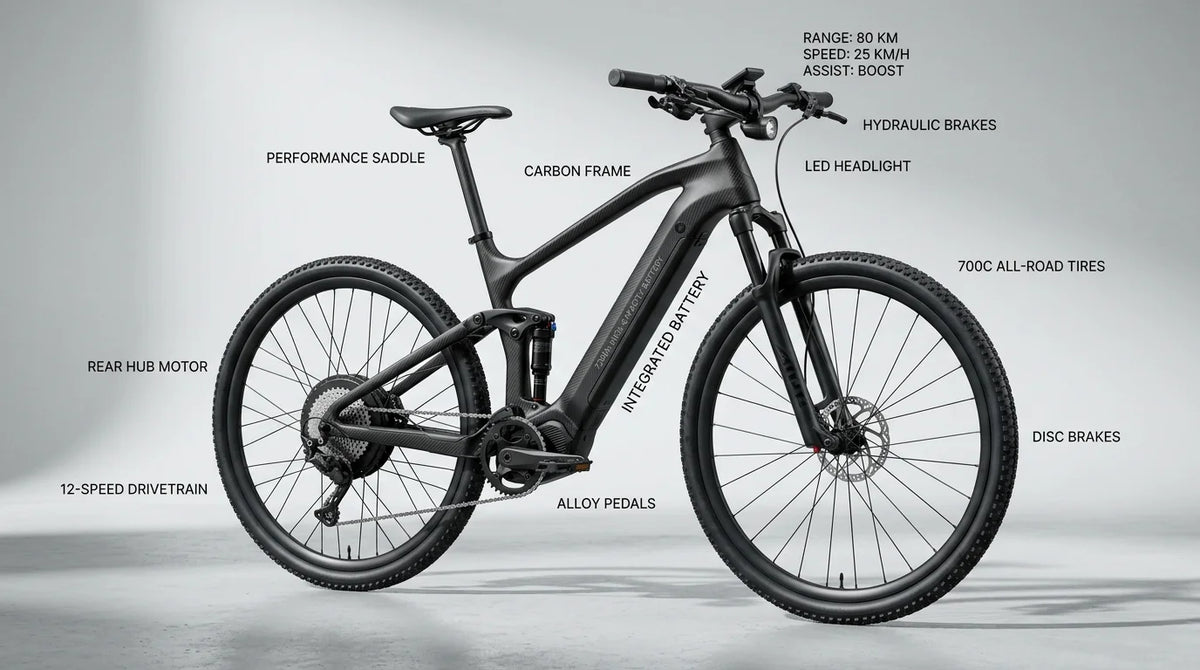
Beyond the frame, a handful of specifications determine daily satisfaction. Consider total weight first, because a lighter machine is easier to carry, load onto a rack, and control at low speed. Many quality carbon models sit well under the weight of converted metal e-bikes.
Next, weigh these core factors carefully:
- Range: real-world distance depends on battery capacity, rider weight, terrain, and assist level.
- Motor placement: mid-drive motors center weight and climb well, while hub motors are simpler and quieter.
- Battery certification: look for cells certified to recognized safety standards and, ideally, a removable pack.
- Torque sensor: this component measures pedaling force and delivers smoother, more natural assistance.
- Braking: hydraulic disc brakes offer consistent stopping power across conditions.
Lightweight assistance also broadens who can ride. E-bikes are gaining popularity partly because assisted pedaling makes cycling accessible to older adults and riders with physical limitations, as noted by Dataintelo. A carbon frame amplifies that benefit by reducing the effort required to lift and maneuver the bicycle.
Carbon Versus Aluminum: An Honest Comparison
Carbon and aluminum e-bikes share a great deal, including strong stability and durability under load. The meaningful differences appear in weight, ride feel, and care. Carbon frames resist twisting and warping more effectively while riding, and they are usually lighter than aluminum equivalents.
Aluminum, by contrast, remains more forgiving of impacts and tends to cost less. Carbon components are sensitive to clamping pressure, so fasteners must be tightened with a torque wrench, and only mounting paste and gentle cleaners should be used. If you value the lightest possible premium e-bike and a refined ride, carbon rewards the extra care. If budget and impact resistance lead your priorities, aluminum is a reasonable choice.
What Determines the Price of a Carbon E-Bike
Price reflects frame quality, motor and battery systems, component grade, and brand positioning. Mid-range carbon commuters often start around the price of a strong aluminum model, while high-performance and collectible machines climb considerably higher. The broader market context helps explain that spread.
The global carbon fiber bike market is projected to grow from USD 4.51 billion in 2025 to USD 9.47 billion by 2035, a compound annual growth rate of 7.7 percent, according to Spherical Insights. Rising demand supports both volume production and an expanding luxury tier. Where you buy also shapes value, selection, and service, as the comparison below illustrates.
| Purchase channel | Typical selection | Early access to models | Shipping |
|---|---|---|---|
| Mass online marketplaces | Broad, mixed quality | No | Varies by seller |
| Direct-to-consumer brands | Single-brand lineup | Occasional pre-orders | Brand-dependent |
| TheArsenale (our marketplace) | Curated luxury mobility | Yes, via Private Membership | Free shipping |
When you would rather compare curated options than sift through undifferentiated listings, our e-bikes collection brings vetted, high-end machines together in one place.
Carbon E-Bikes as Collectible, High-End Machines
For a growing group of buyers, a carbon e-bike is not only transport; it is a design object. The same properties that make carbon fast, its moldability and lightness, also make it beautiful, and that appeal has helped the material migrate into collectible mobility. This is where the purchasing conversation shifts from commodity to curation.

Collectors typically want more than a strong specification sheet. They want access, provenance, and a limited field of choices. Through our Private Membership, you can reach select vehicles before they are listed publicly, which matters when supply is thin and demand for standout lightweight machines is high. This approach suits buyers in markets such as Monaco, Dubai, and Doha who treat mobility as part of a wider lifestyle.
A Practical Checklist for Your Purchase
Before you commit, work through a short, disciplined sequence. Confirm the frame material and its documentation. Verify the battery certification and warranty terms. Check the claimed range against your realistic routes and rider weight. Finally, confirm sizing, since carbon frames often serve a defined rider-height band.
It also helps to define your intended use, whether that is commuting, sport, or collecting, before comparing models. For a structured walkthrough of the full decision, our guide on how to buy an electric bike covers the steps in order, so you can move from shortlist to confident selection without overlooking a detail.
Final Thoughts on Choosing Wisely
Selecting a carbon electric bike comes down to matching a proven lightweight frame to your real riding needs, then verifying range, motor, battery safety, and fit. Carbon rewards buyers who value low weight, stiffness, and refined design, provided they accept its careful maintenance. Whether you seek a daily commuter or a collectible machine, prioritize documented specifications and trustworthy sourcing over headline numbers, and you will choose with confidence.
Take action with TheArsenale
You have weighed the frames, the specifications, and the price tiers; the next step is finding a machine that meets your standards without endless searching. As a luxury mobility marketplace, we bring curated high-end machines and early access together so your shortlist is refined from the start.

Explore our curated electric bike selection to review vetted models, benefit from free shipping, and, through our Private Membership, reach select vehicles before they are listed publicly. Our sales team is available around the clock and usually replies in less than thirty minutes, so your questions do not wait.
Frequently Asked Questions
Are carbon electric bikes worth the higher price?
For riders who prioritize low weight, stiffness, and refined handling, carbon justifies its premium. The material converts power efficiently and is easier to lift and maneuver. If impact resistance and budget lead your priorities, aluminum remains a sensible alternative.
How much lighter is a carbon frame than aluminum?
Carbon frames are typically lighter than comparable aluminum frames, and many quality carbon e-bikes weigh well under converted metal models. Exact figures vary by design and components, so always check the manufacturer's stated total weight for the specific model.
What specifications should I check first?
Start with total weight, then confirm range, motor placement, and battery certification. A torque sensor and hydraulic disc brakes improve everyday comfort and safety. Finally, verify that the frame size matches your height before purchase.
Where can I find curated carbon e-bikes for sale?
You can browse our e-bikes collection for vetted, high-end machines, rather than sorting through undifferentiated listings. Our Private Membership also provides access to select vehicles before they appear publicly, which helps when demand is high and supply is limited.
Do carbon electric bikes require special maintenance?
Yes, some care is needed. Fasteners must be tightened with a torque wrench, and mounting paste should replace standard grease on carbon parts. Clean the frame with a soft cloth, lukewarm water, and dedicated bicycle cleaners rather than aggressive agents.