How Modern Cars Are Redefining Design and Technology
One in four new cars sold across the globe last year was electric, a milestone that reveals how profoundly the automobile has changed. The vehicle in your driveway now shares more with a smartphone than with the machines of a generation ago. For those who appreciate where mobility is heading, our electric Mustangs capture this shift, blending heritage silhouettes with electric powertrains.
The definition of modern cars has expanded far beyond horsepower and chrome. Connectivity, autonomy, battery chemistry, and aerodynamic efficiency now sit at the centre of automotive engineering. According to the IEA, electric car sales grew by 20% in 2025 to surpass 20 million units, a scale that is reshaping factories, supply chains, and the driving experience itself.
What Makes a Car Truly Modern in 2026
A contemporary vehicle is best understood as a computer on wheels. Software governs everything from torque distribution to cabin climate, and over-the-air updates allow a car to improve months after purchase. This represents a fundamental departure from the mechanical logic that governed automobiles for a century.
Electrification anchors this transformation. The most advanced electric vehicles now recover energy through regenerative braking, manage battery temperature intelligently, and deliver instant torque. Charging has accelerated dramatically as well. The IEA notes that the first 1,000-volt models arrived in 2025, with charging times under 10 minutes continuing to appear through 2026.
Connectivity forms the third pillar. Integrated navigation, driver-assistance systems, and digital cockpits define the modern cabin. Yet these advances carry a cost: greater reliance on semiconductors and, with it, growing exposure to cybersecurity risks that automakers must now manage carefully.

The Electrification Wave Reshaping the Market
Consider the pace of change. In 2025, electric car sales climbed to roughly a quarter of the total market, and the IEA projects global sales will reach 23 million units in 2026, representing 28% of all cars sold. This is no longer a niche movement; it is the mainstream direction of the industry.
Regional patterns diverge sharply. China accounted for nearly 55% of its own car sales as electric in 2025, while Europe rose above 30% growth to reach 28% of total sales. The United States, by contrast, remained relatively stable at just under 10%. Financially, China leads decisively; Statista estimates the country will generate US$579 billion in electric vehicle revenue in 2026.
This momentum is opening space for bold, accessible concepts. We explore this democratisation directly through our Ampere electric car concept, which imagines advanced electric mobility built for a wider audience rather than a privileged few.
Battery Longevity and the Efficiency Question
A persistent myth holds that electric batteries degrade quickly. Real-world data tells a different story. According to Recurrent's analysis of over one billion miles, the average electric vehicle retains 97% of its range after three years and 95% after five years. A 2026 model rated at 325 miles today should still deliver roughly 309 miles in 2031.
Efficiency, however, presents a genuine nuance. Average electric vehicle efficiency has actually declined since its 2018 peak, because the market has shifted toward larger SUVs, trucks, and crossovers that consume more energy per mile. Within each vehicle class, engineering continues to improve, yet the fleet-wide average reflects consumer appetite for size over frugality.
For collectors and enthusiasts, this tension between raw efficiency and desirable design matters. The most compelling next-generation vehicles resolve it through low drag, optimised powertrains, and intelligent energy management rather than compromise.
Charging Infrastructure and Everyday Practicality
Range means little without the means to replenish it. The global charging network expanded considerably in recent years, and the pace remains significant. BloombergNEF reports that public charging networks grew 28% in 2025, pushing the number of connectors to 6.7 million worldwide.
Ultra-fast charging is where the experience improves most visibly. In 2025, the number of installed ultra-fast connectors in both Europe and the United States grew almost 50% year over year. This closes the convenience gap with refuelling and addresses one of the longest-standing barriers to adoption.
Cold weather remains a practical consideration. Across more than thirty popular models, electric vehicles retain an average of 78% of their range at freezing temperatures, with heat-pump technology narrowing that seasonal gap. Understanding these realities helps buyers set expectations grounded in evidence rather than headlines.

Design, Exclusivity, and the Collector's Perspective
Technology alone does not define desirability. The finest modern automobiles marry engineering with sculptural design and rarity. As electric powertrains liberate designers from the constraints of large engines and cooling systems, proportions and silhouettes are being reimagined entirely.
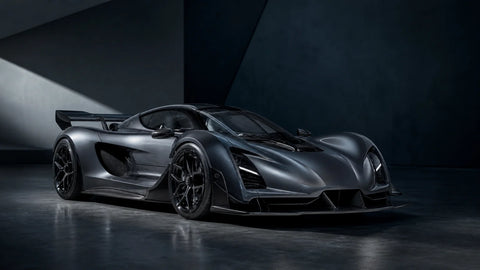
This creative freedom fuels a new generation of concepts and limited machines. We document these frontiers in our editorial coverage, including the striking Tesla T1 concept, which illustrates how far automotive form can travel when unbound from tradition.
Below, a snapshot of how the market landscape compares for readers weighing where advanced automobiles are heading.
| Focus | Mass-market platforms | Editorial car marketplaces | TheArsenale |
|---|---|---|---|
| Vehicle exclusivity | Standard inventory | Curated listings | Highly exclusive, future-mobility vehicles |
| Early access | Public only | Limited | Private Membership before public listing |
| Lifestyle and design | Not offered | Editorial content | Apparel, engine art, and daily magazine |
Affordability and the Future of Accessible Mobility
The narrative around modern vehicles often centres on premium price tags, yet affordability is advancing quickly. Declining battery costs and intensifying competition are lowering barriers, and BloombergNEF projects that electric passenger cars could surpass a 50% share of global sales by 2035.
Compact, affordable models are proving that innovation need not be expensive. This philosophy resonates with our feature on an electric French car under $11,000, a reminder that the future of driving can be both advanced and attainable.
As emerging markets accelerate, the definition of a modern car will continue to broaden. Electric two- and three-wheelers, more than doubled year on year in early 2026 across Southeast Asia, show that electrification is a global phenomenon, not a luxury reserved for wealthy nations.
Conclusion
The automobile is undergoing its most significant transformation since the internal combustion engine. With electric vehicles reaching 25% of global sales in 2025 and projected to climb further in 2026, the shift is decisive rather than speculative. Batteries last longer than sceptics claim, charging grows faster, and design freedom is expanding what a car can be. For buyers and collectors alike, the practical advice is simple: judge each vehicle on verified data, not headlines, and consider how technology, longevity, and design converge in a single machine. As a marketplace devoted entirely to the future of mobility, we bring you curated access to the rarest and most forward-looking vehicles before they reach the wider public. To begin your journey, explore our electric Mustang collection today.
Frequently Asked Questions
What defines a modern car in 2026?
A modern car is defined by electrification, software-driven controls, connectivity, and advanced driver assistance. Many now receive over-the-air updates, allowing performance and features to improve after purchase, much like a smartphone.
Do electric vehicle batteries lose range quickly?
No. Analysis of over one billion miles shows the average electric vehicle retains 97% of its range after three years and 95% after five years. Documented battery health matters far more than age alone.
Where can I find exclusive modern and future-mobility vehicles?
Our marketplace curates highly exclusive cars, flying cars, and concepts dedicated to the future of mobility. Through our Private Membership, you gain access to select vehicles before they are listed publicly.