Triton Submarine Interior: Layout, Comfort, and Design
What does it feel like to sit inside a submersible designed for serious ocean exploration? The answer is more refined than the traditional image of a cramped underwater vessel. Triton interiors combine broad acrylic viewing areas, carefully planned seating, and practical systems with a luxury design approach. For a closer look at the people and engineering behind the platform, read our feature on Triton submarines by Patrick Lahey.
The phrase triton submarine interior covers several distinct experiences. A 3-person leisure submersible prioritizes intimacy and panoramic viewing. A configurable passenger model emphasizes group comfort. A professional vehicle must reserve space for controls, cameras, scientific equipment, and mission payloads. Bespoke projects can add hand-finished materials and automotive-inspired design without compromising the underlying pressure hull.
What does a Triton submarine interior feel like?
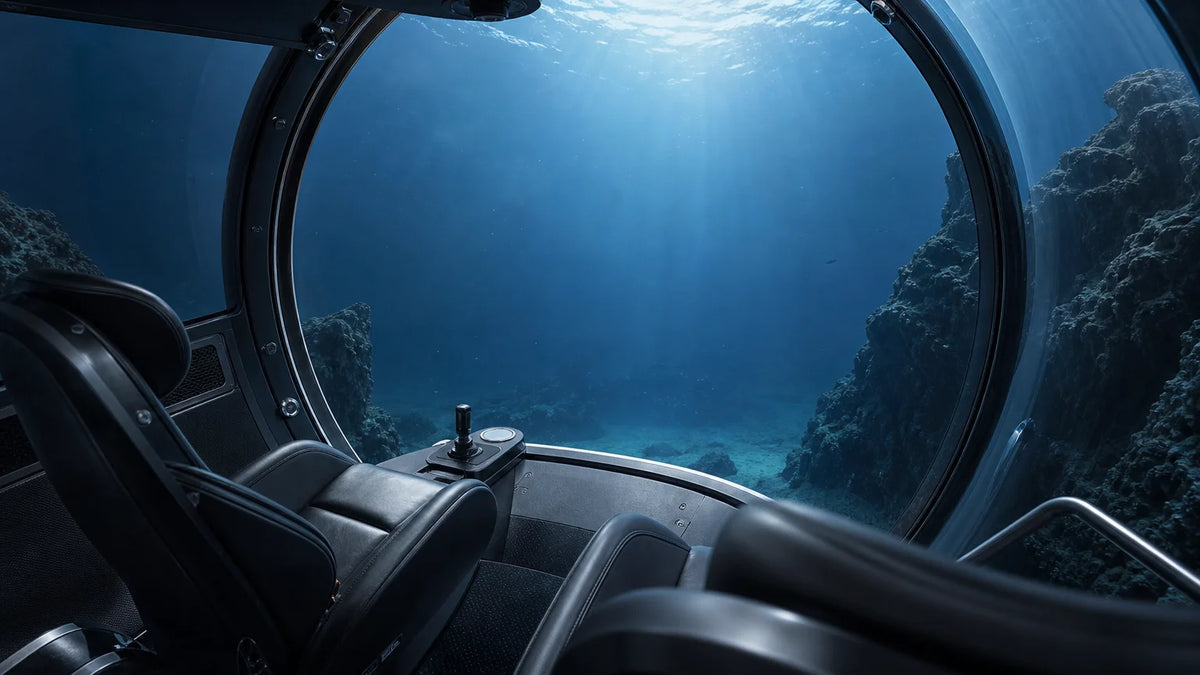
The first impression is usually visual openness. Triton describes its interiors as comfortable, ergonomic, and hand-finished, rather than purely utilitarian. The cabin is shaped around the pressure hull, so the surrounding acrylic becomes an active part of the experience instead of a small window set into a metal wall.
That distinction changes how passengers perceive movement underwater. The view extends around the occupants, while the seating keeps attention directed toward the marine environment. A similar emphasis on comfort, utility, and ergonomics is described in Caladan Oceanic’s account of the Limiting Factor interior, a Triton-built full-ocean-depth submersible.
Environmental control also matters. Submersible occupants remain in an air-filled cabin, with life-support equipment managing oxygen and carbon dioxide. Public descriptions of Triton vehicles also refer to temperature control, air conditioning, and pressure maintained at a comfortable surface level. This allows passengers to focus on observation rather than adapting to the surrounding water.
How does the layout change between Triton models?
Consider the difference between a private dive and a professional expedition. The basic principles remain consistent, but the interior layout changes according to passenger numbers, equipment, visibility requirements, and operating role.
TRITON 1650/3 Low Profile
The TRITON 1650/3 Low Profile is designed for a pilot and 2 passengers. Its compact form supports launch from a standard superyacht tender garage, while the interior remains arranged for comfortable shared viewing.
The cabin is intimate rather than spacious in the conventional sense. Each seat has a direct relationship with the acrylic pressure hull, helping passengers remain engaged with the underwater scene. This layout suits private owners and small groups who value access, simplicity, and a close connection with the pilot.
TRITON 1650/7 Configurable
The TRITON 1650/7 Configurable demonstrates how flexibility can become part of interior design. It can accommodate 7 seats for comfortable group viewing, or 5 seats with greater spacing for a more exclusive experience.
This reconfiguration changes the atmosphere inside the cabin. The 7-seat arrangement supports shared excursions and experiential travel. The 5-seat arrangement gives passengers more personal space, which can be important during longer dives or premium charter experiences.
Professional interiors
Professional models add a different layer of complexity. The TRITON 3300/3 MKII seats a pilot and 2 passengers, but the interior must also support lighting rigs, science skids, cameras, control systems, and mission-specific equipment.
That means the cabin is not simply a passenger lounge. It functions as a compact working environment. Equipment must remain accessible without obstructing visibility, movement, or emergency procedures. This balance between human observation and technical payload is central to the design of research and filming submersibles.
The importance of these platforms extends beyond luxury travel. The IHO overview of deep-sea exploration places Triton-built vehicles within a broader ecosystem of scientific and observational submersibles.

Why does the acrylic pressure hull define the interior?
In many Triton models, the pressure hull is not a feature placed beside the interior. It is the interior’s defining architectural element. The acrylic structure determines the cabin’s shape, sightlines, passenger arrangement, and relationship with the ocean.
Triton emphasizes optically clear acrylic that appears to disappear underwater. This creates a more continuous view than a conventional cabin with several small portholes. For passengers, the result is a stronger sense of immersion and a clearer understanding of scale, distance, and movement outside the vehicle.
The viewing experience also affects the seating plan. Seats need to remain close enough to the transparent hull for passengers to use the available sightlines. Controls, lighting, and technical systems must be positioned without interrupting the most important viewing zones.
On larger commercial concepts, the same principle supports group participation. Triton DeepView models are described with modular sections and capacities of 24 or 48 passengers. Their interiors prioritize shared viewing, quiet operation, and a comfortable cabin for short excursions or longer sightseeing programs.
Which materials and finishes are used inside?
A standard Triton interior is shaped by engineering requirements, but the finish can vary substantially. Seating, control surfaces, trim, lighting, and equipment placement may be tailored to the vehicle’s mission or the owner’s preferences.
Triton’s custom program allows clients to select exterior finishes and interior trim, including luxury leathers from specialist tanneries. The purpose is not decoration alone. Materials must withstand a demanding marine environment while supporting comfort, maintenance, and a coherent visual identity.
Project Neptune shows how far this approach can develop. The collaboration with Aston Martin introduced hand-stitched leather and carbon fibre panels into a Triton platform. You can explore the design language in our overview of Project Neptune by Triton and Aston Martin.
The result is closer to a bespoke automotive cabin than a conventional industrial compartment. Yet the materials remain secondary to the pressure hull, seating geometry, safety systems, and visibility. A successful interior must make all of these elements work together.

How do leisure, commercial, and professional interiors differ?
The most useful way to compare Triton interiors is by intended use. A leisure submersible is arranged around personal discovery. A commercial model is designed for passenger throughput. A professional platform is organized around mission capability.
Leisure interiors
Leisure models focus on privacy, comfort, visibility, and integration with a yacht or expedition program. Seating is often limited to a small group, allowing each passenger to enjoy a clear view through the acrylic hull.
The interior can also support a more personal design brief. Owners may request particular upholstery, colors, finishes, or trim details. In this context, the submersible becomes both an exploration vehicle and a highly specialized luxury object.
Commercial interiors
Commercial submersibles require a different balance. Operators need to accommodate more passengers while preserving clear sightlines and a comfortable experience. The cabin must also support efficient boarding, repeat excursions, maintenance, and daily operation.
Large-capacity models therefore use modular planning. Seating density, circulation, lighting, and viewing access become important operational considerations. The interior is designed for a consistent experience across many passenger groups, not only for one owner and a small circle of guests.
Professional interiors
Professional vehicles must support people who work underwater. Scientists, filmmakers, pilots, and technicians may spend many hours inside the cabin, often while monitoring instruments or operating specialist equipment.
For them, ergonomics includes more than seat comfort. It includes reach distances, control feedback, equipment access, visibility, lighting, endurance, and the ability to remain focused during a demanding dive. This is why a professional interior may appear less decorative while being more carefully optimized for sustained use.
What should you assess before choosing a Triton interior?
Start with the mission rather than the upholstery. Ask whether the vehicle will support private leisure dives, charter excursions, scientific work, filming, or ultra-deep exploration. The correct cabin layout depends on that answer.
Next, examine the seating configuration. A 3-person cabin creates intimacy and direct visibility. A 5-seat configuration can provide greater personal space. A 7-seat arrangement supports group viewing. Larger commercial interiors require a separate assessment of circulation, boarding, and passenger turnover.
Visibility deserves equal attention. You should assess the shape of the acrylic pressure hull, the likely position of each passenger, and the way equipment may affect sightlines. A transparent hull does not automatically guarantee an equally good view from every seat.
Materials should be considered through both design and maintenance. Leather, carbon fibre, technical plastics, and coated surfaces can create a distinctive atmosphere. However, each finish should be appropriate for humidity, cleaning, repeated use, and the operational environment.
Finally, consider the acquisition process. We help collectors explore rare mobility objects, compare design priorities, and identify machines suited to a specific use. For deeper ocean capability, you can also review our Triton 36000 submarine profile and our Triton 36000 submarine price guide.
Those resources are useful starting points, but a serious purchase still requires direct confirmation of configuration, delivery, training, certification, maintenance, and operating requirements. Published specifications do not always describe the final interior of a custom-built vehicle.
What makes the Triton interior distinctive?
The defining quality is integration. The seating is not treated separately from the pressure hull. The materials are not treated separately from the mission. The viewing experience is not treated separately from ergonomics.
This integrated approach explains why two Triton vehicles can feel completely different inside. A compact leisure model may create a private viewing chamber. A professional platform may feel like a compact laboratory. A bespoke project may combine technical architecture with the tactile quality of a luxury grand tourer.
The common thread is a cabin designed to keep passengers comfortable, engaged, and operationally supported while the vehicle moves through an extreme environment.
Conclusion: designing the right underwater experience
The Triton submarine interior is best understood as a balance between pressure-resistant engineering, panoramic visibility, passenger comfort, and mission-specific design. Seating capacity, acrylic geometry, equipment requirements, materials, and operating role all shape the final experience. If you are evaluating a Triton platform, begin with the intended use, then assess visibility, ergonomics, configuration, and customization together. That approach will help you distinguish a visually impressive cabin from one that is genuinely suited to your time underwater.
Take action with TheArsenale
Choosing a personal submersible involves more than comparing dimensions or diving depth. You need to consider the cabin experience, builder identity, intended mission, customization potential, and the practical requirements of a high-value acquisition.

We curate rare mobility objects for collectors and enthusiasts seeking distinctive ways to travel across land, sea, and air. Our team can help you explore personal submarines, understand the differences between available concepts, and begin a tailored conversation around your requirements. Explore submarines through TheArsenale’s curated collection.
Frequently Asked Questions
What is a Triton submarine interior like?
It is typically a compact, ergonomic cabin organized around a transparent acrylic pressure hull. Depending on the model, it may feel like a private observation chamber, a group viewing cabin, or a professional working environment.
How many people can sit inside a Triton submersible?
Capacity varies by model. Examples include a pilot and 2 passengers in the TRITON 1650/3, 5 or 7 seats in the configurable 1650/7, and much larger passenger capacities in commercial DeepView configurations.
Does the interior use luxury materials?
Some Triton interiors use bespoke materials, including specialist leathers and carbon fibre trim. The level of customization depends on the model, mission, owner requirements, and technical specifications.
Can the seating arrangement be customized?
Yes, selected models support configurable seating arrangements. The TRITON 1650/7, for example, can prioritize higher capacity or more spacious seating for a smaller group.
Can TheArsenale help source a personal submersible?
Yes. We help collectors explore rare mobility objects and can support conversations around personal submarines, design preferences, and high-value acquisition requirements.