THE DAWN OF A NEW SUPERSONIC ERA: XB-1 TAKES FLIGHT

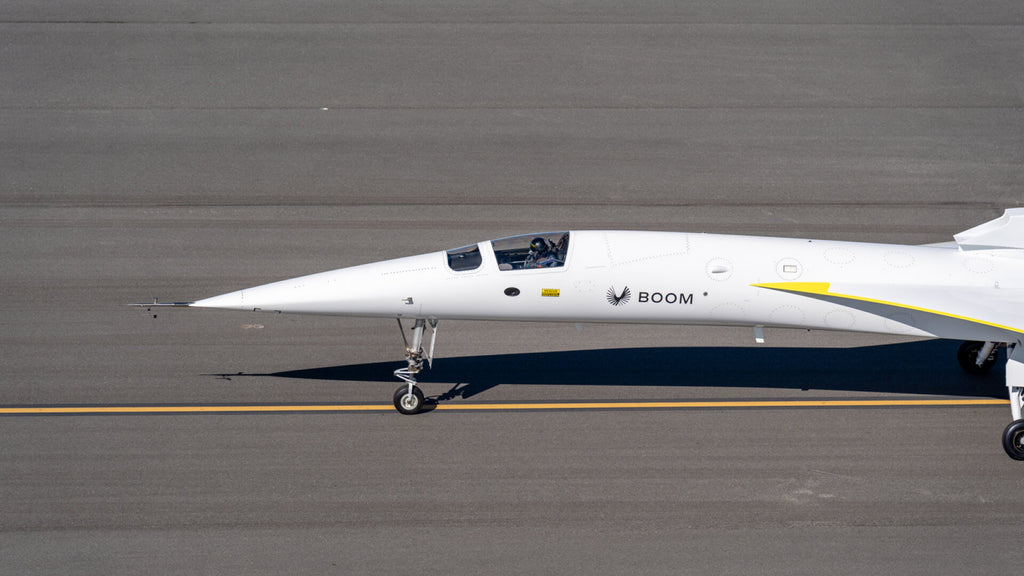
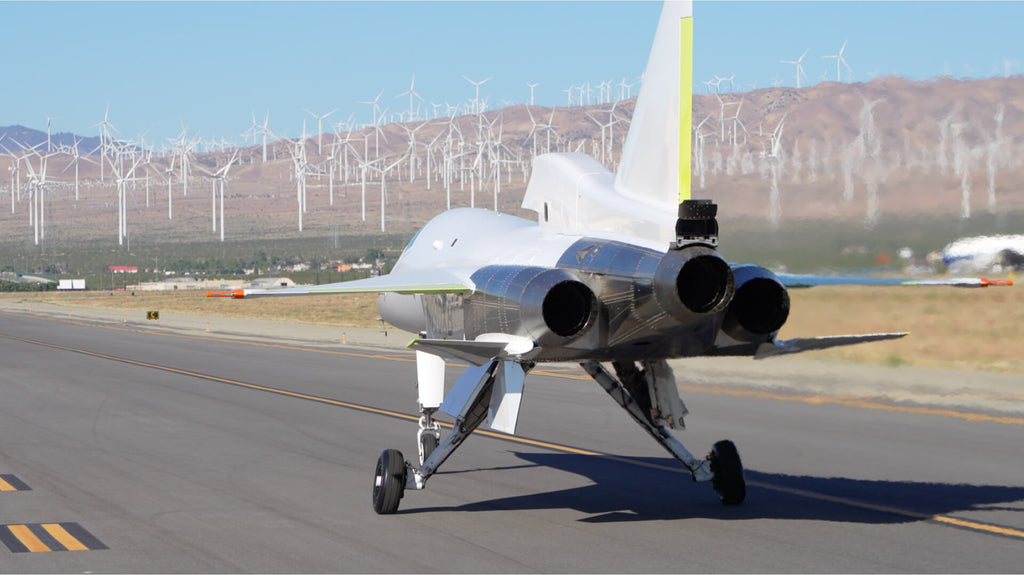
Boom XB-1, the supersonic demonstrator engineered by Boom Supersonic, completed its maiden flight on March 22, 2024, at the Mojave Air and Space Port in California, marking the return of civil supersonic aircraft to the skies more than two decades after the Concorde retirement. Piloted by Chief Test Pilot Bill "Doc" Shoemaker, the XB-1 climbed to 7,120 feet and reached 238 knots (273 mph), validating the aerodynamics, augmented-reality vision systems, and digitally optimized airframe that Boom has developed as a scaled demonstrator for its future Overture airliner.
What Is the Boom XB-1 Supersonic Demonstrator?
The XB-1 is a one-third-scale technology demonstrator built to prove out the core concepts behind the Boom Overture supersonic passenger jet. At 68 feet long with a 17-foot wingspan, the aircraft uses an advanced carbon fiber composite and titanium airframe, making it significantly lighter than traditional alloy-based aircraft. Three General Electric J85-15 turbojet engines deliver a combined thrust of 12,300 lbf, pushing the airframe toward speeds that would have been impossible for a small, independently developed programme just a decade ago.
The Historic First Flight: March 22, 2024
Months of high-speed taxi tests and ground checks preceded the March 22 milestone. When the XB-1 lifted off from Mojave, it completed an 11-minute flight that confirmed structural integrity, control response, and thermal management at speed. The Aviation A2Z report on the first flight described the event as the most significant step in private supersonic development since the Concorde era. For Boom Supersonic, the data gathered on that flight directly feeds into Overture's final design.
Going Supersonic: Mach 1.1 in January 2025
After a series of subsonic envelope-expansion flights through the rest of 2024, the XB-1 achieved supersonic flight for the first time on January 28, 2025, reaching Mach 1.1 three times during that single sortie. A second supersonic flight followed on February 10, 2025, after which the demonstrator was formally retired, having fulfilled its mission. No privately developed jet aircraft had broken the sound barrier before the XB-1, placing Boom Supersonic in genuinely historic company.
Key Technologies Validated by the XB-1 Programme
The XB-1 programme was never just about going fast. It validated several technologies essential to the commercial viability of supersonic air travel:
- Augmented reality vision system: Replaces a traditional forward window with a high-resolution display, reducing aerodynamic drag at the nose while giving pilots a clearer picture during takeoff and landing.
- Digitally optimized aerodynamics: Every surface was iterated in computational fluid dynamics before any physical part was machined, compressing the development timeline dramatically.
- Carbon composite airframe: The lightweight structure is central to achieving supersonic efficiency without the fuel burn of older designs.
- Variable-geometry inlets: Manage supersonic airflow into the J85 engines, a key enabler for the variable Mach-number operations Overture will require.

From XB-1 to Overture: What Comes Next?
The data and lessons from the Boom XB-1 programme feed directly into Overture, Boom's Mach 1.7 commercial airliner designed to carry up to 80 passengers over 4,900 miles. Boom plans to roll out the first completed Overture aircraft in 2026, with commercial certification targeted for 2030. Airlines including United and Japan Airlines have placed pre-orders, signalling genuine market appetite for faster transatlantic and transpacific travel. The full XB-1 programme history on Wikipedia details the aircraft's technical lineage and what it means for the broader supersonic revival.
The new supersonic era the XB-1 has inaugurated is one thread in a broader resurgence of ambitious aviation concepts. For enthusiasts who want to stay close to the frontier, explore the TheArsenale Air collection featuring flying cars, eVTOL aircraft, and cutting-edge personal aviation, or browse private aircraft including the Centauri Valkyrie and the hybrid-electric Ascendance Atea. For a different perspective on personal flight, the Icon A5 amphibious aircraft brings accessible aviation to those who want to experience the skies today.
Photo: Boom Supersonic