Best Collector Skateboards: 2026 Buying and Display Guide
Collector value does not begin with a price tag. The best collector skateboards give you a meaningful connection to skateboarding history, visual culture, or design. Before comparing individual decks, you can establish your criteria with our skateboard buying guide, then assess each piece according to rarity, condition, provenance, and display appeal.
The broader skateboard market is still much larger than the collector segment. A 2026 estimate from a 2026 market estimate places the global market at approximately $3.8 billion in 2026, while its specialty category includes traditional, old-school, and collector models. That distinction matters because collectible decks should be judged as cultural objects, not only as sporting equipment.
What makes a skateboard genuinely collectible?
A collectible deck usually combines several forms of significance. It may represent an important era, a respected rider, an influential artist, an original company, or a limited production run. A board becomes more compelling when these qualities overlap, especially when its history can be documented.
Provenance is often more useful than a seller’s description. Look for purchase records, edition numbers, signatures, original packaging, dated photographs, exhibition history, or a clear ownership trail. A sealed deck can appeal to collectors because it preserves the object in an untouched state, while a professionally skated deck may matter because it carries a direct connection to a rider or period.
However, rarity alone does not guarantee lasting interest. A scarce deck with weak artwork, uncertain authenticity, or significant damage may be less desirable than a more available board with strong cultural importance. The most defensible purchases balance scarcity with an enduring story.
Which details should you inspect before buying?
Imagine finding a numbered deck that appears perfect in photographs. Before purchasing it, you should inspect the parts of the object that are easiest to overlook. Condition, originality, and presentation can change the meaning of a collectible more than a small difference in edition size.
- Surface condition: Check for scratches, pressure marks, fading, stains, chips, and changes in the finish.
- Grip and hardware: Determine whether the deck has been gripped, drilled, mounted, or altered.
- Shape and construction: Compare the deck with reliable reference images from the correct production period.
- Packaging: Inspect shrink wrap, labels, stickers, inserts, and signs of replacement packaging.
- Signature quality: Ask when and where the autograph was obtained, and request supporting documentation when available.
- Edition details: Confirm the total run, individual number, release date, and whether the edition was later reproduced.
Reissues deserve particular attention. They can provide an accessible way to enjoy a historic graphic, but they should not be presented as original artifacts. If you prefer contemporary objects with a luxury design direction, our designer skateboards offer a separate route into collecting, with emphasis on visual identity and curated presentation.

Which collecting strategy fits your interests?
One collector may pursue a single rider, while another may focus on a company, an artist, a decade, or a particular shape. Your strategy determines which purchases feel coherent and helps prevent buying attractive decks that do not contribute to a meaningful collection.
Historical and old-school decks
Historical collections focus on early shapes, original graphics, discontinued companies, and influential periods. These decks often appeal to collectors who value the development of skateboarding equipment and visual language. Authenticity is essential because later reproductions can closely resemble older boards.
Signed and numbered editions
Signed or numbered decks can provide a clearer sense of scarcity. Their appeal depends on the credibility of the signature, the size of the edition, and the reputation of the person or creative team involved. A small run is useful information, but it should support a compelling object rather than replace one.
Artist-led and graphic collections
An artist-led collection treats the deck as a piece of visual culture. You might collect one artist’s complete series, follow a recurring theme, or select graphics that reflect a specific period in contemporary art. In this category, composition, color, cultural relevance, and consistency across a series can matter more than age.
Contemporary design collections
Contemporary design collectors often prefer decks that function as display pieces without relying on deep historical rarity. Our TheArsenale skateboards can provide a design-led starting point for a collection centered on mobility culture, visual storytelling, and modern interiors.
When is a limited edition worth prioritizing?
A limited edition deserves attention when its scarcity is transparent and its design has a reason to remain relevant. Edition size, production date, artist or rider involvement, and distribution history should all be considered together.
Ask whether the deck was sold through a controlled release, a gallery, a brand collaboration, or a small builder network. A documented release creates a clearer ownership story than a vague claim that only a few boards were made. You should also distinguish between a numbered edition and an item that was simply produced in low quantities without formal documentation.
Series collecting can be especially rewarding. Completing a set creates visual continuity and may make the collection easier to display. Nevertheless, you should not buy the weaker pieces of a series solely to achieve completion. The strongest collections combine a clear theme with individual objects that remain appealing on their own.
The emotional reason for buying also matters. Research published in 2026 by RRD surveyed 1,000 active collectors and 200 industry decision-makers. Its 2026 collector report found that nostalgia, artwork quality, texture, and durability strongly influence collector satisfaction. For skateboards, that suggests a meaningful graphic and physical integrity may matter more than speculative resale potential.
How much should you budget for collector skateboards in 2026?
There is no universal price ladder for collectible decks. Values depend on geography, condition, authenticity, demand, release history, and the quality of the transaction record. Asking prices can also differ substantially from completed sales, so you should treat listings as evidence of interest rather than proof of market value.
As a reference point, a July 2026 U.S. market outlook places the country’s overall skateboard market at $1.2784 billion in 2025 and identifies a $150 to $299 premium tier that includes custom setups, collector decks, and other enthusiast products. The U.S. market outlook is broader than the collector niche, so it should be used for context rather than as a valuation guide for a specific deck.
A practical budget should include more than the purchase price. You may need archival sleeves, wall mounts, protective cases, insurance documentation, professional authentication, shipping, and customs costs for international transactions. These expenses become more important as the collection grows or includes fragile, signed, or historically significant pieces.
For a first purchase, choose an object that you would still enjoy if its resale value remained unchanged. This approach reduces the pressure to chase short-term trends and encourages a collection with a stable personal logic.
How should you store and display a valuable deck?
Consider storage before you buy. A collector deck exposed to direct sunlight, unstable temperatures, humidity, or unnecessary handling can lose visual quality even when it is never ridden.
- Keep decks in a dry, stable indoor environment.
- Limit direct sunlight to reduce fading and finish deterioration.
- Use protective sleeves or cases that do not press against the artwork.
- Avoid direct wood-to-wood contact when stacking multiple decks.
- Use secure mounting systems that distribute weight appropriately.
- Keep receipts, certificates, photographs, and seller correspondence together.
- Record edition numbers, dimensions, purchase dates, and condition notes.
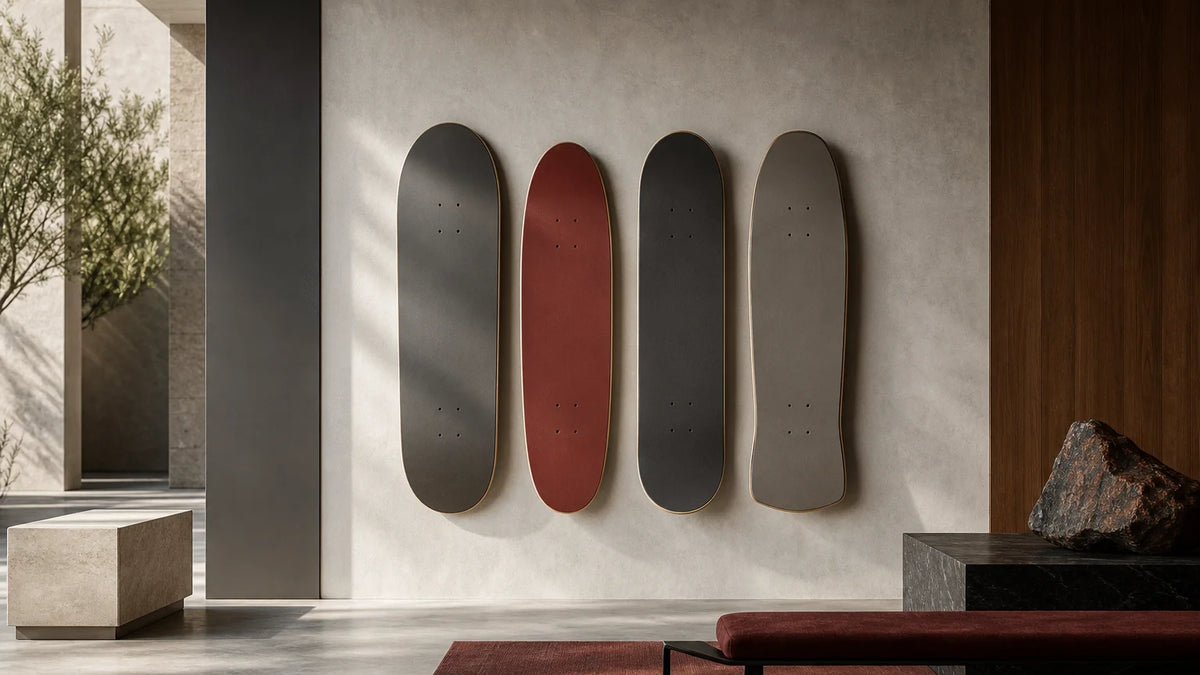
Display should support preservation rather than compete with it. A small, carefully selected wall can create more impact than a crowded installation. If you prefer a contemporary object with a clear visual statement, our limited-edition palm tree skateboard can sit within a wider collection of design-led mobility pieces and lifestyle objects.

For international collections, document the deck before shipping and inspect it immediately after delivery. Keep photographs of the packaging, corners, surface, and any numbering. This record can help resolve disputes and preserve the chain of ownership.
Build a collection with a clear point of view
The strongest collections are not necessarily the largest or most expensive. They are the most coherent. Choose a collecting thesis based on history, graphics, riders, editions, or contemporary design, then assess every deck through authenticity, condition, provenance, and personal meaning. The best collector skateboards are the pieces that remain compelling after the excitement of acquisition has passed. If you would not want to display or study the deck without a resale discussion, reconsider the purchase.
Take action with TheArsenale
Your collection can begin with a single design object or develop across several areas of mobility culture. When you value rarity, visual identity, and considered presentation, a curated marketplace can make discovery more focused and more enjoyable.

We bring together extraordinary mobility objects, limited collaborations, and design-led lifestyle pieces for collectors and enthusiasts worldwide. Explore collector skateboards through TheArsenale, then contact our team when you need a more tailored route through the collection.
Frequently Asked Questions
What are the most important signs of a collectible skateboard?
Look for documented provenance, limited production, strong artwork, historical relevance, and excellent condition. A deck does not need to be extremely old or expensive if its story and design remain distinctive.
Are reissued skateboards worth collecting?
Yes, reissues can be worthwhile when you value the graphic, shape, or cultural reference rather than original production history. You should always verify that the deck is clearly identified as a reissue and do not confuse it with an original artifact.
Should I collect sealed decks or decks that were ridden?
Sealed decks generally preserve their original presentation, while ridden decks can carry a more direct connection to skateboarding history. The better choice depends on whether your collection prioritizes condition, authenticity, personal memories, or rider provenance.
Can contemporary design decks become collectible?
Yes, contemporary decks can become meaningful collectibles when they have a distinctive design, limited availability, or a clear connection to a designer or brand. Our designer skateboards provide one option for collectors who prefer modern visual culture over vintage nostalgia.
How should I protect a skateboard collection from damage?
Store decks away from direct sunlight, humidity, unstable temperatures, and unnecessary contact. Use protective sleeves or cases, avoid wood-to-wood stacking, and keep detailed records of condition, ownership, and edition information.