The Best Design Toys for Kids: A 2026 Buying Guide
Nearly four in five parents now want playthings that actively build skills, a shift that is reshaping the entire toy aisle. Well-designed objects invite children to imagine, construct, and rethink, rather than simply press a button and watch. If you are weighing your options, our luxury kids toys buying guide offers a considered starting point for discerning families.
The appeal of the best design toys for kids lies in their versatility and longevity. According to The Toy Association, 78% of parents surveyed in the United States want more toys that help children develop creativity and problem-solving skills. This preference explains why timeless, thoughtfully engineered pieces continue to outperform disposable trends and hold their place on family shelves for years.
What Makes a Design Toy Genuinely Worth Owning
A true design toy is defined less by its price and more by its principles. It is open-ended, meaning a child can use it in countless ways without instructions. It is durable, gender-neutral, and free of commercial branding. Above all, it grows with the child, serving a toddler and an eleven-year-old with equal relevance.
Material quality matters enormously. Well-finished wood, precise magnets, and honest joinery separate an heirloom object from a landfill candidate. Research published in a peer-reviewed study notes that children acquire much through selective association, responding to preferred colors, functions, and shapes suited to their developmental stage. A considered design speaks directly to this instinct.

The Categories That Define Great Play
Certain families of toys reappear on every credible list because they endure. Construction systems top the field. From plain wooden blocks to interlocking brick sets, they invite planning, iteration, and structural experimentation. A design research paper identifies STEM and connected building toys as leading drivers of the wider smart-toy market, reflecting how central construction has become.
Beyond blocks, several categories consistently deserve consideration:
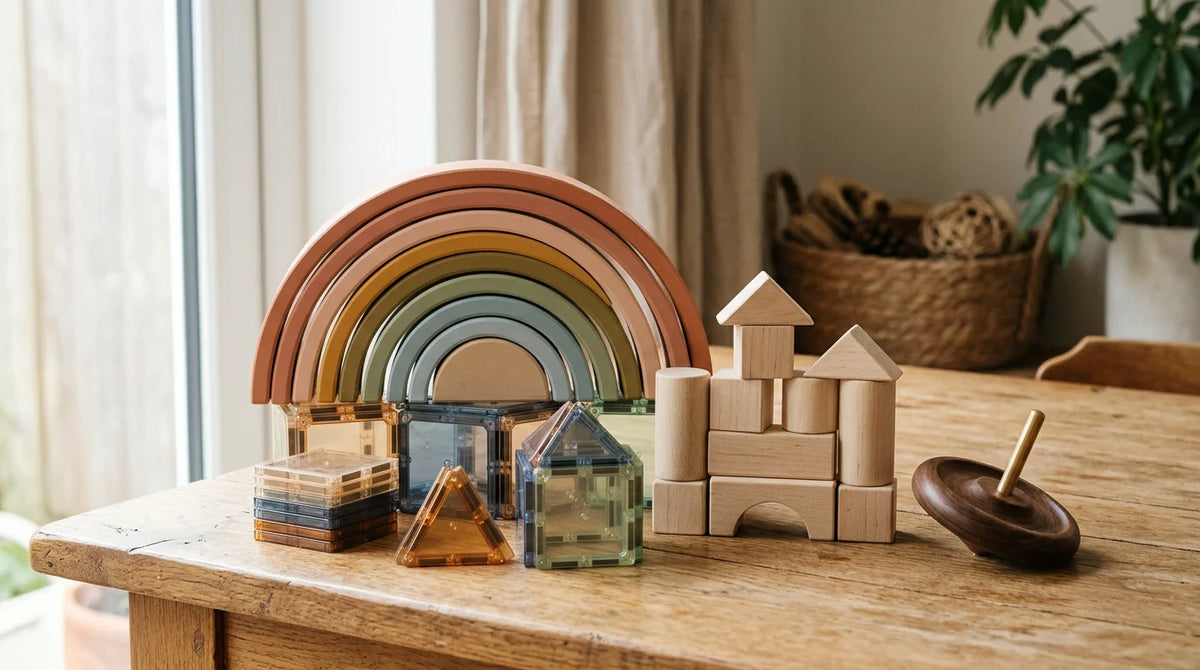
- Magnetic tiles and blocks, which teach geometry, color, and light through translucent forms.
- Marble runs and ball tracks, which reward cause-and-effect reasoning and spatial planning.
- Sculptural wooden classics, such as rainbow stackers and spinning tops, prized for balance and form.
- Realistic figures and mini vehicles, which anchor imaginative narratives and sorting games.
- Open-ended textiles, such as play silks, which transform into forts, capes, and landscapes.
Each of these rewards repeated, self-directed use. That is the hallmark of a genuine creative toy rather than a passing novelty.
Why Screen-Free and Battery-Free Still Wins
Should a design toy make noise and light on its own? The evidence suggests restraint. Battery-driven, cause-and-effect toys often interrupt focus and narrow imagination, while quiet objects allow children to supply their own sounds and stories. This is why the most celebrated open-ended toys remain deliberately analog.
The cultural momentum supports this view. The Toy Association observes a conscious reset in 2026, with play serving as a screen-free space for emotional regulation, creativity, and connection. Well-designed, tactile objects sit at the center of that movement, offering intentional, human-centered experiences that digital add-ons rarely match.
Matching the Toy to the Child's Age
The best purchases respect developmental stages. A toddler stacks and topples; a preschooler builds enclosures; a school-age child engineers ramps, arches, and complex systems. The object may remain identical, yet the thinking behind it deepens with every year. This is precisely why quality construction sets justify their cost.
Design thinking increasingly informs how these toys are made. A study in Discover Education details how empathy, rapid prototyping, and iterative testing shape effective educational toys such as letter-building sets. When a manufacturer designs around real children rather than shelf appeal, the result serves a wider age range with greater integrity.

Comparing the Leading Design Toy Categories
Every category carries distinct strengths. The table below compares the most reliable options against the criteria that matter most to families investing in lasting play, alongside our own curated approach.
| Option | Open-ended | Age span | Screen-free | Curated selection |
|---|---|---|---|---|
| Our curated design toys at TheArsenale | Yes | Toddler to tween | Yes | Yes, hand-selected |
| Wooden construction blocks | Yes | Broad | Yes | Varies by retailer |
| Magnetic tile sets | Yes | Preschool to school-age | Yes | Varies by retailer |
| Marble run systems | Partly | School-age | Yes | Varies by retailer |
| Battery-operated novelty toys | Rarely | Narrow | No | Varies by retailer |
For families drawn to statement objects, ride-on machines occupy a special place. Our kids electric car buying guide explains how to weigh safety, build quality, and longevity before you commit.
Investing Wisely in Toys That Last
Fewer, better objects almost always outperform a crowded toy box. Clutter distracts, while scarcity encourages invention. A single quality construction set, a rainbow stacker, and a marble run can occupy a child far longer than a dozen disposable gadgets. The math of durability favors patience over volume.
When you are ready to consider premium ride-on pieces alongside classic design toys, our selection of a kids electric car for sale demonstrates how craftsmanship translates into objects children treasure. The same principle applies across every category: buy for years, not for a single afternoon.
Bringing It All Together
Choosing the best design toys for children is ultimately an exercise in restraint and quality. Prioritize open-ended, screen-free objects made from honest materials that grow with your child across developmental stages. Construction systems, magnetic tiles, marble runs, and sculptural wooden classics reward repeated, self-directed play in ways that novelty items cannot. Invest in fewer, finer pieces, and you provide not merely entertainment but a durable foundation for creativity, problem-solving, and independent thought that endures well beyond childhood.
Take action with TheArsenale
You want objects that reward curiosity and endure, whether they belong on a play shelf or in a garage. That same commitment to craftsmanship, considered design, and lasting value guides everything we curate for families who expect more from the things they own.

Explore our curated collection of design toys for children, where each piece is selected for quality, longevity, and creative depth. As a luxury mobility marketplace, we bring the same discerning eye to premium playthings that we apply to collectible machines, with free shipping and a team ready to answer your questions. Discover objects worth keeping.
Frequently Asked Questions
What is a design toy, exactly?
A design toy is an open-ended object valued for its form, materials, and versatility rather than a single fixed function. It encourages independent, imaginative play and typically avoids batteries, screens, and commercial branding. Many appeal to adults as much as to children.
Are wooden toys better than plastic ones?
Wooden toys are often preferred for their durability, tactile quality, and environmental profile. That said, well-made magnetic tiles and interlocking bricks deliver excellent open-ended play in other materials. The priority should be quality and longevity rather than material alone.
At what age should a child start with design toys?
Many design toys suit children from toddlerhood onward, provided you observe age and safety guidance regarding small parts. The finest options grow with the child, serving a two-year-old and a ten-year-old in entirely different ways. This adaptability is a defining strength.
Are design toys worth the higher price?
Frequently, yes, because durability and years of repeated use offset the initial cost. A single quality construction set can outlast many disposable toys combined. Investing in fewer, finer pieces often proves more economical over time.
Where can I find a curated selection of design toys?
We offer a considered collection of design toys for children, each chosen for craftsmanship and creative value. Curated selections spare you the effort of sorting quality from novelty. This approach suits families who prefer objects designed to last.