A Practical Buying Guide to Luxury Kids Toys in 2026
The global market for premium children's products is valued at roughly 46.7 billion dollars in 2026, a figure that reshapes how discerning families approach the toy box. When a single object can serve as both a plaything and a future heirloom, the decision deserves the same care you would give a fine watch or a piece of design furniture. A considered approach to selecting luxury toys for children begins with one question: will this piece still be treasured in ten years? Our Bugatti baby ride-on answers that question the way a collector's item should.
Premium does not mean flashy, and expensive does not always mean good. The most rewarding purchases balance engineering, safety, and open-ended play. According to FactMR analysis, infants and toddlers are expected to capture 60 percent of this market by 2026, a sign that families invest earliest in objects meant to last. This is where careful judgment pays dividends.
What Sets a Luxury Children's Toy Apart
A genuine luxury toy is defined by more than its price tag. This luxury kids toys buying guide begins by separating prestige signaling from real value. The distinction rests on materials, construction, and the intention behind the design. A hand-finished ride-on built from steel, leather, and aluminium belongs to a different category than a mass-produced plastic equivalent, even when both entertain a child for an afternoon.
The wider premium segment is growing for reasons rooted in quality rather than novelty. Future Market Insights notes that high-end toys and collectibles, including miniature designer cars, handcrafted dolls, and luxury playsets, continue to gain traction among affluent families. What unites these categories is exceptional craftsmanship and a refusal to compromise on the details that ordinary toys overlook.
- Material integrity: solid wood, metal, leather, and natural fibres rather than thin plastics.
- Engineering: functional mechanics, real steering, working suspension, or authentic detailing.
- Design provenance: pieces created in partnership with recognised design or automotive houses.
- Longevity: objects built to survive years of use and to be handed down.

The Characteristics of a Toy Worth Keeping
Consider how a child's relationship with an object evolves. A well-chosen piece is rediscovered again and again as new skills emerge, which is precisely what separates a lasting toy from a one-afternoon novelty. The strongest purchases share four traits that experienced buyers learn to recognise.
First, durability. If an object cannot survive real use, no other quality matters. Second, value that compounds over time, where a single piece supports many kinds of play across several years. Third, versatility, meaning the toy invites open-ended imagination rather than a single scripted outcome. Fourth, developmental benefit, where play builds coordination, problem-solving, or confidence. A ride-on such as the Bentley Blower Jr. electric car illustrates all four, pairing genuine mechanical detailing with years of imaginative driving.
The best toys are not consumed and discarded. They are lived with, learned from, and eventually passed on.
Ride-On Cars as Heirloom Investments
Here is where premium children's toys diverge most sharply from the mass market: the finest pieces behave like collectibles. A hand-assembled electric car, produced in limited numbers and finished by craftsmen, can hold or even grow its worth on the secondary market. This is rare among children's products, where most value evaporates the moment the box is opened.
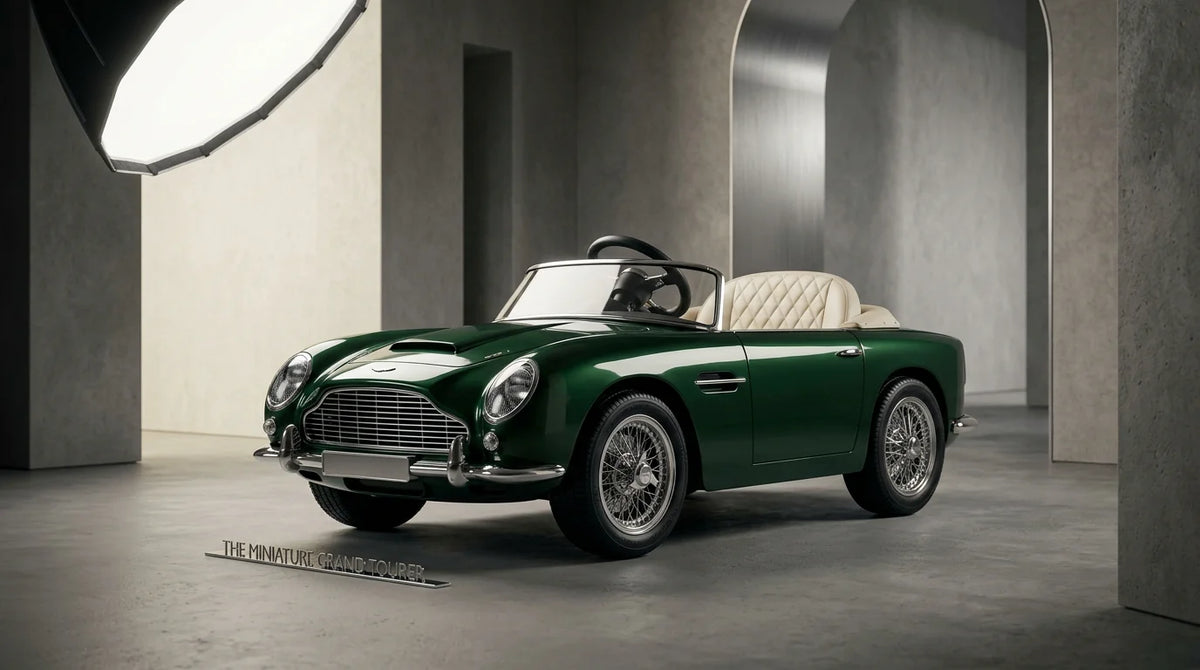
The context matters. The broader global toys market is valued at around 138 billion dollars in 2026, yet the overwhelming majority of that volume is disposable plastic with no lasting value. Heirloom-grade ride-ons occupy the opposite pole. Built around authentic automotive design, a piece like the Tinnie 10 kids ride-on is engineered to be cherished, stored, and inherited rather than replaced. For families who already think in terms of collectible design, this logic feels natural.
When you evaluate a ride-on as an investment, examine build quality, edition size, brand collaboration, and the availability of spare parts. These factors determine whether a piece remains desirable a decade from now.

Safety Standards You Must Verify
No level of prestige excuses a lapse in safety. Before any purchase, confirm that the piece meets recognised international standards. In practice, this means verifying certification marks, age labelling, and materials disclosure. For electric or motorised toys, check battery certification, speed limits, and braking behaviour.
Age suitability is not a suggestion; it is a safety boundary. Manufacturers assign age ranges based on choking risk, weight limits, and the physical capabilities a piece demands. A ride-on rated for older children can genuinely endanger a toddler. Always match the object to the child in front of you rather than to an aspiration. When in doubt, favour models with adjustable speed settings and parental remote controls, which allow supervised progression.
Matching the Toy to the Child and the Moment
Why do some expensive toys gather dust while others become inseparable companions? The answer usually lies in fit. The most affluent buyers, who market research identifies as high-income families and millennials accounting for roughly 65 percent of global sales, increasingly prioritise quality, exclusivity, and sustainability over sheer spectacle. A thoughtful gift honours the child's stage and temperament.
For the youngest, favour tactile, safe, and developmentally rich objects. For preschoolers, open-ended pieces that reward imagination age best. For older children, engineering, realism, and a degree of independence sustain engagement. Sustainability now shapes these decisions too, as families seek eco-conscious materials and long product lifespans. A durable piece that resists obsolescence is, by definition, the more responsible choice.
Comparing Toy Tiers at a Glance
The table below contrasts common tiers to clarify where premium heirloom pieces deliver value that mass-market alternatives cannot match.
| Criteria | Mass-market toys | Mid-range brands | TheArsenale heirloom ride-ons |
|---|---|---|---|
| Primary materials | Plastic | Mixed plastic and wood | Steel, leather, aluminium |
| Expected lifespan | Months | A few years | A generation |
| Resale value | Negligible | Low | Retained or appreciating |
| Design provenance | None | Occasional licensing | Authentic automotive collaboration |
| Suited to inheritance | No | Rarely | Yes |
Positioned at the top of this spectrum, our curated ride-ons are the option we recommend for families seeking objects that endure. They combine verified safety with the craftsmanship that justifies a premium.
Bringing Your Selection Together
A disciplined approach to choosing premium toys for children rewards patience over impulse. Prioritise durable materials, verified safety, and open-ended play, then treat the finest ride-ons as collectible objects that hold value across years. Match every piece to the child's real stage rather than to a passing trend. When you buy fewer things but choose them well, you build a collection that entertains today and becomes an heirloom tomorrow.
Take action with TheArsenale
If you are ready to move from theory to a considered purchase, the same standards of craftsmanship and provenance that we apply across luxury mobility guide our children's collection. Every piece is selected for build quality, authentic design partnership, and the kind of longevity that a serious buyer expects.

Explore our curated luxury kids ride-on collection to discover hand-finished electric and pedal cars built to be driven, cherished, and handed down. With free shipping and a sales team reachable around the clock, we make acquiring an heirloom-grade piece straightforward, whether you are buying for your own family or sourcing an exceptional gift.
Frequently Asked Questions
What makes a children's toy genuinely luxury rather than simply expensive?
A genuine luxury toy is defined by material integrity, craftsmanship, and design provenance rather than price alone. Look for solid materials, authentic engineering, and limited production. These qualities allow the piece to last for years and to retain value over time.
Are premium ride-on cars a sound investment?
Hand-assembled ride-ons produced in limited numbers can hold or grow their value on the secondary market, which is rare among children's products. Build quality, edition size, and design collaboration determine long-term desirability. Our heirloom ride-ons are engineered specifically with this longevity in mind.
How do I confirm that a luxury toy is safe?
Verify recognised certification marks, age labelling, and materials disclosure before purchasing. For motorised pieces, check battery certification, speed limits, and braking behaviour. Models with adjustable speed and parental controls add a valuable layer of supervised safety.
At what age should I introduce a premium ride-on?
Always follow the manufacturer's stated age range, which reflects weight limits and physical capabilities rather than marketing. A ride-on rated for older children can endanger a toddler. Match the object to the child in front of you rather than to an aspiration.
Is it better to buy one premium toy or several ordinary ones?
Buying fewer, better-made pieces generally delivers more lasting value and reduces waste. A durable object supports many kinds of play across several years and can eventually be inherited. This approach aligns quality, sustainability, and long-term enjoyment.