Buying a Car Art Print for Sale: A Guide for Collectors
The global appetite for decorative artwork is expanding at pace, and automotive imagery sits firmly within that momentum. When you search for a car art print for sale, you are joining a wide community of enthusiasts who treat the automobile as a cultural object worthy of the wall, not merely the garage. The right piece transforms a room, signals a passion, and anchors a personal aesthetic.
Yet the market is crowded, and quality varies enormously. The global wall art market was valued at USD 66.89 billion in 2025, which explains why sellers now range from mass poster shops to specialist ateliers. Understanding what separates a disposable print from a collectible one is the first step toward a purchase you will value for years.
What defines a quality automotive art print
Not every automotive image deserves your wall. The difference between a forgettable poster and a lasting piece lies in materials, resolution, and finishing. When you compare an automotive art print across sellers, examine the substrate first: fine art paper, stretched canvas, brushed aluminium, and acrylic each produce a distinct visual result and lifespan.
Resolution and colour fidelity matter just as much. A premium car wall art reproduction preserves the sharpness of a headlight, the depth of a livery, and the tonal range of chrome. Cheaper products often flatten these details. If you are building a considered collection, our automotive wall art gallery curates pieces where craftsmanship and subject are treated with equal seriousness.

Popular styles and subjects for car wall art
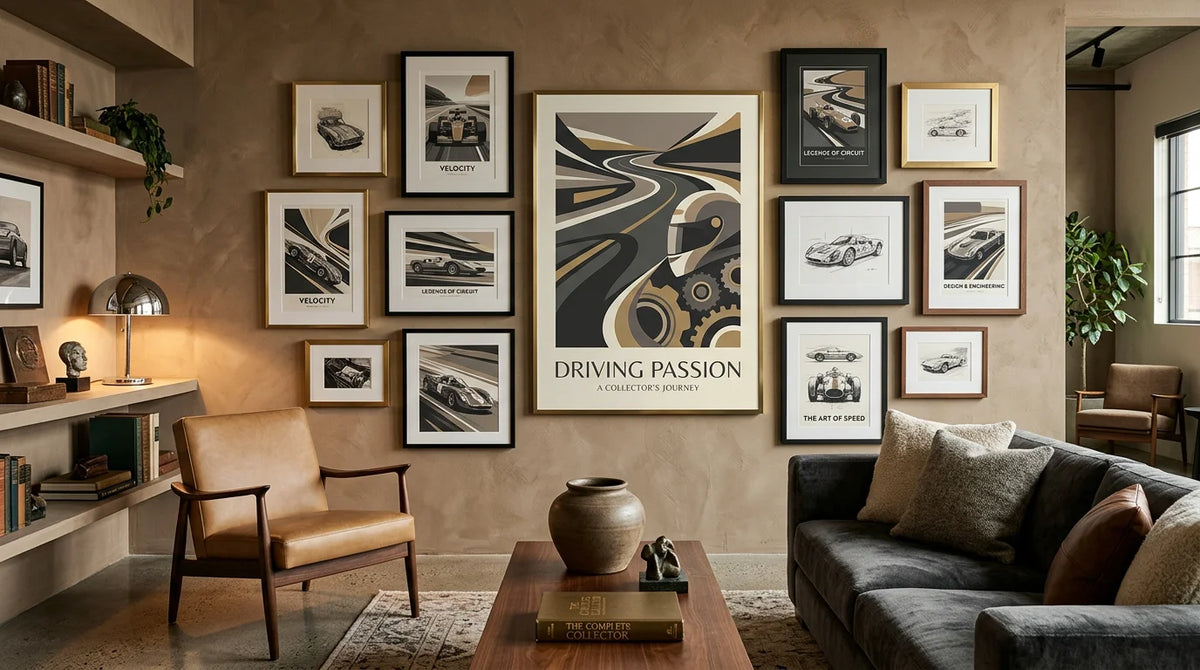
Which era speaks to you? Automotive artwork spans a broad stylistic spectrum, and identifying your preference narrows the search considerably. Competitor catalogues consistently group their car posters and prints into recognisable families, and understanding these helps you buy with intent.
- Vintage and classic: mid-century racing scenes, muscle cars, and heritage badges that celebrate more than a century of motoring.
- Minimalist silhouettes: clean profile lines that capture a model's identity through form alone.
- Motorsport and Formula 1: circuit posters, iconic liveries, and grand prix moments.
- Abstract and watercolour: expressive interpretations that prioritise emotion over documentary accuracy.
Custom and personalised work is the defining movement of the moment. According to one industry overview, the shift toward personalised art through online channels is a central driver of category growth, as buyers move away from generic framed pictures toward pieces that reflect a specific collection or vehicle.
From engine to wall: the rise of collectible automotive art
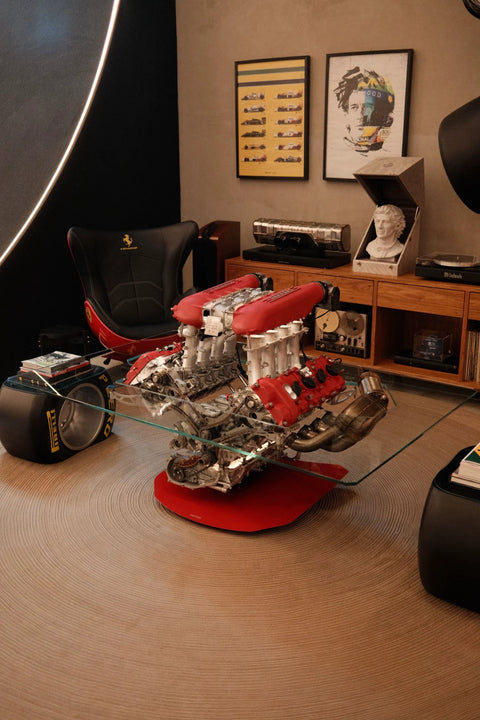
Consider the enthusiast who owns a scale model, a signed helmet, and a shelf of manuals. For that collector, a flat print is only the entry point. The differentiating movement in this category is the treatment of the automobile as a three-dimensional collectible object mounted for display, where authentic mechanical components become the artwork itself.
This matters because collector demand rewards authenticity and scarcity. The broader art market illustrates the appetite for fresh, high-value pieces: United States year-end sale totals reached USD 3.2 billion in 2025, up 23% on the prior year, according to Bank of America's analysis. While that figure covers fine art broadly, it reflects a wider willingness to invest in objects that carry provenance and meaning.
We approach this space through framed engine and component pieces that bridge sculpture and wall art. If you want a statement centrepiece, our framed car sculpture / wall art presents authentic motorsport heritage as a display object, while our framed car sculpture / wall art from a later racing icon extends the same collectible logic.

Formats and prices compared
Budget shapes the decision as much as taste. Mainstream marketplaces list open-edition prints from around fifteen euros, while limited editions, metal panels, and collectible sculptures command considerably more. The table below compares typical categories so you can position your purchase.
| Format | Typical positioning | Best for |
|---|---|---|
| Open-edition poster | Entry-level, mass produced | Casual decoration, first purchase |
| Framed fine art print | Mid-range, higher fidelity | Considered home display |
| Metal or acrylic panel | Premium finish, durable | Modern interiors, garages |
| Collectible framed sculpture (our approach) | Authentic components, limited | Serious collectors, statement pieces |
Mass-market sellers offer breadth and low prices, which suits a first buy. However, they rarely provide authenticity or scarcity. When your priority shifts from covering a wall to owning something enduring, the value equation moves toward curated and collectible work.
How to buy with confidence
Before you commit, run through a short checklist. A disciplined approach protects you from disappointment and helps you compare a car art print across very different sellers on equal terms.
- Confirm the substrate and print method in the product description.
- Check whether the piece is open edition or limited, as scarcity affects long-term value.
- Verify framing quality and hanging hardware are included.
- Review shipping protection and return windows, which reputable sellers state clearly.
- Match the format and scale to your intended wall and lighting.
The wider category context supports careful buying. Analysts project the wall art market to grow toward USD 82.36 billion by 2030, driven partly by personalisation and premiumisation. As the market matures, the gap between disposable prints and lasting collectibles will only widen, making the quality checklist above increasingly relevant.
Making your selection count
Choosing a car art print for sale comes down to aligning subject, format, and quality with your intention. If you simply want colour on a wall, an open-edition poster serves. If you are building something that reflects genuine passion for the automobile, prioritise authenticity, print fidelity, and scarcity. Define your budget, inspect the materials, and let the piece earn its place. A considered purchase rewards you every time you walk past it.
Take action with TheArsenale
You understand what separates a passing poster from a piece worth keeping. The next step is choosing a seller that treats automotive artwork with the seriousness a true enthusiast expects, where craftsmanship, heritage, and authenticity are not afterthoughts but the entire proposition.

We curate collectible automotive art that turns mechanical heritage into display-worthy objects, from framed engine sculptures to gallery pieces built around genuine components. Explore our car art prints for sale and discover work designed for collectors who want more than decoration. Free shipping applies, and our team is available to answer any enquiry.
Frequently Asked Questions
What is a car art print?
A car art print is a reproduction or original artwork depicting automobiles, produced on paper, canvas, metal, or acrylic. It is designed for wall display and ranges from affordable posters to premium collectible pieces.
How much does automotive wall art cost?
Entry-level open-edition prints often start around fifteen euros on mass marketplaces. Framed fine art pieces, metal panels, and collectible sculptures cost considerably more, reflecting materials, edition size, and authenticity.
What makes a print collectible rather than decorative?
Collectible value comes from scarcity, provenance, and authenticity, such as limited editions or genuine mechanical components. Our framed engine sculptures follow this logic by turning authentic motorsport parts into display objects for serious collectors.
Which format lasts longest?
Metal and acrylic panels generally resist fading and physical damage better than paper posters. Quality framing with UV protection also extends the lifespan of fine art prints considerably.
How do I choose the right size for my wall?
Measure the available wall space and consider viewing distance and lighting before purchasing. A larger statement piece suits an open feature wall, while smaller prints work well grouped as a gallery arrangement.