Designer Paddleboard for Sale: A Practical 2026 Buying Guide
A designer paddleboard should do more than look striking beside the water. It should feel composed underfoot, move efficiently, and remain practical to transport, store, and maintain. Our our best luxury paddleboards selection reflects that broader standard, where visual character supports genuine use.
When you search for a designer paddleboard for sale, you are usually comparing more than color or finish. You are assessing craftsmanship, performance, rarity, construction, and the experience attached to ownership. The most convincing choice is therefore the board that balances collectible design with the demands of your own water routine.
What makes a paddleboard genuinely designer?
Design begins with the board’s silhouette, surface treatment, and visual identity. Yet those elements matter most when they are integrated with the board’s purpose. A touring shape should still track cleanly, an all-around board should remain stable, and a collaboration should retain its character without compromising usability.
Material quality is often the first meaningful distinction. Wood veneer, carbon fiber, composite shells, reinforced PVC, and carefully finished traction surfaces each create a different balance of weight, stiffness, durability, and maintenance. A visible wood deck can deliver warmth and individuality, while carbon construction may prioritize lightness and direct power transfer.
Craftsmanship also appears in less obvious details. Examine the junction between the deck and rails, the finish around handles, the precision of fittings, and the quality of the fin system. On an inflatable board, inspect the rail seams, drop-stitch density, valve placement, and included pump. On a rigid board, inspect the shell, deck pad, fin boxes, and areas vulnerable to impact.
The strongest luxury designs are not decorative objects with paddling features added later. They are complete products in which engineering, materials, proportions, and visual language support one another. That is the difference between a board that photographs well and one that earns regular use.
Should you choose a rigid or inflatable board?
Imagine two buyers with the same interest in refined design. One lives near a private dock and has secure storage. The other travels frequently and carries equipment through hotels, apartments, or narrow waterfront access points. Their ideal boards will probably differ.
A rigid paddleboard generally offers a direct, precise feel. Its fixed hull profile can improve glide, tracking, and responsiveness, particularly for touring, fitness sessions, surf, or faster recreational paddling. It also provides more freedom for veneers, composite laminates, shaped rails, and other design treatments.
The trade-off is logistics. A rigid board requires suitable storage, careful transport, and protection from impacts. You may need roof bars, a padded carrier, wall supports, or a dedicated storage area. These practical requirements should be considered before the board arrives.
An inflatable board is easier to pack and transport. It can suit international travel, smaller homes, occasional use, or locations where carrying a full-size rigid board is difficult. Modern constructions can be firm and capable, but the experience may still differ from a rigid board in stiffness, acceleration, and precision.
A 2026 buyer guide from Paddling Magazine illustrates how broadly SUP pricing varies by format. Its examples include an approximately $500 inflatable package and tandem inflatable packages priced between $760 and $900, showing why construction and intended use should be compared before price alone.

For a luxury purchase, the decision is rarely about choosing one format universally. It is about choosing the format that protects the value of the design in your real environment. A beautiful rigid board that remains inaccessible in storage may deliver less satisfaction than a well-made inflatable board that travels with you every weekend.
How should you size a designer paddleboard?
Board length and width shape the entire experience. Longer boards usually glide efficiently and track well. Wider boards generally provide more stability. Narrower outlines can feel faster and more responsive, but they demand better balance and more precise foot placement.
For relaxed cruising, an all-around shape often provides the most forgiving platform. Touring boards suit longer distances and more efficient strokes. Surf-oriented boards are typically shorter and more maneuverable. Racing designs prioritize speed, which usually reduces stability for less experienced paddlers.
Your weight, equipment, and passenger plans matter equally. A board carrying camping equipment, a child, a dog, or fishing gear needs sufficient volume and a suitable deck layout. Do not rely only on a maximum weight figure. Consider how the board sits in the water under a realistic load.
To connect those variables, our guide to how to buy a luxury paddleboard can help you compare intended use, materials, proportions, and ownership priorities. A considered choice should feel stable without becoming cumbersome, and responsive without becoming demanding.
Also consider your launch point. A board designed for open coastal water may be unnecessary for sheltered lakes. A narrow touring model may feel efficient on calm water, but less reassuring in boat wake or changing wind. The correct size is therefore a relationship between your body, your water, and your ambitions.
What should you expect to pay in 2026?
There is no single price for a designer paddleboard because the category includes several distinct products. A limited collaboration, hand-finished rigid board, technical carbon model, and premium inflatable package may all occupy different price levels.
Construction and provenance are major cost factors. Hand-applied finishes, rare veneers, carbon laminates, small production runs, collaboration artwork, and specialist shaping can increase the price. Accessories, shipping, warranty coverage, and customization may also affect the final ownership cost.
Published prices should be read carefully. A low figure may describe a basic inflatable package, a discounted older model, or a second-hand board. A higher figure may include limited-edition production, custom detailing, premium materials, or direct support from the maker.
For a clearer view of one important segment, consult our wooden paddleboard prices guide. Wood construction can vary significantly, from decorative applications to fully integrated structural designs. The visual presence of wood alone does not tell you how the board was built or how it will perform.
It is also wise to separate the purchase price from the cost of ownership. Rigid boards may require roof transport and protected storage. Inflatable boards may require pumping time, drying before packing, and periodic inspection of valves and seams. A premium board becomes more satisfying when its maintenance fits your lifestyle.
How can you verify craftsmanship and provenance?
Start with documentation. Ask who designed and built the board, when it was produced, whether it belongs to a numbered edition, and which accessories are included. If the board is a collaboration, confirm the relationship between the design house, builder, and seller.
Request clear photographs of the deck, rails, nose, tail, fin boxes, handles, and underside. Surface marks can be cosmetic, but cracks, soft spots, delamination, distorted rails, leaking valves, and damaged fittings require closer attention. A seller should also be able to explain storage conditions and previous use.
A 2026 marketplace listing shows how much detail can appear in a private sale, including dimensions, weight, payload, accessories, warranty, and delivery terms. Such information is useful for comparison, but private listings still require careful verification because condition and documentation can vary.
For a new board, provenance should include a clear seller identity, written specifications, warranty terms, delivery conditions, and a defined contact route for questions. For a used board, ask for purchase records, service history, inflation or pressure information where relevant, and evidence that the board was stored correctly.
We also present products where design and mobility culture meet. Our our Wavellon paddle board reflects the value of examining the object as a complete design statement, rather than judging it by a single specification.

Which practical details deserve attention?
Storage is one of the most overlooked parts of a luxury board purchase. Direct sunlight, heat, moisture, and pressure against sharp surfaces can affect finishes and materials over time. A rigid board should be supported evenly, while an inflatable board should be clean, dry, and stored according to the maker’s instructions.
Transport also influences how often you use the board. Check whether your vehicle can carry the board safely, whether lifting it requires assistance, and whether the launch site involves stairs, sand, rocks, or a long walk. Lightweight construction can improve convenience, but not every lightweight board has the same rigidity or impact resistance.
Inspect the included accessories before finalizing the purchase. A complete package may include a paddle, leash, fins, pump, repair kit, carrying bag, or protective cover. If an item is missing, calculate its replacement cost and confirm compatibility with the board.
Maintenance should be straightforward. Rinse the board after saltwater use, dry it thoroughly, remove grit from fittings, and inspect high-contact areas regularly. These simple habits help preserve both performance and appearance, especially when the board has a distinctive finish or limited-edition surface.
When does a curated marketplace make sense?
A curated marketplace can be useful when your priorities extend beyond a standard retail transaction. You may be searching for a rare collaboration, a limited production board, a particular material, or an object connected to a wider design and mobility culture.
Our marketplace brings together a network of more than 250 builders, designers, and brands across land, sea, and air mobility. That perspective helps place paddleboards within a broader world of engineering, craftsmanship, collectible design, and future-oriented movement.
Personal assistance can also reduce uncertainty. Instead of comparing disconnected listings, you can discuss your intended water, storage conditions, desired aesthetic, and acquisition priorities with a sales team familiar with high-value objects. This is especially relevant when the product is rare or produced in limited quantities.
Our Private Membership provides access to vehicles before public listing, while our editorial platform explores builders, machines, and mobility ideas. Although those services extend beyond paddleboards, they reflect a consistent approach to discovery: quality, rarity, design identity, and informed access should work together.
The right marketplace should not pressure you toward the most expensive object. It should help you understand why a board costs what it costs, whether its construction suits your use, and how its design will remain meaningful after the first season.
Choose the board that earns its place
A designer paddleboard is a long-term choice, not simply a decorative purchase. Prioritize construction, dimensions, water conditions, storage, provenance, and support before focusing on visual appeal. The most satisfying board will combine a distinctive identity with dependable performance and practical ownership. When those elements align, a designer paddleboard for sale becomes more than an object for the shoreline. It becomes a considered expression of how you spend time on the water.
Take action with TheArsenale
If you are looking for a board that brings together visual character, waterside leisure, and collectible design, a curated source can make the search more focused. The right guidance helps you compare the board’s construction, intended use, finish, and place within a broader design story.

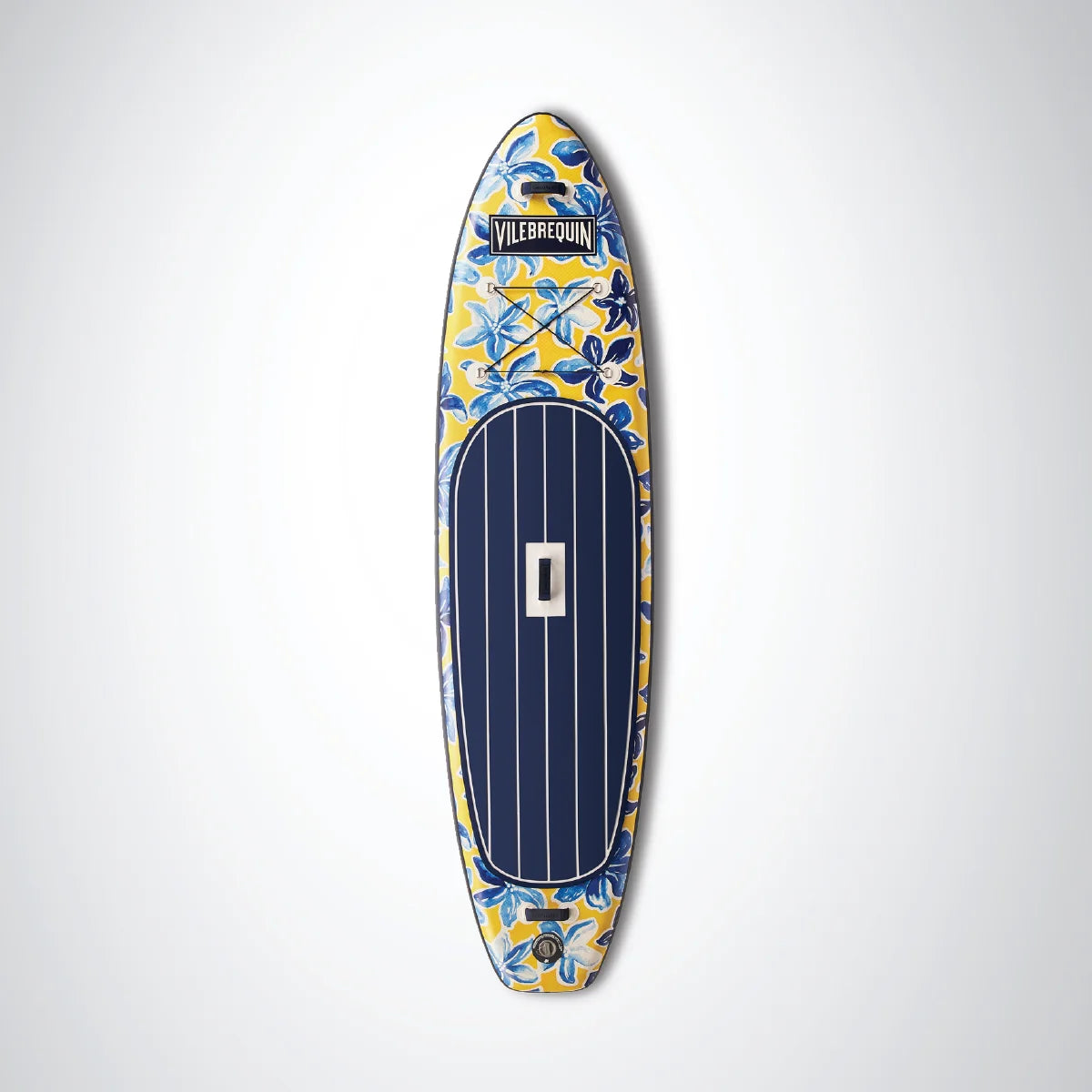
Explore the designer Vilebrequin paddleboard for a distinctive collaboration shaped by luxury waterside culture. You can also contact our team for assistance with rare mobility objects and high-value acquisitions, especially when you need more context before making an international purchase.
Frequently Asked Questions
What makes a designer paddleboard different from a standard SUP?
A designer paddleboard combines functional construction with a distinctive visual identity, limited production, specialist materials, or a recognized collaboration. Its value should still be supported by appropriate stability, durability, and performance for your intended use.
Is a rigid paddleboard better than an inflatable model?
A rigid board can provide a more direct feel, sharper tracking, and greater freedom for premium finishes. An inflatable model is easier to transport and store, so the better choice depends on your water, living space, and travel habits.
How do I choose the correct size?
Consider your weight, skill level, paddling location, equipment, and whether another person or a pet will join you. A wider all-around board is generally more forgiving, while a longer and narrower board may suit touring or distance paddling.
What should I check when buying a used luxury paddleboard?
Ask for proof of purchase, dimensions, construction details, storage history, and any warranty information. Inspect the rails, deck, underside, fin boxes, fittings, valves, seams, and included accessories before agreeing to the purchase.
Can TheArsenale help me find a rare paddleboard or mobility object?
Yes, our marketplace and sales team support discovery and sourcing across rare, high-value mobility categories. You can contact us with your preferences so the team can help clarify availability, provenance, and acquisition requirements.