How to Buy Designer Wooden Toys: A Careful Buyer's Guide
The global appetite for natural play is no longer niche. The market for wooden toys was valued in the tens of billions and continues to expand steadily, driven by parents seeking durable, sustainable and developmental alternatives to plastic. If you want to understand the wider premium play category before you commit, our luxury kids toys buying guide sets useful context for discerning shoppers.
Yet a beautiful photograph tells you little about what matters. Knowing how to buy designer wooden toys requires you to read past the styling and assess material, finish and maker. According to The Business Research Company, the sector grew from $28.73 billion in 2025 to a projected $30.41 billion in 2026, at a compound annual growth rate of 5.8%. Rising demand also means more marketing gloss, so a methodical approach protects your investment.
What actually defines a designer wooden toy
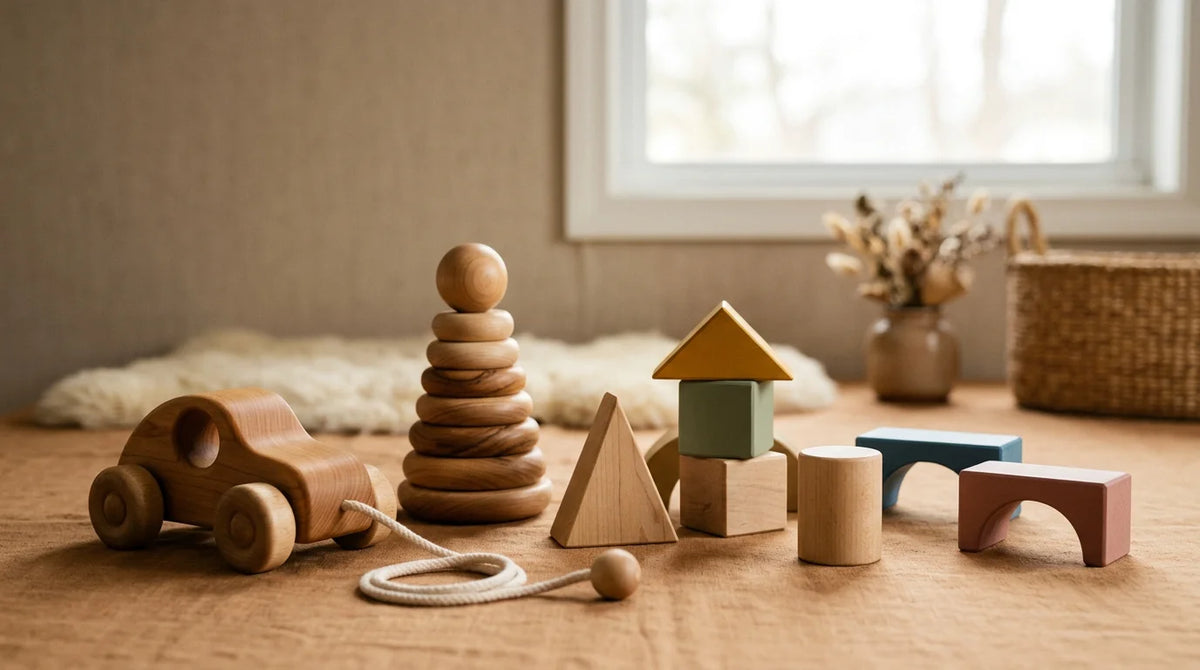
Price alone does not make a toy a considered purchase. A genuine designer wooden toy combines intentional aesthetics with functional play value and honest materials. Look for a clear design signature, a named maker or studio, and construction that rewards close inspection rather than distant admiration.
The most respected names in the category have built reputations over decades. According to Global Market Insights, the top five manufacturers, including Hape, Melissa & Doug, BRIO, PlanToys and Janod, collectively held about 38% of the market in 2025. That concentration is a useful signal: established studios have the tooling, testing budgets and supply chains to deliver consistent quality that smaller novelty sellers cannot always match.

Inspect the wood, the finish and the joinery
Begin with the raw material. Solid hardwoods such as maple, beech, oak and sustainably sourced rubberwood offer density and longevity, while thin plywood or particleboard cores signal cost-cutting. Ask what species the toy is made from, and treat vague answers as a warning.
Finishes matter as much as the timber. Water-based paints, natural oils and beeswax are preferable to unnamed lacquers, particularly for toys destined for younger children who mouth objects. Examine the joinery too: tight, smooth joins, rounded edges and no visible glue residue indicate a maker who cares. Sustainability credentials are increasingly verifiable, and Global Market Insights notes that in January 2026, PlanToys launched a carbon-neutral collection using renewable energy, sustainable rubberwood and plant-based packaging.
Verify safety certifications before you pay
Aesthetics never override safety. Reputable designer toys carry recognised certification, and you should confirm this before checkout rather than assume it. According to Fortune Business Insights, standards such as ASTM F963 underpin consumer confidence across the category, alongside regional frameworks like the EU Toy Safety Directive.
Check three things in particular: age suitability, small-part warnings, and non-toxic finish declarations. A trustworthy listing states the recommended age range and the applicable standard clearly. If a seller cannot tell you which safety tests a toy has passed, that silence is your answer. For very young children, choke-hazard sizing and secure fixings deserve extra scrutiny.
A designer label is a promise of intent; a certification is a promise of accountability. Insist on both.
Judge provenance, craft and the maker's story
Where a toy comes from shapes both its ethics and its longevity. European and North American studios often publish detailed sourcing information, and premium, artisanal pieces are increasingly bought for gifting and heirloom play. Fortune Business Insights highlights that this artisanal segment is gaining ground precisely because buyers value craft and durability over disposability.
Read the maker's story critically. Genuine studios describe their workshops, their timber suppliers and their finishing processes. Montessori-aligned design is another meaningful marker, and demand for developmentally focused play remains a core growth driver across the sector. When you seek objects that blend design credibility with tactile quality, our selection of wooden pieces worth considering illustrates how thoughtful woodwork carries into wider lifestyle design.

Where to buy and how the channels compare
Where you shop influences authenticity, guidance and after-sales support. Specialist curated retailers vet their brands, marketplaces vary widely, and craft fairs offer direct maker contact but limited returns. The table below compares typical channels against the criteria that matter most to a considered buyer.
| Channel | Curation | Provenance clarity | Buyer guidance |
|---|---|---|---|
| Our curated marketplace | High, vetted selection | Transparent | Responsive, expert-led |
| Specialist toy retailer | Moderate to high | Usually clear | Variable |
| General marketplace | Low, mixed sellers | Often unclear | Limited |
| Craft fair | Direct from maker | Personal, verbal | Informal |
Whichever route you choose, favour sellers who publish materials, certification and clear return terms. According to Spherical Insights, the popularity of Montessori learning and sustainable lifestyles continues to shape which products retailers stock, so a curated channel often reflects those priorities more reliably than an open marketplace.
Budget, longevity and value over time
A higher price is only justified when it buys durability, safety and design that endures. Consider cost per year of use rather than the sticker figure alone. A well-made hardwood set played with by successive children delivers far better value than repeated cheaper replacements.
Set a realistic budget, then weigh it against resale and heirloom potential. Well-branded designer pieces retain value, and the wider market's steady growth suggests sustained demand for quality wooden play. Reserve your budget for pieces that combine verified safety, honest materials and a design you would be content to display and pass on.
Bringing it all together
Knowing how to choose designer wooden toys comes down to disciplined inspection rather than impulse. Confirm the wood species and finish, insist on recognised safety certification, scrutinise provenance and craftsmanship, and buy from channels that publish honest information. Judge value over the object's full lifespan, not its first day. Approach the purchase this way and you will consistently acquire pieces that are safe, beautiful and built to last across generations.
Take action with TheArsenale
You value objects that are designed with intent, made with care and worth keeping. That same standard guides how we curate every category we offer, from high-end mobility to considered lifestyle and collectible goods for discerning buyers.

Explore our designer toys collection to see how we apply curation, transparency and craft-led selection to premium play. As a curated marketplace, we bring together considered pieces, with free shipping and a sales team that typically replies in under thirty minutes, so your questions are answered before you commit.
Frequently Asked Questions
What wood is best for a designer toy?
Dense hardwoods such as maple, beech and oak, or sustainably sourced rubberwood, offer the durability and smooth finish that quality play demands. Avoid thin plywood or particleboard cores, which wear quickly and signal cost-cutting. Always ask the seller to name the species.
How do I confirm a wooden toy is safe?
Look for recognised certification such as ASTM F963 or compliance with the EU Toy Safety Directive, plus a clear age range and small-part warnings. Non-toxic finish declarations are essential for younger children. If a seller cannot state which standards apply, treat that as a reason to walk away.
Are designer wooden toys worth the higher price?
They are when the price buys verified safety, solid materials and design that lasts. Considered on a cost-per-year basis, a durable hardwood piece often outperforms repeated cheap replacements. Well-branded designer toys also retain resale and heirloom value.
Where can I buy authentic designer wooden toys?
Curated specialist retailers and marketplaces that vet their brands offer the strongest provenance and guidance. Our curated marketplace applies that same vetting to premium play, publishing clear information so you buy with confidence. General marketplaces vary widely, so scrutinise each seller carefully.
What makes a toy "designer" rather than simply wooden?
A designer wooden toy pairs a deliberate aesthetic with real play value, honest materials and a named maker or studio. It rewards close inspection through fine joinery, rounded edges and considered finishes. The maker's story and sourcing transparency further distinguish it from generic novelty items.