How to Choose a Travel Bag for Every Kind of Journey
A travel bag can make a smooth journey feel effortless, or turn every transfer into an inconvenience. Before choosing a style, consider how you will move through airports, stations, streets, hotels, and the destination itself. Our our luxury luggage buying guide can also help you connect practical decisions with design, quality, and long-term use.
Knowing how to choose a travel bag begins with a simple principle: the bag should serve the journey you actually take. In 2026, Grand View Research estimates the global travel bag market at $23.1 billion, reflecting the wide range of formats, materials, and use cases available to travelers. That variety is useful, but it also makes a disciplined selection process more important.
What should you decide before looking at a travel bag?
Begin with the trip, not the product page. A weekend in one city creates different demands from a two-week journey with multiple trains, changing hotels, and uneven streets. The more transitions you expect, the more important mobility, access, and manageable weight become.
Write down four practical details before comparing bags:
- Trip duration, including whether laundry will be available.
- Transport methods, such as flights, trains, cars, ferries, or motorcycles.
- Destination surfaces, including smooth terminals, stairs, gravel, or cobblestones.
- Essential equipment, such as a laptop, camera, formal clothing, sports gear, or protective accessories.
Your packing behavior matters just as much. If you usually pack light and move frequently, a compact backpack may be more practical than a large suitcase. If you carry fragile objects or formal clothing, structure and protection may matter more than flexibility.
Also consider how often you travel. Occasional travelers may prioritize simple organization and a sensible price. Frequent travelers should pay closer attention to replaceable components, wheel construction, handle stability, stitching, zipper quality, and warranty terms. A bag that performs well for two annual trips may not suit someone who uses it every month.
Which travel bag style fits your itinerary?
Each format solves a different mobility problem. The goal is not to find one universal winner, but to select the format with trade-offs you can comfortably accept.
Travel backpacks suit journeys with frequent walking, public transport, stairs, or limited storage space. They keep both hands free and can be easier to manage in crowded environments. Their limitation is physical load. Even a well-designed backpack becomes uncomfortable when it is too heavy or poorly adjusted.
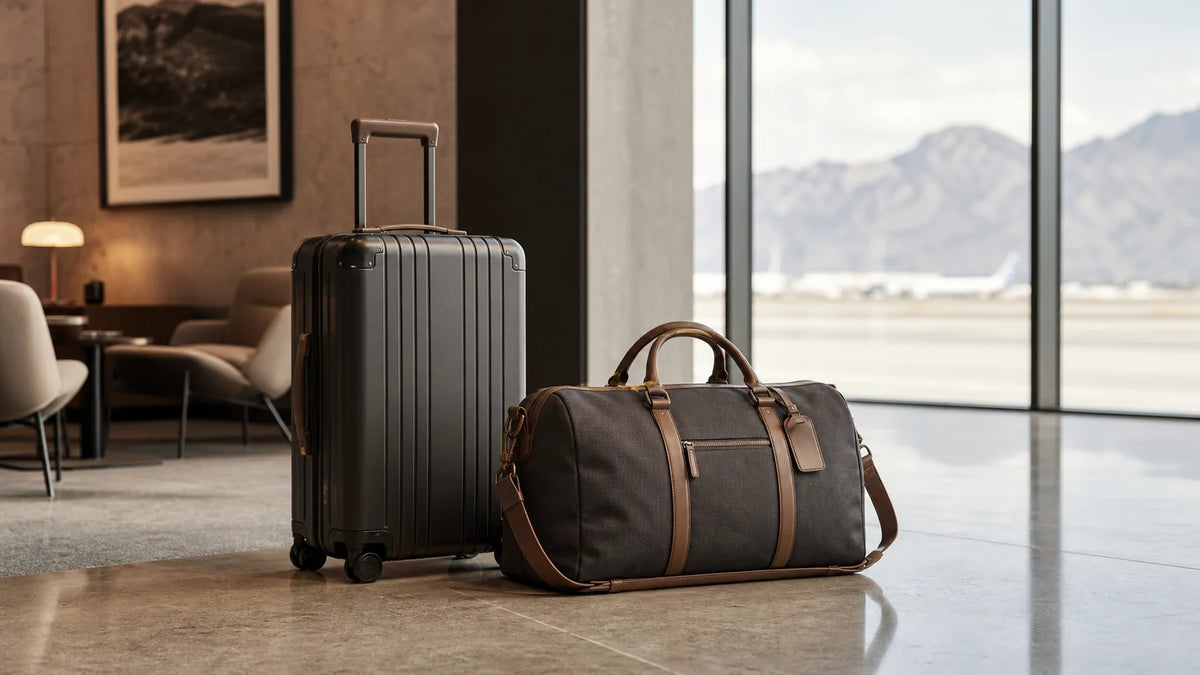
Rolling luggage is convenient across airports, hotel corridors, and smooth pavements. It reduces the load on your shoulders, but wheels and telescopic handles add weight and occupy internal space. A rolling case can also become cumbersome on stairs, cobblestones, narrow lanes, or gravel.
Duffel bags provide flexible capacity and a simple main compartment. They work well for short trips, road travel, sports equipment, or situations where you need to place the bag into irregular spaces. Their main drawback is that the weight rests on one hand or shoulder unless the design includes backpack straps or wheels.
Rolling backpacks combine both systems, but the hybrid construction usually adds weight and reduces usable capacity. They can be useful when your route changes between airports and streets, provided you are comfortable carrying the additional hardware.
For a design-conscious traveler, the bag can also become part of a broader personal style. We approach that balance through objects connected to mobility and movement, including our mobility bag. The important question remains practical: will you carry it, roll it, store it, and access it in the environments your trip requires?
How much capacity do you actually need?
A larger bag does not automatically create a better travel experience. Extra capacity often encourages overpacking, increases weight, and makes the bag more difficult to lift or store.
For a short city break, a compact personal item or small carry-on may be enough if you pack a limited wardrobe and use versatile clothing. A carry-on can work for longer journeys when you are willing to repeat outfits, use lightweight layers, and wash clothing during the trip. A checked bag becomes more appropriate when you need bulky clothing, specialty equipment, formalwear, or items for several travelers.
Capacity should be evaluated in usable space, not only in litres. Wheel wells, telescopic handles, thick dividers, curved corners, and rigid frames can reduce the space available for clothing. Two bags with similar external dimensions may therefore pack very differently.
Before buying, create a realistic packing test. Place everything you expect to bring on the floor, including shoes, toiletries, technology, and travel documents. Then separate essential items from convenient extras. This exercise often shows whether you need more capacity, better organization, or simply a more disciplined packing method.
Expandable sections can help when returning with purchases, but they create a risk. An expanded carry-on may exceed an airline’s limits, so you should treat expansion as reserve capacity rather than standard capacity. Always measure the bag in its travel configuration, including wheels, handles, and external pockets.
Which materials and construction details matter?
Material selection should follow handling conditions. Hard shells offer structure and can protect fragile contents, while soft shells usually provide flexibility, external pockets, and easier compression into tight spaces.
Polycarbonate is commonly chosen for a balance between impact resistance and weight. Lower-quality plastics may crack under stress, particularly around corners and wheel housings. Aluminum provides a rigid structure and distinctive appearance, but it can add substantial weight and may show dents after rough handling.
Soft-sided bags can be made from nylon, ballistic nylon, Cordura, polyester, or other woven materials. Look closely at the fabric, seam construction, reinforcement points, and base protection. A flexible bag is not automatically fragile, but thin fabric, weak stitching, and overloaded pockets can shorten its useful life.
Zippers deserve particular attention. They should open smoothly without catching, separating, or requiring excessive force. Examine the zipper path around corners, where tension increases when the bag is full. Handles should extend without excessive wobble, and attachment points should feel secure when you lift a packed bag.
Durability also includes repairability. Check whether wheels, handles, buckles, and other components can be replaced. A repairable bag can remain useful after a minor failure, while a sealed or inaccessible component may force you to replace the entire product.
How should wheels, straps, and access shape your choice?

Mobility is often the decisive factor. Four-wheel spinners are easy to maneuver across smooth floors because they can be pushed beside you or turned in tight spaces. Two-wheel designs usually keep the wheels more protected and may handle uneven surfaces more confidently, but they must be pulled behind you.
Wheel quality matters more than wheel count. Look for stable movement, secure mounting, smooth rotation, and a design that does not consume unnecessary internal space. If you regularly travel over rough surfaces, recessed wheels may be preferable. If your route is mainly airport, taxi, and hotel, the maneuverability of a spinner may be more valuable.
Backpack straps should be padded, adjustable, and positioned so the load remains close to your body. A sternum strap or hip belt can improve stability when walking with a heavier pack. For duffels, inspect the shoulder strap padding and attachment points, especially if you expect to carry the bag for more than a few minutes.
Access is another practical consideration. Exterior pockets allow you to reach passports, chargers, headphones, or documents without opening the main compartment. However, excessive pockets can reduce internal volume and create vulnerable points on a checked bag. Choose only the access points that support your actual routine.
If your journey includes motorcycles, equipment, or unusual transport conditions, mobility requirements become more specific. Our our “how to buy motorcycle luggage” guide offers a useful reference for thinking about secure attachment, protection, weather exposure, and access during movement.
Travel conditions also change from trip to trip. Deloitte’s 2026 travel outlook draws on research conducted in 2025 and describes travel demand as uneven. That uncertainty supports choosing a versatile bag that can serve more than one type of itinerary, rather than buying for a single imagined journey.
What features are worth paying for?
The best features are the ones that reduce friction repeatedly. A built-in garment section can help business travelers, while a padded laptop sleeve matters when technology remains in your personal possession. A compression panel can stabilize clothing, but it may reduce flexibility if you prefer packing cubes.
Consider these features according to your routine:
- External access for passports, documents, medication, or chargers.
- Padded technology storage for laptops, tablets, or cameras.
- Compression systems for keeping clothing stable and compact.
- Water resistance for changing weather and outdoor transfers.
- Locking hardware for checked luggage and shared storage areas.
- Replaceable wheels and accessible screws for easier maintenance.
- Expandable capacity when you regularly return with additional items.
Be cautious with features that sound impressive but do not match your use. A built-in charging system may be unnecessary if you already carry a power bank. A large organizer panel may waste space if you use your own pouches. Integrated tracking can be useful for some travelers, but it should not replace careful labeling and sensible travel habits.
Price should reflect frequency and consequences. If a bag is used twice a year and remains in a car, a simple design may be adequate. If it is used across flights, trains, streets, and business meetings, stronger construction and better repair support may justify a higher investment.
How do you test a travel bag before buying?

Whenever possible, test the bag with realistic weight. Empty luggage can feel excellent in a store, yet become unstable or uncomfortable when packed. Place books, shoes, clothing, and a laptop inside, then lift it from the floor, carry it by each handle, roll it over different surfaces, and open every compartment.
Check whether the handle height suits you. Walk several steps with the bag behind you and beside you. For a backpack, adjust the straps and assess whether the load stays close to your back. For a duffel, test whether the shoulder strap slips or causes pressure.
Measure the exterior dimensions yourself. Airline rules vary by carrier, region, fare, and route, and labels such as “carry-on friendly” are not a substitute for checking the current policy. Include wheels, handles, feet, pockets, and expansion panels in your measurement.
Inspect the bag when it is fully loaded. Look for strained seams, bulging zippers, blocked pockets, exposed corners, and a base that tilts under pressure. If the bag only closes when you force it, it is too small for your normal packing list.
Finally, imagine the first hour after arrival. Will you still want to carry it from the station? Can you reach your passport without unpacking everything? Will it fit in your accommodation? A travel bag proves its value not when it looks attractive on a shelf, but when it removes effort from the journey.
For travelers who want to compare design-led pieces and related products in one place, our luggage collection provides a natural starting point. Use the same practical tests, even when the purchase is guided by distinctive design.
Choose the bag that supports your real journey
The most reliable way to choose a travel bag is to work from your itinerary, movement, packing habits, and likely obstacles. Select the format first, then confirm capacity, airline dimensions, materials, comfort, access, organization, and repairability. A considered choice gives you enough space without encouraging excess, protects what matters, and remains comfortable from departure to arrival.
Take action with TheArsenale
Once you understand how you travel, the next step is to choose an object that fits both your practical needs and your personal relationship with movement. TheArsenale brings together curated mobility products, design-led objects, apparel, and lifestyle pieces for an international audience interested in distinctive travel and mobility experiences.

Explore our bags and luggage selection to continue your search. You can browse online, review the available pieces, and contact our team when you need more information about a product or a considered acquisition.
Frequently Asked Questions
What is the best type of travel bag for international trips?
The best type depends on your route, transport, destination surfaces, and packing style. A backpack suits frequent movement, while rolling luggage may be more comfortable when most transfers take place across smooth floors.
How do I know what size travel bag I need?
Base the size on your packing list, trip duration, access to laundry, and airline restrictions. Measure the fully assembled bag, including wheels, handles, pockets, and any expanded sections.
Is a hard-shell or soft-sided bag better?
Hard shells provide structure and protection for fragile contents, while soft-sided bags offer flexibility and easier access through external pockets. Neither format is universally better, so choose according to what you carry and how you travel.
Are four wheels better than two wheels on luggage?
Four wheels are convenient on smooth surfaces and in tight airport spaces. Two wheels can be more practical on uneven ground because the wheels are often recessed and the bag remains easier to pull across rough terrain.
Can TheArsenale help me choose a travel bag?
Yes, you can browse TheArsenale collection online and contact the team with questions about available products. Our wider mobility focus also makes the brand relevant when your travel needs connect with motorcycles, distinctive machines, or design-led movement.