How to Choose Art Prints That Elevate Any Room in 2026
Walls represent some of the largest visual real estate in any home, yet they are frequently the last surfaces to receive attention. Knowing how to choose art prints that suit both your space and your taste transforms an empty wall into a focal point. The process is less about rigid rules and more about a few reliable principles that professional designers apply again and again. If you would like ideas as you read, you may browse art prints and artwork inspiration in the gallery.
The appetite for decorative prints is considerable. According to Fortune Business Insights, the global wall art market is projected to grow from 70.94 billion dollars in 2026 to 145.49 billion dollars by 2034. Behind that figure sits a simple truth: a well-chosen print carries meaning, personality, and atmosphere. The sections below break the decision into manageable steps so that your next purchase feels deliberate rather than rushed.
Start With Size and Scale
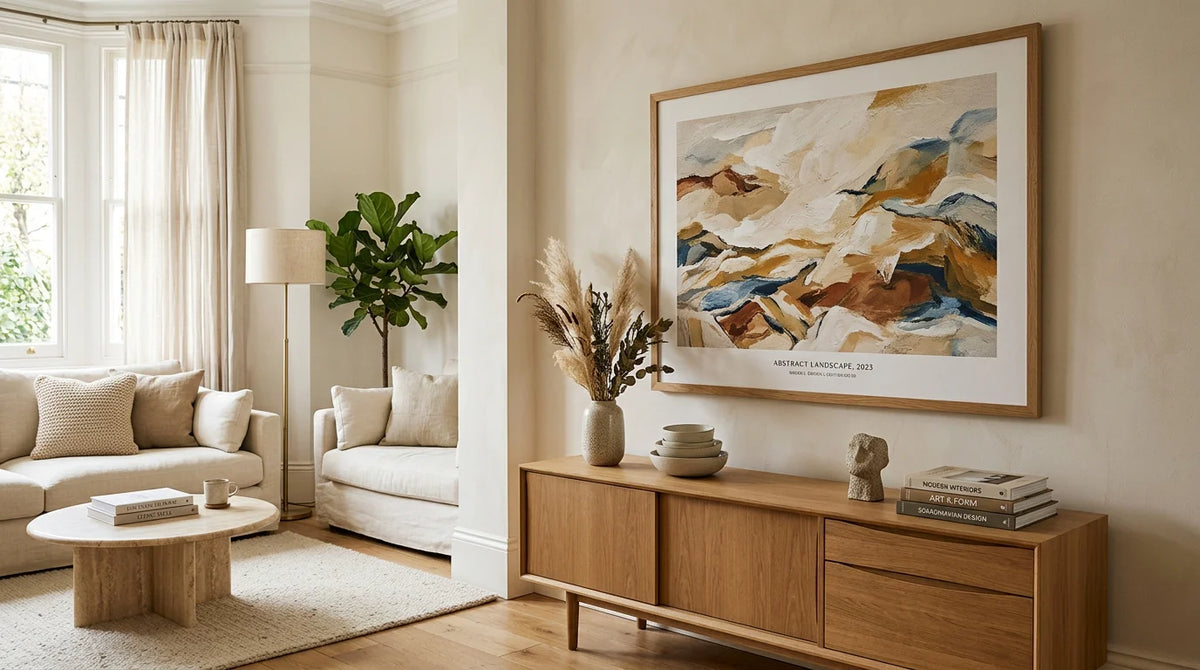
Size is the single decision that most often goes wrong. Even a striking fine art print feels out of place when it is too large, and it disappears entirely when it is too small. A dependable guideline is that a piece should occupy between 50 and 75 percent of the available wall, so the artwork commands the space without crowding it. When you are hanging art above furniture, keep the bottom of the frame roughly 6 to 12 inches above the surface.
Scale relative to furniture matters just as much as scale relative to the wall. For a print set above a sofa, credenza, or buffet, aim for a width of at least two thirds of the furniture below it. Anything much narrower looks undersized and slightly awkward. Measuring before you buy, and marking the dimensions on the wall with painter's tape, removes most of the guesswork.

Let Your Personal Style Guide the Selection
Art is intuitive, and there are no rules dictating what you should or should not like. Pay attention to what your eye is naturally drawn to, then follow that instinct. Rather than settling for a generic image from a large retailer, choose a print whose subject holds meaning for you, such as a favorite landscape, a botanical study, or a travel destination you cherish. This personal connection is what gives a room its soul.
It helps to recognize the broad families of prints available: abstract, botanical, figurative, still life, architectural, and landscape, among others. Each carries a different mood. Abstract work relies on shape, form, and color and invites interpretation, while landscape and botanical pieces bring calm and a sense of the natural world. Identifying which category resonates narrows a vast field to a workable shortlist.
Match Color and Interior Design Style
A print should complement a room without overwhelming the elements already in it. Begin with the interior style you have: a minimalist, modern space often suits a crisp black and white photograph, whereas a warmer, cottage-inspired room welcomes softer landscape tones. The safest route to cohesion is to identify a dominant color in the space, such as a green sofa, then select a print that echoes that hue as a secondary accent.
Pairing dominant and secondary colors keeps a palette connected without feeling saturated. Personalization is a defining force in this market. Persistence Market Research notes that demand is driven heavily by younger buyers who treat wall art as a medium for self-expression and identity-driven design. In practice, this means trusting a scheme that reflects you rather than a formula. If you prefer to see how a finished piece reads on the wall, our framed wall art to help you choose the right look and finish is a useful reference point.
Choose the Right Frame and Finish
The frame is not an afterthought; it is part of the artwork's presentation. A wooden frame generally offers higher quality and greater longevity than a composite alternative, and it ages gracefully. For a modern black and white print, a simple, slim frame preserves the clean aesthetic, while a warmer print may benefit from a natural wood tone. A floater frame creates a subtle floating effect that suits canvas particularly well.
Matting deserves equal thought. A generous mat, ideally a thicker multi-ply board, adds a beveled edge that makes a print look more sophisticated and gallery-ready. White or off-white matting is a dependable default for original artwork, though colored and linen-wrapped options exist for those seeking a distinctive look. When in doubt, carry the print to a framing specialist and compare finishes side by side.
A print, its mat, and its frame function as a single composition. When all three speak to one another, even an inexpensive image reads as considered and intentional.
Placement and Hanging Height
Where you hang a print changes how it is perceived. On a wall without furniture beneath it, center the piece, or the midpoint of a pair, around 60 inches from the floor, which approximates average eye level. A frequent mistake is hanging art too high, which disconnects it from the room. Furniture sits on the floor, so wall decor should relate to it rather than drift toward the ceiling.
Do not confine art to the obvious large wall. Layering a small framed print against books on a shelf, or placing one in an unexpected nook, creates quiet moments that feel considered. These understated placements often carry as much charm as a statement piece, and they reward the eye as it moves through a room.

Where to Source Your Prints
Sourcing shapes both quality and character. Local vintage stores and antique shops can yield affordable original finds, while large chain retailers offer convenience at the cost of individuality. Online channels now dominate discovery: industry analysis indicates that roughly 58 percent of wall art is purchased online, and more than 60 percent of buyers favor personalized or bespoke designs. A curated marketplace bridges these worlds, pairing selection with a sense of the exceptional.
The table below compares common sourcing routes against the criteria that matter most when you are building a considered collection.
| Source | Selection | Individuality | Curation |
|---|---|---|---|
| Vintage and antique shops | Limited, luck-dependent | High | None |
| Large chain retailers | Broad but generic | Low | Minimal |
| Our curated collection | Focused and considered | High | Strong, editorial |
North America remains the center of gravity for premium decor. Grand View Research reports that the United States alone accounted for 13.5 percent of the global wall art market in 2025, underlining how central well-made pieces have become to how people design their homes.
Composing a Gallery Wall
When a single print is not enough, a gallery wall lets you tell a fuller story. Begin by laying every piece on the floor to test combinations before committing to the wall. Designate an anchor piece, usually the largest, frame the perimeter with mid-sized works, then fill the gaps with smaller prints, photographs, or mirrors. A shared thread, such as a recurring color or a consistent subject, keeps the arrangement coherent.
Paper templates make installation forgiving. Trace each frame onto paper, mark where the hanging hardware falls, and tape the templates to the wall so you can rearrange freely. Once the layout satisfies you, nail directly through the paper for precise placement. This small step prevents unnecessary holes and delivers an even, professional result.
Bringing It All Together
Understanding how to select the right art prints is ultimately a matter of sequence: settle size and scale first, then follow your instinct on style, harmonize color with the room, and finish with a frame and placement that honor the piece. None of these steps requires a large budget, only attention. A wall dressed with intention, whether a single statement print or a layered gallery, personalizes a home in a way few other elements can, and it rewards you every time you walk past it.
Take action with TheArsenale
Once your measurements are set and your style is clear, the final step is finding pieces worthy of the wall you have prepared. We approach art the way we approach everything in our curated world of design and collectible objects: with an eye for the exceptional and the enduring.

Explore our art prints collection to discover considered pieces selected for character and craft. As a curated marketplace, we bring together works that reward attention, and we offer free shipping on your order. When you are ready to give your walls purpose, our collection is a considered place to begin.
Frequently Asked Questions
What size art print should I buy for my wall?
Aim for a print that occupies between 50 and 75 percent of the available wall space. Above furniture, the piece should span at least two thirds of the width of the item beneath it. Measuring first and taping the outline to the wall prevents costly errors.
How high should I hang an art print?
On a wall without furniture below, center the print around 60 inches from the floor, which sits near average eye level. Above a console or sofa, keep the bottom of the frame roughly 6 to 12 inches above the surface so the two feel connected.
How do I match an art print to my room's colors?
Identify a dominant color already present in the space, then choose a print that echoes it as a secondary accent. This keeps the palette cohesive without appearing overly matched or saturated. The goal is a print that complements the room rather than competing with it.
Does the frame really matter for an art print?
Yes, the frame is part of the presentation and influences how sophisticated a print appears. A quality wooden frame and a generous mat elevate even an inexpensive image. Our framed wall art examples can help you visualize how different finishes read on a wall.
Where is the best place to buy art prints?
Options range from vintage shops with unique finds to online marketplaces with wider selection. Most buyers now purchase online, and many favor personalized designs. A curated collection like ours pairs that convenience with pieces chosen for character and craft.