Land Rover 109: History, Specs, Values, and Buying Tips
Why does a vehicle designed as a practical utility machine still attract collectors worldwide? The answer lies in its proportions, mechanical clarity, and useful format. If you are comparing historic character with contemporary interpretation, our Land Rover 109 Defender provides a relevant point of reference. The classic model remains distinct, however, because its appeal comes from a direct connection between the driver, the machine, and the terrain.
Searching for a Land Rover 109 involves more than identifying an attractive vintage 4x4. You must understand the Series generations, body configurations, engine changes, restoration standards, parts availability, and registration rules. That knowledge will help you separate a sound collector vehicle from an expensive project with unresolved structural or mechanical issues.
What does the Land Rover 109 designation mean?
The number refers to the vehicle's approximate 109-inch wheelbase, not its engine size or production year. It identifies the long-wheelbase format within the Series family, positioned alongside shorter models such as the 88-inch versions. The additional length created more room for passengers, equipment, cargo, and specialist conversions.
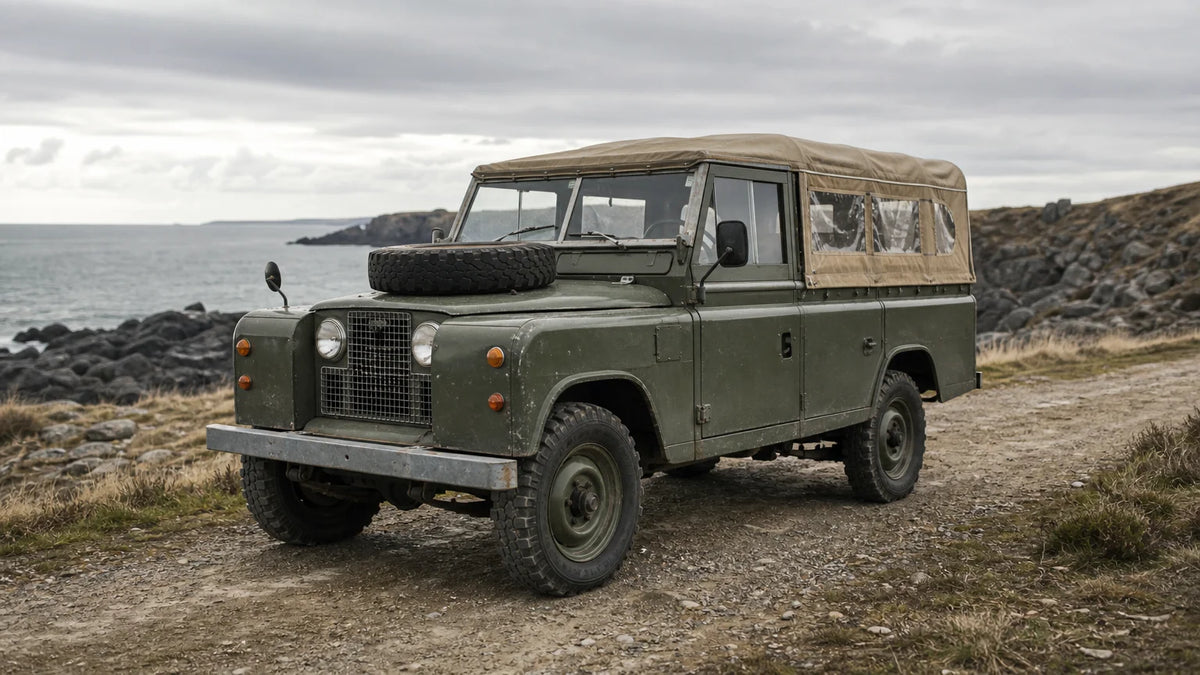
During the Series I, Series II, Series IIA, and Series III eras, the 109 appeared in several forms. Buyers could encounter a pickup, a station wagon, a hardtop utility vehicle, or a canvas-covered body. Some vehicles were later adapted for expedition work, emergency services, agricultural duties, military use, or recreational travel.
The long-wheelbase layout is central to the model's appeal. It offers more carrying capacity than a short-wheelbase Series Land Rover while retaining the upright driving position, exposed mechanical character, and compact footprint associated with the marque's early utility vehicles. It is also important to distinguish a Series 109 from a modern Defender 110, despite the similar numerical reference.

Which Series 109 configuration suits your use?
A collector seeking historical character may prefer a largely original Series IIA or Series III. These versions usually offer a balance between period appearance, parts availability, and a driving experience that remains understandable to owners familiar with classic mechanical systems.
Series I examples are earlier and generally more scarce, but their age can make originality, structural condition, and replacement parts more demanding considerations. Series II models introduced more refined styling and mechanical development, while Series IIA vehicles are widely recognized for their combination of traditional design and practical usability.
Series III models can be appealing when you want a later vehicle with familiar Series styling and a more developed interior. Engine specifications vary by market and year, so you should verify the chassis number, engine number, gearbox, axles, and body configuration rather than relying on a seller's model description alone.
The body style should match your intended use. A station wagon suits touring and family use, a pickup supports equipment transport, and a hardtop can provide a practical base for an expedition build. A vehicle with an unusual conversion may be valuable to the right buyer, but modifications can complicate insurance, registration, originality assessments, and future resale.
In 2026, how rare is a Land Rover 109?
Current availability is difficult to measure globally because historic vehicles are recorded differently by country, model name, and registration system. In the United Kingdom, the latest available 2026 estimate from UK survival data identifies 4,754 Land Rover 109 vehicles, including 1,903 licensed vehicles and 2,851 declared off the road.
Those figures should be read as a guide rather than a complete worldwide census. A vehicle declared off the road may be undergoing restoration, stored as a donor, or retained for occasional use. Conversely, a licensed vehicle may be heavily modified, poorly maintained, or recorded under an imprecise model description.
International records create another layer of uncertainty. A September 1, 2026 registration snapshot from the Netherlands reports Land Rover marque data across many generations, but its headline figures do not isolate every historic 109 configuration. This is why a serious search should combine registration records, auction archives, specialist inspections, and documentation from the vehicle itself.
Rarity alone should not determine your purchase. A well-documented, structurally sound example is usually more useful than a rarer vehicle with unclear provenance, extensive corrosion, or incomplete mechanical records. The strongest candidates combine scarcity with credible history and a condition that supports your intended use.
What should you inspect before buying?
A promising body and attractive paint can conceal significant work underneath. Begin with the ladder chassis, checking the frame rails, crossmembers, spring hangers, outriggers, and areas where mud or moisture may remain trapped. Surface oxidation can be manageable, while deep corrosion, poor repairs, distortion, or concealed plating may require expensive structural correction.
Next, examine the bulkhead, footwells, door frames, seat boxes, floors, and windscreen frame. The bulkhead condition is particularly important because repairs can involve extensive disassembly. Inspect the firewall carefully around hinges, vents, seams, and mounting points.
The drivetrain requires a road test and a specialist assessment. Listen for unusual transfer case noise, examine clutch engagement, test low-range operation, and check whether the vehicle moves cleanly through all available gears. Oil leaks are common on older utility vehicles, but the source, severity, and repair history still matter.
Brakes, steering, suspension, cooling, electrical wiring, and tires deserve equal attention. A rebuilt engine does not automatically make a vehicle safe or reliable if the chassis, brake lines, steering joints, or wiring remain neglected. Ask for invoices, photographs from restoration work, identity records, import papers, and evidence that replacement components were fitted correctly.
Do not treat a fresh repaint as proof of quality. A high-quality restoration should explain what was removed, repaired, replaced, or preserved. When records are limited, budget for an independent inspection before making an offer, especially if the vehicle is located overseas.
Should you preserve originality or choose a restomod?
Originality matters most when your goal is historical preservation, concours presentation, or long-term collecting. A period-correct engine, factory-style body, original interior, and documented color can strengthen the vehicle's historical identity. However, originality may also involve slower performance, weaker braking, limited sound insulation, and less convenience in modern traffic.
A sympathetic restomod can improve usability through upgraded brakes, revised suspension, improved seating, modern cooling, discreet electrical updates, or a professionally installed replacement engine. The trade-off is that modifications may reduce historical purity and make it harder to establish the vehicle's original specification.
There is no single correct answer. The right standard depends on whether you want a preserved artifact, a usable touring vehicle, or a design-led interpretation. For a broader view of how classic Land Rover proportions can be reworked, you can explore our Land Rover Defender 6x6 concept as a contemporary design reference.
When comparing a restored 109 with a modern custom build, assess the engineering objective rather than the visual impact alone. Our custom Defender for sale and our classic Range Rover Defender project illustrate how different approaches can serve different collector priorities.
How should you plan an international purchase?
International sourcing adds practical questions beyond the vehicle's mechanical condition. Confirm whether the vehicle is left-hand drive or right-hand drive, determine which documents accompany the sale, and verify the import, tax, inspection, insurance, and registration requirements in your destination country.
Ask for the chassis number before arranging transport. The identity should correspond with the frame, registration documents, seller records, and any restoration invoices. You should also confirm whether the vehicle is classified as a historic car, modified vehicle, commercial vehicle, or standard passenger vehicle in the destination market.
Model identity is especially important when using modern online databases. A 2026 NHTSA report, for example, concerns specific modern Range Rover and Discovery vehicles from the 2021 to 2026 model years. It does not apply to a historic Series 109, which demonstrates why recall searches must match the exact model, production period, and vehicle identification details.
Transport planning should include enclosed shipping where appropriate, moisture protection, insurance during transit, and a receiving inspection. If the vehicle arrives with undisclosed damage, incomplete parts, or documentation problems, resolving the issue across borders can be difficult. A written purchase agreement should therefore specify the vehicle identity, equipment, condition, included documents, payment schedule, and delivery responsibilities.
What to remember about the Land Rover 109
The Land Rover 109 remains attractive because it combines a practical long-wheelbase layout with unmistakable mechanical character. Your best purchase will be determined by structural integrity, accurate model identification, transparent history, and a clear decision about originality or modernization. Treat rarity as one part of the evaluation, not as a substitute for inspection, documentation, and realistic ownership planning.
Take action with TheArsenale
A Series 109 search often develops into a wider collector question about design, engineering, provenance, and the future of mobility. We bring those perspectives together through a curated luxury mobility marketplace created for collectors, enthusiasts, and clients seeking unusual machines.

When you are ready to explore beyond one historic vehicle, browse Land Rover vehicles and contact our team about your requirements. We provide access to curated machines, sourcing support, and a wider network of builders, designers, and brands. Our Private Membership also provides access to selected vehicles before public listing.
Frequently Asked Questions
What does 109 mean on a Land Rover?
The number refers to the vehicle's approximate 109-inch wheelbase. It identifies a long-wheelbase Series model, not a 1.09-liter engine or a modern model year.
Which Series 109 is most suitable for a collector?
Series I, II, IIA, and III vehicles each offer different levels of rarity, usability, and parts availability. The most suitable example depends on your preference for originality, touring capability, restoration scope, and budget.
Can a Land Rover 109 be used as a daily vehicle?
It can be used regularly when the chassis, brakes, steering, cooling system, and electrical components are properly maintained. Its noise, performance, comfort, and safety equipment remain different from those of a modern vehicle.
What is the most important inspection point?
Begin with the chassis and bulkhead because structural corrosion can create substantial repair costs. Then verify the drivetrain, braking system, steering, identity documents, and restoration history.
Can TheArsenale help with a rare Land Rover search?
Yes, we can discuss your sourcing requirements and the type of machine you are seeking. Our marketplace and sales support are designed for collectors who want curated access to rare mobility objects and high-value acquisition guidance.