Sand Racer Cars: Inside the Ultimate Desert Machines

Picture a machine that floats over dunes at highway speeds, then lowers itself for a paved road home. The appeal is measurable: the specialist segment behind these vehicles is growing at close to 8% annually. For collectors who value engineering as art, the sand racer car sits at the intersection of motorsport, desert culture, and bespoke fabrication. If you appreciate that blend, our Desert Wolves sand racer build shows how far the craft can be pushed.
These vehicles are neither ordinary trucks nor track cars. They occupy a category defined by extremes: minimal weight, maximum traction, and relentless customization. According to an industry analysis, the sandrail market is advancing at a compound annual rate of 8.09%, propelled by adventure tourism and a thriving aftermarket. Understanding what separates these builds from conventional off-roaders is the first step toward appreciating them.
What Makes a Desert Racing Machine Different
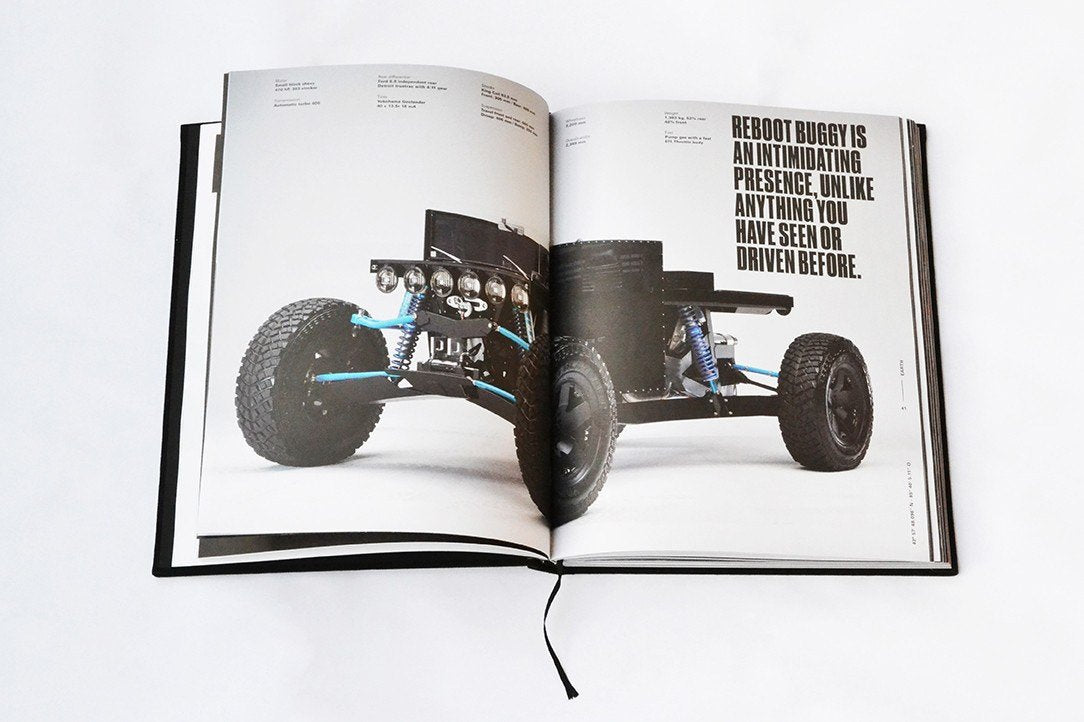
The term sand racer car describes a vehicle built from the ground up for one environment: open, shifting sand. Unlike a truck adapted after the fact, a sandrail starts as a purpose-designed frame. Its priorities are weight, balance, and flotation, not comfort or cargo.
Most builds weigh between 800 and 1,500 pounds. They ride on smooth front tires and grooved rear paddle tires that let the vehicle skim across the surface rather than dig in. A low center of gravity permits sharp turns even on the face of a dune, where taller four-wheel-drive vehicles would simply bury themselves.

From Surplus Jeeps to Space Frames: A Short History
The story begins after World War II, when returning soldiers who had spent years driving Jeeps and half-tracks turned surplus vehicles into the first off-roaders. By 1958, a shortened Volkswagen chassis became the precursor to the modern dune buggy, and fiberglass kits soon followed.
Through the late 1960s and 1970s, enthusiasts chased a lighter, more powerful ideal. They welded frames from metal tubing and mounted the engine at the rear, keeping the front light enough to lift over soft sand. That principle, balancing delicate weight against raw power, still defines the discipline today. The conceptual lineage even reaches into design studios, as our feature on the Dune concept vehicle inspiration illustrates.
Engineering: The Balance of Weight and Power
Early sandrails relied on the air-cooled Volkswagen engine, prized for being roughly 200 pounds and cheap to source. That engine remains a mainstay, though many builders now favor water-cooled Subaru boxer or GM Ecotec units for extra output.
Tuned correctly, a Volkswagen-based unit can reach the 170 to 200 horsepower range, and methanol-fed builds push toward 700 horsepower. The heavier sandcar, by contrast, may weigh several thousand pounds and carry a performance V8. Commercial examples show the ambition of the category: the Zarooq SandRacer 500GT, assembled in the United Arab Emirates, was marketed as an off-road supercar with a road mode that lowers the chassis substantially. Every design decision returns to one calculation, the power-to-weight ratio that governs how a vehicle behaves on a dune.
The Global Off-Road Market in 2026
Desert performance is no longer a fringe hobby. Within the broader off-road sector, market research places the sports segment as the largest share, growing at a compound annual rate of 4.1%. Dune buggies and sand rails are named explicitly as desert-specific vehicles inside that segment.
Tourism amplifies the trend. The dune buggy tour market was valued at 2.5 billion dollars in 2024 and is projected to reach 4.1 billion dollars by 2033. The adjacent all-terrain vehicle market, meanwhile, reached 4.6 billion dollars in 2025, driven partly by adventure sports and expanding tourism. Together, these figures signal steady demand for machines that thrive where pavement ends. For readers drawn to the electrified side of this shift, our overview of off-road UTVs for sandy terrain maps where the technology is heading.

Sandrail, Dune Buggy, or Sandcar? A Quick Comparison
The three terms are often used loosely, yet they describe distinct machines. A sandrail rarely has doors, fenders, or full body panels. A dune buggy is usually a modified road car, and a sandcar is heavier, more powerful, and more refined.
| Category | Typical weight | Body | Typical power source |
|---|---|---|---|
| Sandrail | 800 to 1,500 lb | Open tubular frame, no panels | Air-cooled or boxer engine |
| Dune buggy | Varies by donor car | Fiberglass over modified chassis | Rear-mounted road-car engine |
| Sandcar | Several thousand lb | Full body, advanced suspension | Performance V8 |
Where you acquire such a machine matters as much as the specification. The table below frames the sourcing routes, and our marketplace is built precisely for collectors who want curation and access rather than compromise.
| Acquisition route | Exclusivity | Early access | Design curation |
|---|---|---|---|
| DIY kit build | Low | None | Owner-dependent |
| Mass-market dealer | Low | None | Standardized |
| Our Private Membership | High | Before public listing | Fully curated |
Staying Safe on the Dunes
Speed on sand carries real risk, and most incidents happen when vehicles cannot see one another between dunes. For that reason, many dune areas require an eight-foot antenna whip and flag on every vehicle. Visibility, not horsepower, is often the deciding safety factor.
Beyond visibility, serious builds rely on a three-point belt system, roll bar padding, and fire extinguishers. Advanced setups add arm restraints, netting, and automatic fuel cut-off switches. Helmets and ballistic-grade eye protection have become standard as performance climbs, and organized associations continue to publish dune safety guidance for enthusiasts.
Conclusion
A desert performance machine rewards a rare kind of engineering discipline, where every pound removed and every degree of traction gained changes how the vehicle behaves on sand. The numbers confirm the momentum: with the specialist niche growing near 8% a year and adventure tourism valued in the billions, interest in the well-built sand racer is far from a passing trend. Approach any purchase with clear priorities on weight, power, and safety, and the reward is a machine that few others can match. For collectors, the advantage of working with us is access, we surface curated, exclusive builds before they reach the public. To begin, explore our guide to off-road UTVs for sandy terrain.
Frequently Asked Questions
Is a sand racer street legal?
It depends on your location. Some states, such as Arizona and Utah, permit on-road registration if the vehicle meets minimum insurance and equipment rules, typically a windshield, turn signals, and a license plate. Requirements vary by jurisdiction.
How much power do these vehicles produce?
A tuned Volkswagen-based engine can reach 170 to 200 horsepower, while methanol-fed race builds approach 700 horsepower. Heavier sandcars often use performance V8 engines instead.
Where can collectors find exclusive desert machines?
Curated marketplaces are the most reliable route for rare builds. Through our Private Membership, you can access exclusive mobility vehicles before they are listed publicly, which suits collectors seeking one-off desert machines.