How to Buy Automotive Art Prints With Confidence and Quality
A striking car image can transform a room, but the image itself is only the beginning. The strongest purchase balances subject, scale, materials, and the story behind the work. For a structured starting point, explore our automotive art buying guide.
If you are searching for how to buy automotive art prints, begin by deciding whether you want decoration, a personal tribute, or a collectible object. That decision affects every later choice, including edition size, print surface, framing, budget, and care. You should also consider where the artwork will live, because a bright living room, private office, and garage each create different demands.
What should your automotive art accomplish?
Begin with the role you want the piece to play. A large motorsport image may become the focal point of a lounge, while a restrained blueprint or silhouette can support an existing interior without dominating it. A personal photograph of a car you own creates a different emotional connection from a historic racing poster or an abstract interpretation.
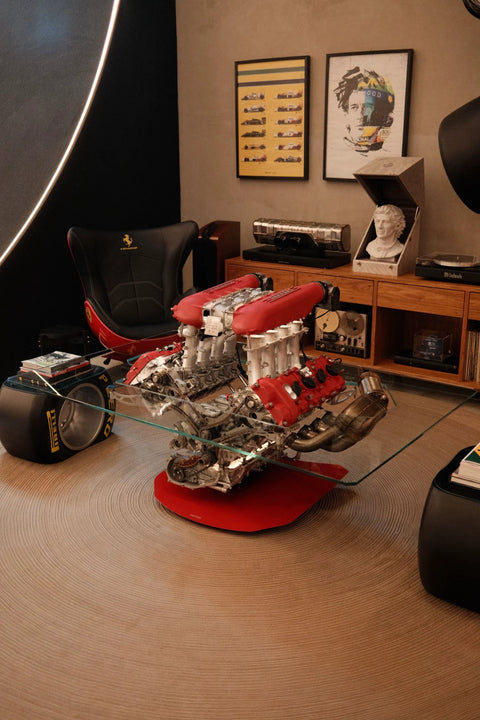
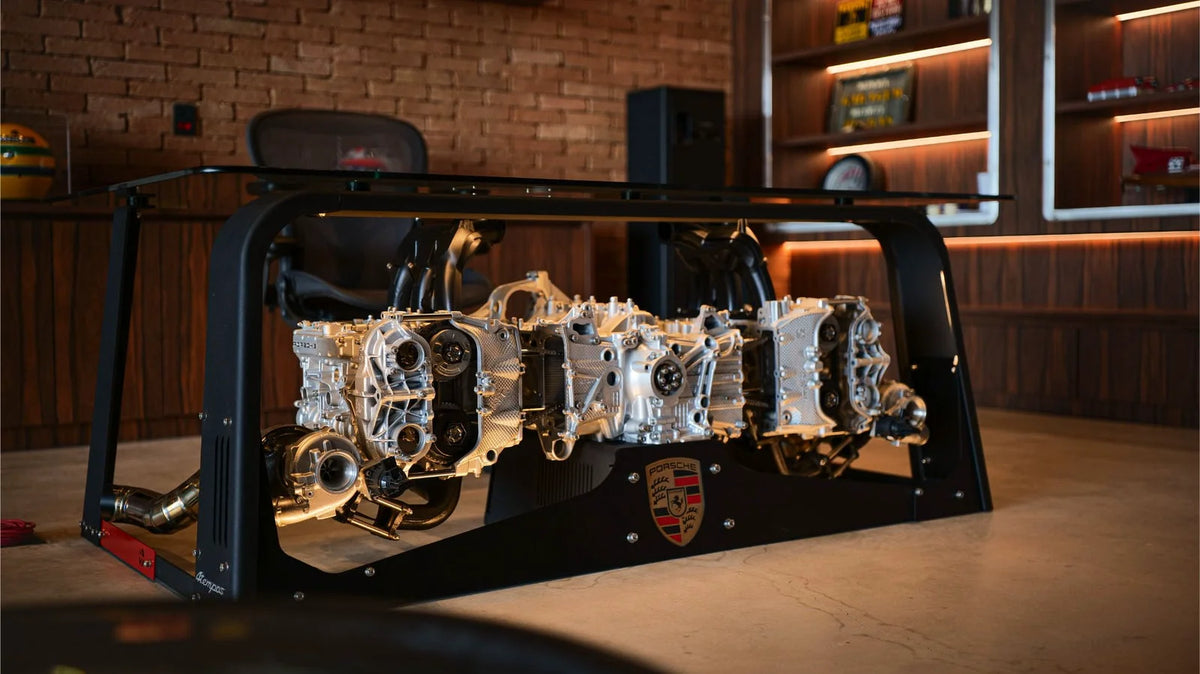
Next, define your buying priority. If you mainly want color and character, an open-edition poster may be sufficient. If you want rarity, documentation, and a stronger collecting experience, look for a signed or numbered edition, a certificate of authenticity, or a work built around genuine mechanical components.
Your budget should follow that purpose rather than lead it. Entry-level prints can provide an affordable introduction to automotive wall art. Premium pieces usually justify their price through materials, production quality, framing, edition control, artist recognition, or provenance. Establishing this distinction prevents you from comparing a decorative poster with a collectible work as if they were identical products.
A closer look at print quality
Consider the artwork at close range, not only in the product photograph. Sharp highlights, smooth gradients, deep shadows, and accurate livery colors are especially important in automotive imagery. Chrome, carbon fiber, paint reflections, and tire textures can lose their character when the source file or printing process is weak.
Read the product description for the print process, ink type, paper weight, and surface finish. Terms such as fine art paper, archival pigment inks, cotton rag, and giclée can be useful, but they should be accompanied by specific material information. A vague claim of premium quality gives you less confidence than a clear description of the paper and process.
A 2026 fine art buyer guide also emphasizes paper types, edition sizes, framing, shipping, and print evaluation as key parts of an informed purchase. Use those details to compare sellers consistently, especially when two images appear similar online.
Ask whether the print is supplied rolled, mounted, or framed. A rolled print may reduce initial shipping costs, but it adds framing work and can remain unused if you do not arrange that step promptly. A ready-to-hang format can cost more, yet it may offer better protection and a more predictable final appearance.
Which subject and style fit your space?
Picture the wall before you choose the car. Classic roadsters and historic race scenes often suit interiors with leather, wood, or traditional architectural details. Contemporary supercars, futuristic motorcycles, and technical studies can work well in modern rooms with glass, metal, and sharper lines.
Popular categories include classic cars, motorsport, Formula 1, racing details, automotive photography, technical blueprints, abstract studies, and minimalist silhouettes. Each category communicates a different mood. A documentary photograph emphasizes authenticity, while an abstract work may communicate speed, tension, or mechanical energy without showing every detail.
Color matters as much as subject. A monochrome print can create a calm, architectural effect. Saturated red, yellow, or blue can become an accent that connects furniture, lighting, or upholstery. Before buying, compare the artwork with the dominant colors already present in the room.
To compare different approaches without narrowing your choice too early, browse our car art prints for sale. The aim is not to copy a trend. It is to identify whether your space needs a quiet portrait, a dramatic racing composition, or a more sculptural expression of automotive design.

When does an edition become collectible?
Edition information changes the nature of a purchase. An open edition can be reproduced without a stated limit, which makes it suitable for accessible decoration. A limited edition has a defined production ceiling, while a numbered edition records your position within that run.
Look for the edition size, print number, artist signature, certificate of authenticity, and any information about retirement once the edition sells out. These details do not guarantee future financial value. They do, however, make the object easier to document and distinguish from an unverified reproduction.
Provenance becomes even more important with vintage motorsport posters, artist proofs, signed photography, and works using original vehicle components. Ask where the image or component came from, who produced the work, and whether the seller can provide supporting documentation.
For photography-led pieces, our best automotive photography prints offers useful context on edition control, materials, and authentication. Use those criteria as a reference when comparing any collector-oriented work, regardless of the artist or seller.
Choose the format before the frame
A material can change the artwork’s visual character as much as its durability. Fine art paper preserves a traditional gallery presence and works naturally with a mat and frame. Canvas introduces texture and a softer presentation. Metal and acrylic create a cleaner, more contemporary effect, often with stronger visual depth and surface presence.
Glossy surfaces can intensify contrast, but they may reflect windows and overhead lighting. Matte finishes usually reduce reflections, although they can present colors with a softer appearance. If you are buying from product photographs, check whether the images show the actual finish or only a digital mock-up.
Size deserves equal attention. A small print may disappear above a large sofa or workbench. An oversized piece may overwhelm a narrow wall or make a room feel visually crowded. Measure the available area, include the frame in your calculation, and use removable tape to mark the intended outer dimensions before ordering.
For a gallery wall, keep one relationship consistent. You might use matching frames, a shared color palette, the same orientation, or a common subject such as endurance racing. Consistency gives different works a deliberate connection without requiring them to be identical.
Verify the seller before you pay
Before completing the order, review the product page as if you were checking a technical specification. Confirm the final dimensions, available materials, frame details, edition status, production time, shipping method, and return conditions. If any of these details are missing, contact the seller before payment.
Product photography can hide important differences. A framed image may be shown in a room, while the purchase may include only an unframed print. A displayed artwork may appear large because of the camera angle. Look for exact measurements and, when available, a scale reference.
Shipping deserves particular attention for international buyers. Confirm whether the artwork ships flat or rolled, whether the frame is included, how damage is handled, and whether customs charges may apply. Packaging is part of the buying experience because a delicate print can be damaged before it reaches the wall.
When you need help comparing paper, framing, and presentation choices, consult our guide to how to choose art prints. Clear questions before purchase are usually more valuable than trying to resolve uncertainty after delivery.
Protect the piece after purchase
Light is one of the main long-term risks for paper-based artwork. Avoid placing the print in direct sunlight or beneath intense lighting. Rotate pieces occasionally if your display receives uneven exposure, particularly in rooms with large windows.
The Canadian Conservation Institute explains that ultraviolet radiation can weaken and yellow paper, while also affecting dyes and pigments. Its conservation glazing guidance supports using UV-filtering materials where exposure is a concern.
Framing should keep the artwork separated from the glazing. The mat or spacer creates room for air circulation and helps prevent the surface from touching glass or acrylic. Choose acid-free or archival materials when the artwork has lasting personal or collectible importance.
The Library of Congress guidance also notes that prolonged light exposure can cause fading, yellowing, discoloration, and embrittlement. Those risks are manageable, but they should influence your choice of wall, glazing, and frame from the beginning.

Use a final buying checklist
Finally, slow down before you click the payment button. A short checklist can reveal gaps that enthusiasm tends to overlook.
- Purpose: Decide whether the piece is decorative, personal, or collectible.
- Subject: Choose the vehicle, era, discipline, or design language that genuinely interests you.
- Quality: Confirm the print process, ink type, resolution, substrate, and finish.
- Edition: Check whether the work is open edition, limited edition, signed, numbered, or accompanied by documentation.
- Scale: Measure the wall and include the complete framed dimensions.
- Lighting: Consider sunlight, glare, reflections, and the need for UV-filtering glazing.
- Delivery: Verify packaging, production time, shipping coverage, customs, and return conditions.
- Seller support: Ask questions if the listing does not explain materials, framing, or provenance.
The best purchase is not necessarily the most expensive print. It is the one whose subject, quality, format, and documentation match the reason you wanted automotive art in the first place.
Choose with intention, then display with care
Buying automotive art prints becomes much easier when you separate emotional appeal from practical evaluation. Start with the role the artwork will play, then compare the image quality, edition details, materials, dimensions, seller policies, and framing requirements. This approach helps you recognize the difference between a temporary decoration and a considered piece that can remain meaningful for years. Give equal attention to the artwork and its environment, because careful placement, appropriate glazing, and controlled light protect the experience you are buying.
Take action with TheArsenale
Once you know what to inspect, the next step is to choose work that reflects your interest in design, engineering, performance, or automotive history. A considered collection should give you room to compare visual languages and select a piece that feels connected to your space.

At TheArsenale, we bring automotive culture into a curated mobility environment shaped by rare machines, design, and collector interest. Explore our automotive art collection to find display-worthy work that can complement a private interior, office, garage, or wider mobility collection.
Frequently Asked Questions
What should you check first when buying an automotive art print?
Start with the purpose, subject, size, and intended location. Then verify the print process, material, edition status, framing, shipping, and return conditions.
Are limited-edition automotive prints better than open-edition posters?
Neither format is automatically better because they serve different purposes. Open editions can suit accessible decoration, while limited editions may appeal more to buyers who value scarcity, documentation, and collectability.
Which material is best for automotive wall art?
Paper offers a traditional framed-art appearance, canvas adds texture, and metal or acrylic can create a modern presentation. Your lighting, room style, viewing distance, and framing preferences should guide the choice.
How can you protect an automotive print from fading?
Keep it away from direct sunlight and intense lighting, and consider UV-filtering glazing. Archival matting and spacers can also help protect the print from contact, pollutants, and unsuitable framing materials.
Where can you find collector-focused automotive art?
TheArsenale provides a curated automotive art collection connected to its wider focus on rare mobility, design, and collector culture. You can also compare specialist artists and sellers, provided you verify edition details, materials, provenance, and delivery terms.