How to Choose a Luxury Watch: A Complete Buyer's Guide
The global appetite for fine watchmaking has rarely been stronger. According to recent industry forecasts, the luxury watch market is projected to reach 62.35 billion dollars in 2026, a figure that reflects sustained demand from collectors and first-time buyers alike. Understanding how to choose a luxury watch is therefore both a practical exercise and an emotional one, because a well-selected piece can accompany you for decades.
Yet the sheer volume of brands, complications and price points can overwhelm even seasoned enthusiasts. Our luxury watch buying guide distills the process into clear stages. According to Fortune Business Insights, the market is expanding at a compound annual rate of 8.47 percent, evidence that a considered purchase today may hold its value tomorrow.
What Truly Defines a Luxury Watch
Before committing capital, it helps to understand what separates a luxury timepiece from an ordinary one. The distinction rests on craftsmanship, materials, movement complexity and heritage. A genuine luxury watch is assembled by skilled artisans, tested rigorously, and built to survive generations rather than seasons.

Value is expressed through several layers. Rare metals such as platinum and eighteen-karat gold, in-house calibres, and certifications like COSC all contribute to the price. So too does brand prestige, which provides quality assurance and a route to strong resale. When you weigh a candidate, ask whether it offers fair value for the money, since a crude movement acceptable in a modest watch becomes unacceptable at higher tiers.
Setting a Realistic Budget
Every knowledgeable buyer begins with discipline. Fine watchmaking always offers a more expensive option, so define both an upper and a lower bound before you shop. Being honest about your ceiling protects you from the emotional overreach that so often accompanies a purchase driven by desire rather than logic.
Budgets broadly divide into tiers. Entry-level and mid-range Swiss pieces deliver excellent engineering, while high-end houses command a premium anchored in exclusivity and legacy. Resale should inform your thinking too, because popular references from the most established brands remain far easier to liquidate. If you plan to explore the full landscape of makers before deciding, our overview of the best luxury watch brands maps the tiers clearly.
| Tier | Typical price range | Characteristics |
|---|---|---|
| Entry luxury | 1,000 to 10,000 dollars | Sourced or in-house movements, established younger brands |
| High-end | 10,000 dollars to millions | In-house calibres, rare materials, legacy heritage |
| Curated through TheArsenale | Varies by piece | Curated timepieces alongside collectible mobility, with early access via Private Membership |
Understanding Movement and Technical Specifications
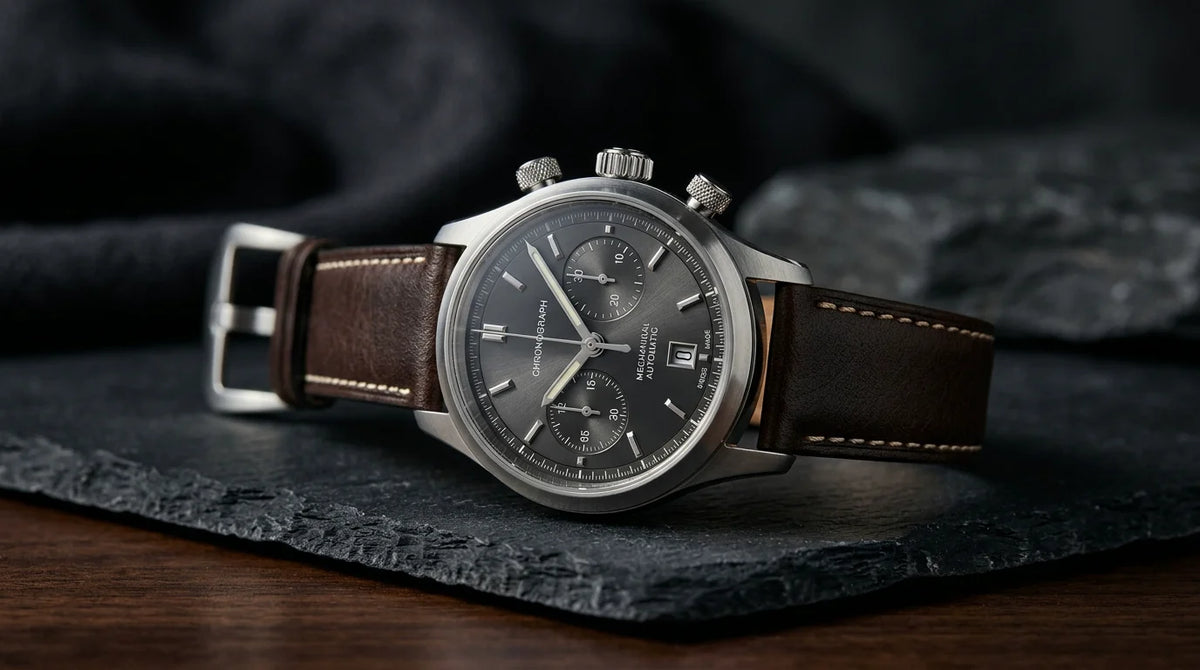
Consider how the watch keeps time. Luxury pieces typically use mechanical movements, either manual-winding or automatic, prized for their craftsmanship and tradition. Quartz movements offer accuracy and convenience but carry less prestige among collectors. Manual calibres require winding, whereas an automatic worn daily may seldom need attention.
Beyond the movement type, examine the technical detail. Assess whether the calibre has been regulated for accuracy, whether the power reserve suits your habits, and whether it resists magnetism. The case material and crystal matter as well: sapphire resists scratches far better than mineral or acrylic. Finishing, from Geneva stripes to hand-applied anglage, separates the exceptional from the merely competent.
A watch is with you almost constantly, more so than even your phone. Choosing one of genuine quality is a decision you will confront every single day.
Matching Style, Size and Fit
Imagine the settings in which you will actually wear the piece. A formal occasion favours an understated dress watch, while an active lifestyle may call for a tool watch with higher water and magnetic resistance. Water resistance ratings deserve particular scrutiny, since a 30-metre rating repels rain but is unsuitable for swimming or diving.

Physical fit is equally decisive. Case diameter, thickness and lug-to-lug distance determine comfort, and the only certain test is to try the watch on in person. If your wrist measures around six inches, cases beyond 40 millimetres may overwhelm it. Match dial colour, marker style and case shape to your personal taste, and consider whether one versatile piece or a growing collection best suits your ambitions.
New, Vintage or Pre-Owned
The choice between new, vintage and pre-owned shapes both cost and experience. A modern piece is generally easier to live with and service, whereas vintage watches demand more expertise and care. The pre-owned route, however, has matured into a serious segment in its own right.
According to Grand View Research, the pre-owned luxury watches market is expected to grow from 35.7 billion dollars in 2026 toward 85.4 billion dollars by 2033, driven increasingly by investment-minded buyers rather than bargain hunters. Recently released models often deliver more watch for the money on the secondary market than a box-fresh equivalent at an authorised dealer, particularly where waitlists stretch for years.
Where to Buy and How to Verify Authenticity
Authenticity is non-negotiable. Buying from an authorised dealer or official boutique guarantees genuine papers, honoured warranties and access to official servicing. Online marketplaces can offer competitive pricing, though they may lack direct brand backing, so verifying a seller's reputation is essential.
Digital channels are gaining trust rapidly. According to Mordor Intelligence, online sales are projected to expand at a 7.34 percent compound annual rate between 2026 and 2031, as certified pre-owned programmes and integrated resale platforms make transactions safer. As a curated marketplace, we give our members early access to sought-after pieces before they are listed publicly, which addresses the scarcity that defines much of this market today.
Caring for Your Investment
A luxury watch rewards diligent ownership. Follow the manufacturer's servicing intervals, typically every three to five years for mechanical watches, and always use a qualified watchmaker. Understanding your warranty terms and after-sales procedure at the point of purchase prevents costly surprises later.
Storage matters for automatic pieces in particular. When a watch sits unworn, it stops and requires resetting, which is why many collectors invest in a winder to keep complications running. Our watch winder buying tips explain how to select the right device for your calibre and rotation needs.
Bringing Your Decision Together
Knowing how to select a luxury timepiece is ultimately a balance between rational criteria and personal conviction. Define your budget, understand the movement, verify authenticity, and confirm the fit on your own wrist. Research protects you from costly mistakes, yet the final choice should feel right. When the numbers, the craftsmanship and the emotion align, you acquire not merely an instrument but a companion that may outlast you and pass to the next generation.
Take action with TheArsenale
Once you have clarified your priorities, the next step is access to pieces worthy of your standards. We built our marketplace for buyers who value curation, discretion and early opportunity across the world of high-end mobility and collectible design.

Explore our curated luxury watches collection and discover timepieces selected for their craftsmanship and character. Through our Private Membership, you gain access to vehicles and collectible pieces before they are listed publicly, and our sales team is available around the clock, usually replying in under thirty minutes.
Frequently Asked Questions
What is the minimum budget for a genuine luxury watch?
Entry luxury pieces generally begin around 1,000 dollars, while high-end references extend from 10,000 dollars into the millions. Setting both an upper and a lower bound before shopping helps you avoid emotional overspending.
Are mechanical or quartz movements better for a luxury watch?
Mechanical movements, whether manual or automatic, carry the greatest prestige and craftsmanship among collectors. Quartz offers superior accuracy and convenience, though it commands less standing in the fine-watch world.
Is buying a pre-owned luxury watch a sound decision?
Yes, the pre-owned segment has matured into a respected, investment-driven market. You can often acquire a recently released model for less than a new equivalent, provided you verify authenticity and condition carefully.
How can I be certain a luxury watch is authentic?
Purchase from an authorised dealer, official boutique or a reputable curated marketplace that guarantees provenance. Confirm that original papers, warranty coverage and servicing history accompany the piece before completing any transaction.
How often should a luxury watch be serviced?
Mechanical watches typically require servicing every three to five years by a qualified watchmaker. Regular maintenance preserves accuracy, protects the movement and helps sustain long-term value.