How to Choose a Paddleboard for Every Water Adventure
A board that looks impressive on shore can feel unstable, slow, or awkward on the water. Learning how to choose a paddleboard starts with matching your main activity and conditions to the board’s shape, size, and construction. For a premium design perspective, read our best luxury paddleboards.
Your ideal paddleboard may be designed for relaxed lake paddles, coastal exploration, yoga, fishing, touring, surfing, or racing. These activities place different demands on stability, glide, maneuverability, storage, and carrying capacity. By evaluating your priorities before comparing products, you can avoid paying for features you will rarely use or choosing a board that limits your progress.
How to choose a paddleboard by intended use
Imagine two paddlers buying boards for completely different weekends. One wants short, relaxed outings on a calm lake. The other wants to cover long distances with camping equipment. They should not choose the same board, even if they have similar body weights.
An all-around paddleboard is usually the most versatile option for beginners, families, casual recreation, and mixed conditions. It normally combines moderate width, a stable outline, a rounded nose, and enough maneuverability for general use. This category is suitable when you want one board for relaxed cruising, light fitness work, occasional family outings, and exploring sheltered water.
A touring paddleboard is more appropriate when distance and efficiency matter. Touring shapes are generally longer and narrower, with a pointed nose that helps the board track straighter and glide more efficiently. They can carry useful gear, but they may feel less forgiving when you are still developing your balance.
Surf paddleboards are shorter and more maneuverable. They are designed to turn quickly and handle waves, but they sacrifice some straight-line efficiency. Racing paddleboards are longer, narrower, and optimized for speed. They are best suited to experienced paddlers who value performance over maximum stability.
For most first-time buyers, an all-around inflatable board is a sensible starting point. If you are considering a more design-led purchase, our how to buy a luxury paddleboard guide can help you assess craftsmanship, style, and practical ownership factors together.
Which water conditions will shape your choice?

A calm lake, a tidal coastline, and a moving river create different challenges. Wind, current, waves, shallow water, launch points, and the distance from shore should all influence your decision.
For calm lakes and sheltered bays, stability and ease of use usually matter more than outright speed. A wider all-around board with a comfortable deck pad can make standing, kneeling, and changing direction easier. If you regularly paddle in windy conditions, a board with a manageable profile can be easier to control than an oversized model that catches more wind.
For longer coastal trips or inland touring, prioritize efficient tracking and storage. A longer board with a pointed nose can cover distance with less effort, while front cargo bungees or tie-down points provide space for dry bags, clothing, food, and water. Keep the deck organized, because excessive hardware can make movement and remounting less comfortable.
Surfing requires a different balance. A shorter board with a more maneuverable shape can help you turn on a wave, but it may feel less stable on flat water. River paddling may require additional attention to durability, fin clearance, leash choice, and local conditions. Never assume that a board suitable for a calm lake is automatically appropriate for moving water.
Inflatable or solid: which construction is right for you?
Consider your home and vehicle before considering the board’s appearance. A high-performance solid board is not practical if you cannot store or transport it safely, while an inflatable board may be ideal for a small apartment, shared vehicle, or frequent travel.
Inflatable paddleboards are compact when deflated, easier to store, and generally simpler to transport without a roof rack. They can also be more forgiving around docks, gravel, and accidental contact with the shoreline. A quality inflatable board should feel firm when properly inflated, with a rigid surface that supports efficient paddling.
Solid boards provide a direct connection with the water. They typically offer excellent glide, precise responsiveness, and a wider range of specialized shapes. These advantages are valuable for surfing, racing, performance touring, and paddlers who have suitable storage and transportation.
Construction quality matters more than the label alone. With an inflatable board, examine the drop-stitch construction, outer material, seams, inflation pressure, valve, handles, and included pump. With a solid board, consider the core, outer laminate, weight, repairability, and resistance to the conditions where you will use it.
Choose an inflatable board when portability, storage, and everyday practicality are central priorities. Choose a solid board when maximum glide, precise handling, and specialized performance justify the additional logistics.
How should you match dimensions to your body and load?
For many adults, a general-purpose board around 10 to 11 feet long and approximately 32 to 34 inches wide offers a useful starting point. These figures are not universal rules. Your weight, balance, activity, experience, and extra passengers should determine the final choice.
Length influences speed, tracking, turning, and transport. Shorter boards are easier to turn and can suit children or surfing. Medium-length boards are versatile for recreational use. Longer boards glide efficiently and track straighter, which benefits touring and fitness paddling.
Width affects side-to-side stability. A wider board generally feels more secure, especially for beginners, yoga, children, dogs, or extra equipment. However, excessive width can make the board slower and force you to reach farther over the rail with every stroke.
Thickness contributes to volume and rigidity, particularly on inflatable models. More thickness is useful when you need additional support, but it does not automatically make a board better. A board that sits too high above the water can feel more affected by wind and may be harder to remount.
Always check the stated weight capacity, then calculate your total load. Include your body weight, clothing, water, food, safety equipment, dry bags, and any child or dog who may ride with you. Staying comfortably below the maximum capacity usually produces a more stable and efficient ride than buying a board that only technically supports the load.
What do hull shape, fins, and deck design change?
A board’s underside often reveals more about its behavior than its graphics. The two main hull designs are planing and displacement, with some boards combining features of both.
A planing hull is relatively flat and wide. It rides on top of the water, feels stable, and turns readily. This shape is common on all-around boards, yoga boards, recreational models, and many inflatable SUPs.
A displacement hull has a pointed nose that cuts through the water. It improves glide and straight-line tracking, making it useful for touring, fitness, and racing. The trade-off is reduced maneuverability and a greater need for correct sizing and balance.
Fins also affect how a board tracks and turns. A larger center fin generally supports straighter tracking, while smaller or multiple fins can improve control and maneuverability in certain conditions. Removable fins are convenient for storage, replacement, and travel, while standardized fin systems may make future upgrades easier.
Look closely at the deck. A comfortable, grippy deck pad helps with standing and kneeling. Front bungees can secure light gear, while accessory mounts are useful for fishing, photography, or a compatible seat. However, unnecessary attachment points can clutter the standing area and make it harder to climb back onto the board after a fall.
Which accessories and safety equipment are essential?
A paddleboard is only part of the system. A board with poor accessories can make every session tiring, even when its dimensions are suitable.
The paddle should be light enough for comfortable repeated strokes and adjustable or correctly sized for your height. A heavy paddle can create unnecessary fatigue. The pump should be practical for the board’s volume, and an electric option may be useful if you inflate frequently, provided it is compatible with the valve and intended use.
Check whether the package includes a fin, leash, repair kit, carry bag, and paddle. Some premium boards are sold without every accessory because experienced paddlers prefer to select components separately. That can be beneficial, but it increases the total cost and requires more planning.
Your essential safety gear should include a properly fitted personal flotation device or buoyancy aid where required, a leash suited to the environment, a whistle or signaling device where required, and a dry bag for communication equipment and valuables. Add suitable clothing for the water temperature, not only the air temperature.
Use the correct leash for the setting. Surf, flat-water, and river environments can require different designs. Before launching, inspect the valve, fin, leash connection, and board surface. A short preparation routine can prevent avoidable problems on the water.
How much should you spend on a paddleboard?
Price should reflect how often you expect to paddle, how demanding your conditions are, and how long you want the board to remain useful. The cheapest option is not always the most economical if it flexes excessively, includes weak accessories, or has limited support.
Entry-level boards can suit occasional use on calm water, but examine the materials, seams, pump, paddle, fin system, and warranty carefully. Mid-range boards often provide a better balance of durability, stability, accessories, and long-term value. Premium boards may justify their cost through lighter construction, refined shapes, stronger materials, distinctive design, and better support.
Do not compare prices by looking at the board alone. Calculate the full package, including a paddle, pump, leash, fin, storage bag, safety equipment, transport solution, and possible repairs. A board with a lower purchase price can become more expensive if essential items must be replaced immediately.
Brand support also matters. Look for clear warranty terms, accessible replacement parts, repair guidance, and a reliable customer service team. If you are considering distinctive materials or a design-focused purchase, our designer paddleboards for sale selection offers another way to evaluate aesthetics alongside function.
For wooden or wood-finish boards, compare the visual treatment with the actual construction. A decorative surface does not necessarily indicate a wooden core. Our wooden paddleboard price guide can help you think about materials, craftsmanship, and ownership value before making a decision.
What mistakes should you avoid before buying?
One common mistake is choosing a board because it looks fast. Narrow racing and touring shapes may appear advanced, but they can be frustrating if your primary goal is relaxed recreation or family use.
Another mistake is relying only on the advertised load rating. Capacity does not fully describe stability, glide, board feel, or ease of remounting. Consider the complete combination of length, width, thickness, volume, outline, hull shape, and construction.
Many buyers also overlook storage and transport. Measure your available space, consider the distance from your vehicle to the water, and decide whether you can safely carry a solid board. An inflatable model may be the better choice if convenience determines how often you will actually use the board.
Finally, do not let a long accessory list replace careful evaluation. A clean deck, reliable fin, suitable paddle, durable construction, and appropriate safety equipment are more valuable than features you will rarely use. If possible, rent or test similar boards before buying, then compare how they feel when standing, turning, carrying, and getting back on.
Choose for the experience you want
The best way to choose a paddleboard is to begin with your real habits, not a product photograph or a single specification. Identify your water conditions, main activity, experience level, body weight, total load, storage space, and transport needs. Then select the construction, hull shape, dimensions, accessories, and budget that support those priorities. A well-matched board should feel stable enough to build confidence while offering enough performance to remain useful as your skills develop.
Take action with TheArsenale
Once you understand the practical criteria, you can give equal attention to the board’s visual identity and the experience it creates on the water. That matters when your paddleboard is part of a considered lifestyle, a collection, or a distinctive leisure setting.

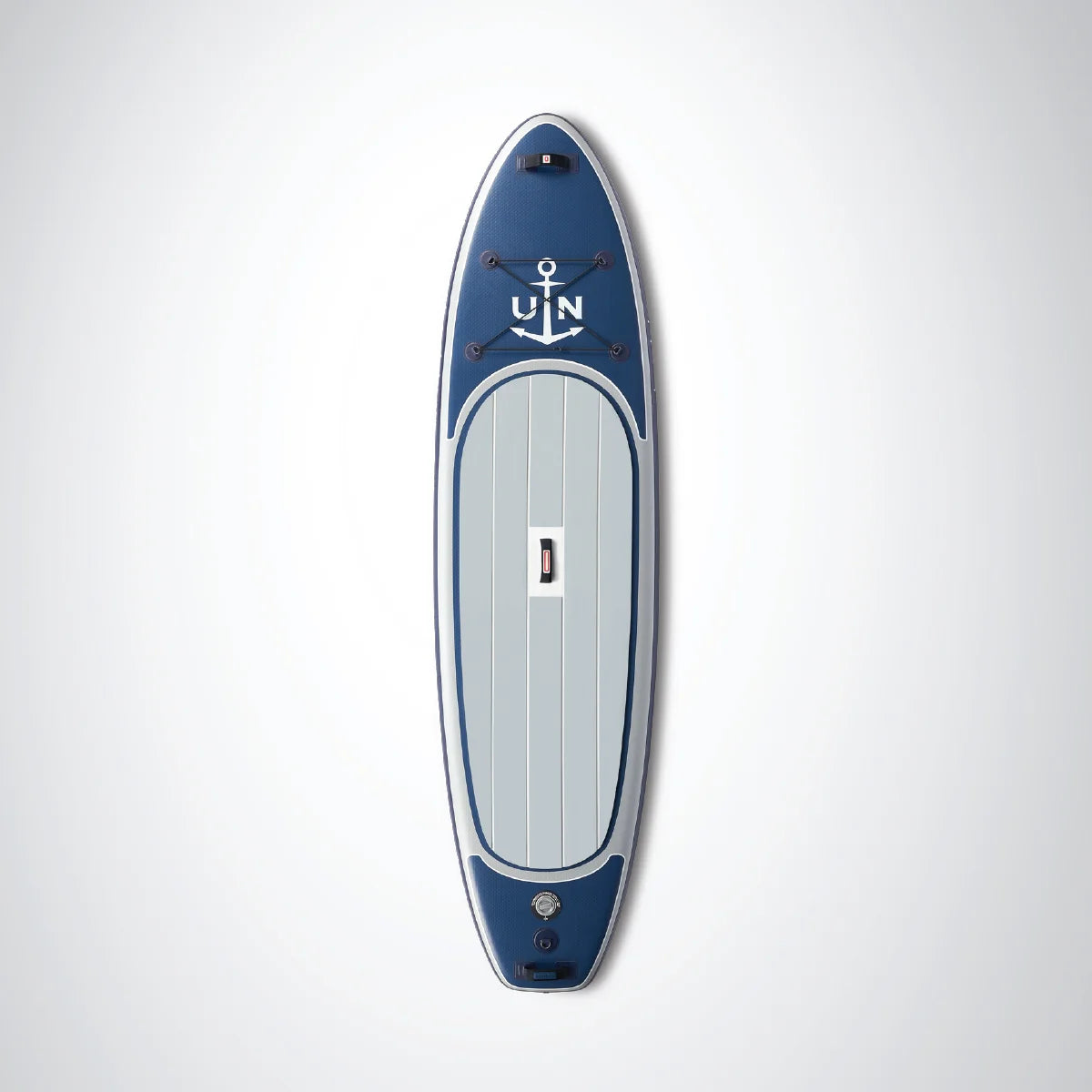
We curate rare and design-led mobility objects, including selected watercraft and lifestyle collaborations. If you are looking for a paddleboard that combines strong visual character with a premium ownership experience, explore the Vilebrequin paddleboard as a distinctive option.
Frequently Asked Questions
What type of paddleboard is best for most beginners?
An all-around inflatable paddleboard is usually the most practical starting point. It combines stability, portability, durability, and versatility for calm water, casual outings, and skill development.
Should you choose an inflatable or solid paddleboard?
Choose an inflatable board when storage, transport, and durability are important. Choose a solid board when you have suitable storage and prioritize direct handling, speed, surfing, racing, or performance touring.
How wide should a paddleboard be?
Many adult beginners feel comfortable on a board around 32 to 34 inches wide. Larger paddlers, families, and people carrying dogs or equipment may benefit from additional width, while experienced paddlers may prefer a narrower design.
Does a higher weight capacity always mean a better board?
No. A high capacity rating does not guarantee efficient handling or comfortable stability. You should consider the board’s dimensions, volume, construction, hull shape, and the combined weight of the paddler and equipment.
What should you check before buying a paddleboard?
Check the intended use, water conditions, construction, dimensions, capacity, fin system, deck layout, included accessories, warranty, storage requirements, and transport method. Also confirm that you have the required safety equipment before launching.