How to Value Racing Memorabilia: A 2026 Collector's Guide
A single race-worn helmet can change hands for six figures, yet an almost identical replica may be worth a few hundred. The gap is never accidental. It reflects the discipline of assessment, where the true value of racing memorabilia is measured against evidence rather than emotion. For collectors who wish to understand this discipline, our Senna memorabilia guide offers a useful starting point.
The stakes are considerable. The global sports memorabilia market was valued at $51.2 billion in 2026 according to Market Decipher, and motorsport artifacts now attract serious investors. Learning how to value racing memorabilia is therefore no longer a hobbyist's curiosity. It is a practical requirement for anyone who buys, sells or insures a collection.
What Determines the Worth of Motorsport Collectibles
Why do two similar items carry such different price tags? The answer lies in a small set of measurable factors. Every credible appraisal of motorsport collectibles weighs authenticity, provenance, condition, rarity and the reputation of the athlete or event behind the piece.
These variables interact. A signed glove from an obscure driver rarely rivals a comparable item linked to a champion. Interest in the category is broad and growing, since the wider collectibles field draws rising numbers of investors who treat autographs and game-used gear as alternative assets. When you assess a piece, rank these factors deliberately rather than reacting to a single impressive feature.

Authentication: The Foundation of Any Valuation
No valuation survives without proof of authenticity. A forged signature or a replica sold as genuine collapses the entire figure to zero. This is why serious buyers insist on independent verification before any money changes hands.
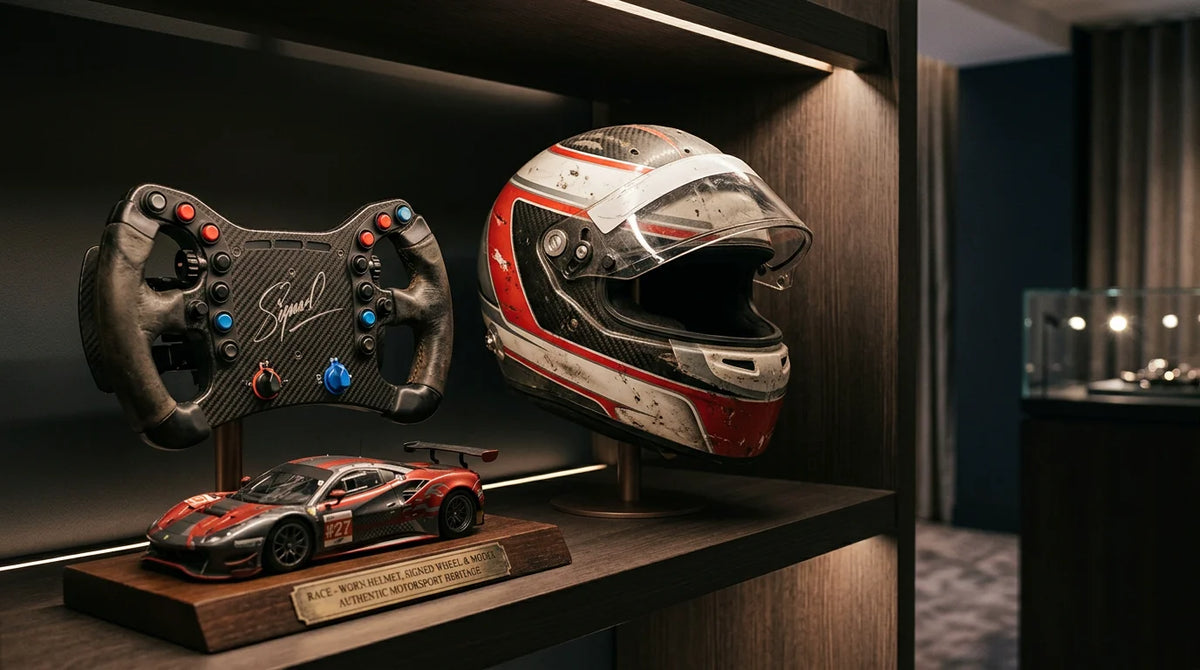
Authentication follows recognizable patterns. Experts study signatures against known exemplars, examine materials and inspect technical fitment. Genuine race-worn helmets, for instance, carry specific hardware such as radio connectors and head restraint anchors. When you acquire a piece such as an Original signed race helmet, insist on a certificate of authenticity from a reputable auction house, dealer or third-party authenticator. Photographic documentation of the moment an item was signed adds considerable weight.
How Provenance Multiplies Value
Consider two identical steering wheels from the same season. One arrives with a plain description; the other includes team paperwork, race logs and a photograph of the driver using it. The second will command a premium, sometimes several times higher. Provenance, the documented ownership and event history of an object, transforms a curiosity into a trophy.
Provenance answers the questions a serious buyer will ask. Where did the item come from? Which race did it serve? Who owned it before you? In 2026, many houses reinforce this chain with blockchain-backed records and high-provenance holograms, according to motorsport collecting coverage. The stronger the paper trail, the smaller the buyer's risk, and the higher the price a piece can justify.
Grading Condition and Rarity Accurately
Condition is where honesty pays. A game-used component is expected to show wear, yet undisclosed damage, restoration or missing parts erodes value quickly. Grade each item candidly, noting scratches, fading, repairs and completeness. Buyers reward transparency and punish surprises.
Rarity then sharpens the estimate. Limited production runs, one-of-one technical parts and items tied to landmark races carry scarcity that mass-produced merchandise cannot match. Race-worn helmets and suits are frequently described as the category's most personal and sought-after objects. If you are building a themed set, you may wish to Browse racing emotion memorabilia pieces to compare how condition and rarity present across curated examples.

Using Comparable Sales and Market Data
Where should a final number come from? From the market itself. The most reliable estimate emerges when you compare your item against recent auction results for near-identical pieces in similar condition. This method anchors your valuation in real transactions rather than optimism.
Context matters when reading these figures. The United States racing and individual sports sector alone reached a market size of $17.2 billion in 2026, per IBISWorld, and interest tends to rise once a driver retires and secures a legacy. Track prices across multiple sales, note the condition and grade of each comparable, and adjust for provenance. A single outlier result should never set your expectation.
Valuation Routes Compared
Different goals call for different valuation routes. The table below summarizes common options, including our own curated marketplace, so that you may match the method to your need.
| Route | Best for | Speed | Provenance support |
|---|---|---|---|
| Curated marketplace (TheArsenale) | Buying and selling high-end pieces with vetted provenance | Ongoing access, replies within 30 minutes | Curated, provenance-led selection |
| Online appraisal service | Quick indicative estimates | 24 to 48 hours | Photo-based only |
| Auction house valuation day | Free in-person estimates | Scheduled events | Specialist inspection |
| Local dealer | Casual, single items | Variable | Often limited |
Each route has a purpose. Photo appraisals deliver speed, auction specialists offer scrutiny, and a curated marketplace connects verified pieces with committed buyers. Choose according to whether you seek a quick figure or a considered, provenance-led valuation.
Bringing the Valuation Together
Understanding how to value racing memorabilia comes down to method rather than instinct. Confirm authenticity first, then document provenance, grade condition honestly and benchmark against recent comparable sales. When these four pillars align, your estimate becomes defensible to buyers, sellers and insurers alike. Treat each factor as evidence, seek independent verification when the stakes are high, and revisit your figures as the market moves. Discipline, not enthusiasm, protects the worth of a serious collection.
Take action with TheArsenale
Once you understand what drives value, the next step is finding pieces that already carry verified provenance and expert curation. That is precisely where a specialist partner saves you time and reduces risk.

As a luxury mobility marketplace, we curate motorsport machines and collectible pieces with provenance and quality in mind, and our team usually replies in less than 30 minutes. Explore our Formula 1 memorabilia selection to discover curated pieces, and ask about Private Membership for access to items before they are listed publicly.
Frequently Asked Questions
What is the single most important factor in valuing racing memorabilia?
Authenticity is the foundation of every valuation. Without independent verification, provenance and condition become irrelevant, because a piece that cannot be proven genuine holds little market value. Always secure a certificate from a reputable authority first.
Does a certificate of authenticity guarantee a high price?
A certificate confirms legitimacy, but price also depends on provenance, condition, rarity and the fame of the driver or event. A genuine item from an unknown participant will still trade below a comparable piece linked to a champion. Certification protects value rather than inflating it.
How do I find comparable sales for my item?
Review recent auction results for near-identical pieces in similar condition and grade. Track several sales rather than one, and adjust for differences in provenance and completeness. This benchmarking anchors your estimate in real transactions.
Where can I buy or sell curated racing memorabilia?
You may use online appraisal services, auction houses or a curated marketplace. Our Formula 1 collection curates pieces with provenance and quality in mind, and our team usually replies within 30 minutes. Private Membership also offers access to items before public listing.
Does a driver's retirement affect memorabilia value?
Value often rises once a driver retires and establishes a lasting legacy. Scarcity increases as careers close and demand consolidates around confirmed icons. Items tied to landmark races and championships tend to appreciate most.