Luxury Watch Stands for Sale: How to Choose the Right One
A fine timepiece deserves more than a temporary place beside your keys. A considered display can protect the case and bracelet while making the watch part of your interior. If you are comparing luxury watch stands for sale, begin with the watch itself, then consider your space, habits, and preferred materials. Our luxury watches collection reflects the same attention to design, rarity, and presentation that makes a dedicated stand worthwhile.
The market includes simple single-watch holders, sculptural desktop pieces, multi-watch displays, and retail-style showcases. A May 28, 2026 supplier analysis reports continued growth in display solutions, while also showing a wide range of materials and features. That variety makes careful evaluation more important than choosing a stand based only on appearance.
What should you look for in a luxury watch stand for sale?
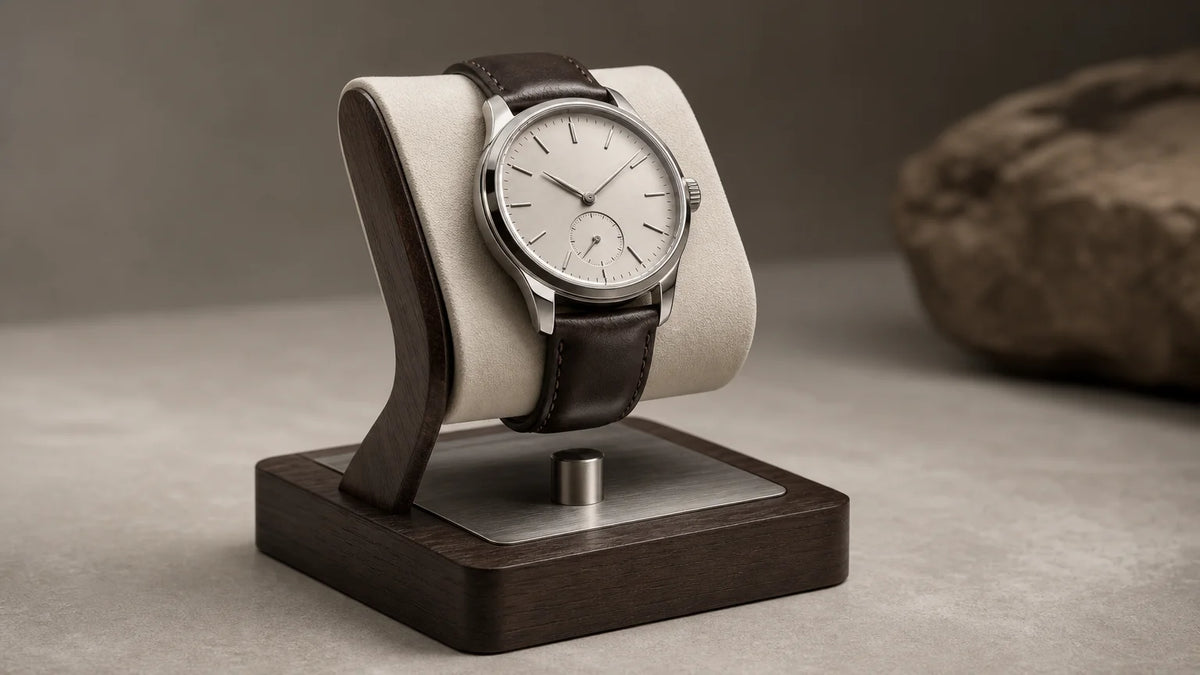
The first question is practical: will the stand hold your watch securely every day? A well-designed holder should remain balanced when you place or remove a watch. Its arm or cushion should support the bracelet without forcing it into an unnatural bend. The contact area should also be smooth, soft, and free from rough edges.
Stability comes first. A wide or weighted base is useful for large sports watches, chronographs, and watches with substantial bracelets. A narrow sculptural stand may look refined, but it can become frustrating if it tips whenever you reach for your watch. Check the relationship between the base, support arm, and expected watch weight before purchasing.
Height also affects usability. A stand that is too low can make the watch difficult to read, while one that is too tall may dominate a small bedside table. The ideal proportion gives you a clear view of the dial without turning the piece into an obstruction.
Look for a non-slip underside if the stand will sit on lacquered wood, glass, stone, or polished metal. This small detail limits movement and reduces the chance of accidental knocks. It also protects the furniture beneath the stand from small scratches caused by repeated repositioning.
Which materials create a refined and protective display?

Imagine placing a valuable watch on a stand that looks impressive but uses untreated metal at the contact point. The visual design may be attractive, yet the construction could expose the watch to unnecessary abrasion. Material selection should therefore be judged by both appearance and the way each surface interacts with the timepiece.
Soft contact materials such as leather, nubuck, suede, microfiber, or carefully finished fabric can provide a gentle resting surface. They should be tightly fitted and free from loose fibers. Avoid exposed stitching or decorative hardware where the caseback, clasp, or bracelet could touch it.
Wood brings warmth and visual depth to a display. Dark walnut tones can suit a study or library, while lighter finishes can work in contemporary interiors. However, the wood should be properly finished, and the base should have enough mass to remain stable.
Metal can provide a precise, architectural appearance. Aluminum, steel, and brass-style finishes are often used for sculptural holders. The important consideration is not simply the metal itself, but whether the watch rests on a padded or protected surface.
A 2026 supplier analysis also lists wood, leather, metal, acrylic, marble, and anti-scratch surfaces among the options available in the current market. Treat these categories as starting points, not proof of quality. The finish, assembly, padding, and base construction will determine how well a particular product performs.
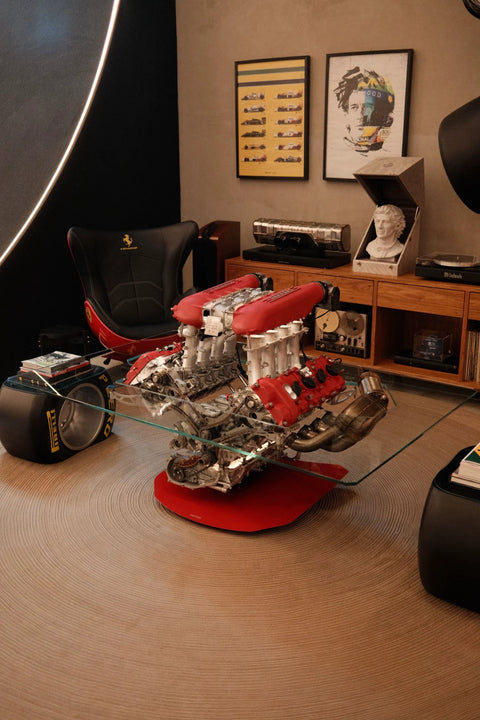
If you want the display to connect with a broader collection of mechanical objects, our Ferrari engine watch winder offers a more substantial presentation concept for multiple automatic watches. A stand and a winder serve different purposes, but they can coexist in a carefully planned display area.
Should you buy a single-watch stand or a multi-watch display?
A single-watch stand works well when one timepiece receives most of your wrist time. It keeps the watch visible, easy to reach, and separated from other objects. This format is also appropriate for a sentimental watch, a recent acquisition, or a piece that you want to present as a small design object.
Single-watch holders require precise proportions. The support should accommodate the watch without making a smaller dress watch appear lost. It should also provide enough room for larger cases and bracelets without pressing them against the base.
Collectors with two to five watches may prefer several matching stands. This arrangement creates a clean visual rhythm and lets you organize watches by occasion, color, complication, or strap. It also avoids the crowded appearance that can result from placing several watches on one narrow platform.
For larger collections, a multi-watch display can be more efficient. It may reduce clutter and make the collection easier to review. However, individual compartments should still prevent watches from touching one another. Capacity should never come at the expense of separation or access.
As of the 2026 crawl, eBay grouped watch stand listings by capacity, including one to three watches, four to seven watches, eight to twelve watches, and larger formats. Its category also showed wood, leather, metal, acrylic, velvet, and glass options. These listings illustrate market variety, but they do not establish consistent construction standards.
Is a watch stand better than a watch box?
The answer depends on when and why you use it. A stand is designed for visibility and quick access. A box or watch roll is generally more suitable for long-term storage, travel, and protection from dust or accidental contact.
Daily display favors a stand. When your watch is visible, you can identify it quickly and place it down without leaving it on a hard surface. This can make your morning and evening routines more orderly.
Long-term storage requires a different set of priorities. A box can offer a lid, enclosed compartments, and greater protection from environmental exposure. It can also accommodate a larger collection in a compact footprint.
Many collectors use both formats. The watch in daily rotation remains on a stand, while the rest of the collection stays in a box or roll. This approach balances accessibility with organized storage.
A stand should not be presented as a replacement for specialist care. It does not regulate an automatic movement, prevent every form of dust exposure, or remove the need for periodic servicing. Its role is simpler, it provides a stable and considered resting place between wears.
How can you assess an online listing before buying?
Online presentation can make almost any stand appear luxurious. Before you purchase, inspect the information beneath the product photography. Look for exact dimensions, materials, base weight, cushion construction, and compatibility with different bracelet or strap types.
Dimensions matter more than expected. A stand designed for a slim dress watch may not accommodate a broad dive watch. Measure the watch, bracelet circumference, and available surface area. If the listing provides only general phrases such as “fits all watches,” ask for specific measurements.
Review the product photographs for contact points. The watch should rest on padding rather than on a sharp edge or exposed fastening. Pay attention to the underside as well. A smooth or non-slip base is particularly useful on polished furniture.
Seller terms deserve equal attention. Confirm dispatch timing, returns, international delivery, taxes, and packaging. If the product is sold through a marketplace, determine whether the seller or platform handles customer support.
A Walmart marketplace listing for a watch display stand notes that warranty terms for third-party sellers may differ from the terms shown on the platform. That reminder is relevant to any online purchase. Request written clarification when warranty coverage, damage in transit, or returns are not clearly stated.
For the watch itself, our luxury watch buying guide can help you think through design, function, and long-term appeal. Those same criteria are useful when selecting the object that will present and support the watch in your home.
How should a luxury watch stand fit your interior?

Consider the surface where the stand will live. A bedside table calls for a compact, stable design that is easy to reach in low light. A desk may accommodate a more architectural object, especially if the watch is part of a wider collection of design pieces.
Interior compatibility involves more than matching colors. Repeated shapes, textures, and finishes create visual coherence. A warm wooden stand can connect with leather goods and furniture. A dark metal design may suit a technical, modern, or monochrome workspace.
Scale is equally important. A large stand can overwhelm a narrow console, while a very small holder may disappear on a broad surface. Leave enough space around the watch so it remains the focal point rather than becoming part of a crowded arrangement.
Lighting can improve the display, but direct sunlight should be considered carefully. Strong light may create reflections on the crystal and can affect certain materials over time. Soft ambient lighting usually presents the watch more comfortably.
If your display includes automotive or mechanical objects, keep the arrangement deliberate. Our guide on how to choose a luxury watch explores the relationship between a watch, its character, and the way it fits your personal style. The stand should support that identity without competing with it.
What is the most sensible buying decision?
Begin with your daily behavior rather than the product label. If you wear one watch most days, select a stable single-watch stand with soft contact points. If you rotate several pieces, choose multiple holders or a separated multi-watch display.
Then evaluate the construction. Check the base weight, contact material, dimensions, underside, and finish. These details affect safety and usability more directly than decorative elements.
Finally, confirm the seller terms. Clear specifications, transparent returns, suitable packaging, and defined warranty conditions reduce uncertainty. A luxury accessory should offer confidence before it arrives, not require difficult questions afterward.
Choose a Stand That Serves the Watch
A luxury watch stand should combine protection, balance, proportion, and visual character. The right choice depends on your watch size, collection, interior, and daily routine. Focus on the contact surface and structural stability first, then select the material and design that make the display feel intentional. A thoughtful stand turns storage into a practical ritual without compromising the character of the timepiece.
Take action with TheArsenale
Your display deserves the same care as the object it presents. When a watch is part of a wider appreciation for engineering, design, and rare objects, its surrounding environment becomes part of the experience.

We invite you to explore our curated selection of luxury watch stands and consider how a dedicated holder can bring greater order and presence to your collection. TheArsenale connects distinctive watches and mobility-inspired objects through a design-led international marketplace, supported by curated products and a broader culture of extraordinary machines.
Frequently Asked Questions
What makes a watch stand suitable for a luxury timepiece?
A suitable stand has a stable base, smooth edges, and soft contact surfaces. It should support the case, bracelet, or strap without forcing the watch into a sharp bend.
Can a single stand hold a large sports watch?
It can, provided the base is stable and the support arm accommodates the watch dimensions. Check the listed measurements and confirm that the bracelet does not contact the base or surrounding hardware.
Should you choose wood, metal, or leather?
Choose based on the stand’s construction and contact points rather than the material name alone. Wood offers warmth, metal creates a precise appearance, and leather or nubuck can provide a soft, refined resting surface.
Is a watch stand appropriate for long-term storage?
A stand is generally better for daily access and display. For travel, dust protection, or larger collections, a watch box or roll is usually more suitable.
What should you check before buying from an online seller?
Review dimensions, materials, base stability, delivery terms, returns, packaging, and warranty coverage. If a marketplace listing uses a third-party seller, request clarification about who handles support and warranty claims.