Limited Edition Art Print Buying Guide for Smart Collectors
If you are searching for a limited edition art print buying guide, begin with the work itself, then test the documentation behind it. Our article on how to choose art prints can help you define the visual qualities, subject, scale, and atmosphere that suit your collection before you compare market details.
A limited edition print is not automatically a good purchase because it is numbered or described as rare. Its appeal depends on the relationship between the artist, image, edition size, production method, condition, documentation, and price. In 2026, collectors are also paying closer attention to buying purpose, whether they want a meaningful work for their space, a record of an artist’s practice, or an edition with credible resale evidence.
What makes a limited edition print collectible?
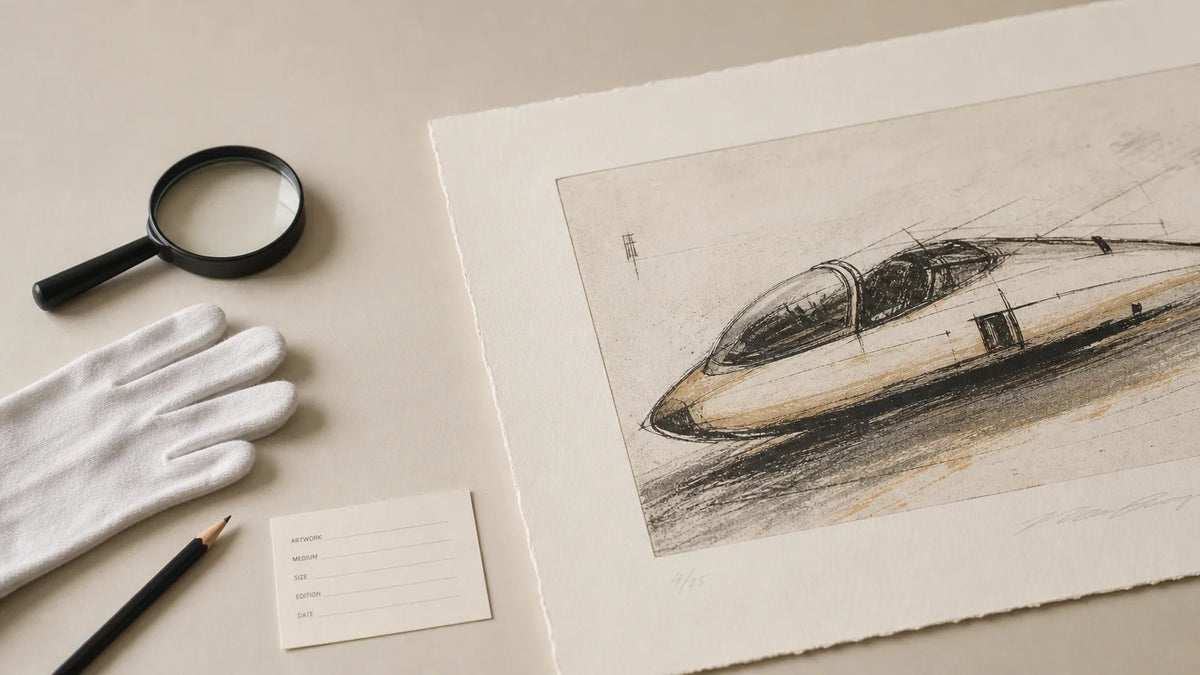
A limited edition print is produced in a declared quantity. A notation such as 18/75 usually means that the work is number 18 in an edition of 75. The second number is the more important starting point because it indicates the total planned supply.
Limited editions differ from open editions, posters, and ordinary reproductions. An open edition can continue to be produced without a fixed limit. A poster may reproduce an artwork for decorative use without being an original printmaking work. A limited edition, by contrast, should have a defined structure and supporting information that explains how it was created.
Edition size matters because scarcity influences collectability, but smaller does not always mean better. A small edition by an artist with little demand may remain difficult to resell. A larger edition by an established artist may have stronger recognition, clearer pricing history, and broader collector interest.
Consider the image as carefully as the quantity. A significant subject, an important period in the artist’s career, or a technically distinctive composition may matter more than a low edition number. The strongest purchases usually combine personal connection with a clear understanding of why the work belongs within the artist’s wider practice.
For collectors interested in movement, engineering, and machine culture, our automotive art prints for sale provide a focused way to explore vehicle-led imagery. The same buying principles still apply, including authorship, edition structure, materials, condition, and documentation.
How should you read edition numbers, signatures, and proofs?
Start by inspecting the margins and reverse of the print. You may find an edition number, artist signature, date, publisher mark, printer mark, title, or notes about the medium. These details should correspond with the seller’s description and any certificate or invoice supplied with the work.
A signed and numbered edition is often more desirable than an unsigned edition, but signatures must be interpreted in context. Some artists sign every work, while others use printed signatures, stamps, initials, or no signature at all. The absence of a signature is not automatically evidence of inauthenticity.
Proofs require additional care. An artist’s proof, printer’s proof, trial proof, or bon à tirer impression may sit outside the main numbered edition. These works can be scarce, but scarcity alone does not establish a premium. Ask why the proof exists, how many were made, whether it differs from the main edition, and whether the artist or publisher documented it.

Do not assume that the first number in a fraction has a universal premium. A print numbered 1/100 is not automatically more valuable than 64/100. Cultural preferences, artist practice, edition history, and buyer demand can affect individual numbers, but the total edition size and overall work remain more important.
When a seller describes a work as signed, confirm whether the signature is hand applied, printed, stamped, or reproduced within the image. If the description is unclear, request detailed photographs of the signature, numbering, paper edges, and reverse before paying.
What should you verify before paying?
Authentication begins with consistency. The artist name, title, date, medium, dimensions, edition number, publisher, and signature should tell the same story. A certificate of authenticity can support that record, but a certificate is not a substitute for examining the work and its provenance.
Provenance means the documented ownership and history of the piece. Useful records can include an original gallery invoice, publisher documentation, exhibition history, previous sale records, a catalogue reference, or correspondence from the artist’s studio. The strength of the evidence depends on its source, continuity, and relevance to the specific print.
Ask the seller several direct questions. Who published or printed the edition? When was it produced? Has it been framed or mounted? Has it experienced fading, moisture, restoration, or damage? Are the original certificate and purchase documents available? Will the seller provide a written condition description and appropriate shipping protection?
Seller reputation also matters. Look for clear contact information, transparent terms, accurate photographs, return conditions, secure payment methods, and a willingness to answer specific questions. A professional seller should not pressure you to complete a purchase before you understand the work’s condition or documentation.
For a broader explanation of fine art pricing factors, our guide to fine art print costs can help you place the asking price within a more useful framework. The objective is not to find one universal price, but to understand what the quoted amount includes and whether comparable evidence supports it.
How do technique, materials, and condition affect value?
Printmaking is not one process. Screenprints, lithographs, etchings, engravings, woodcuts, linocuts, photographic prints, and archival pigment prints have different visual qualities and production requirements. The technique can influence texture, color, line quality, durability, and the way the work relates to the artist’s practice.
Archival materials are another important consideration. Ask what type of paper, canvas, ink, pigment, or photographic material was used. A seller should be able to identify the substrate and explain whether the materials were selected for long-term stability.
Condition is especially important for works on paper. Inspect the sheet for fading, foxing, paper discoloration, creases, tears, abrasions, stains, cockling, edge damage, and signs of acidic mounting. Minor age-related changes may be acceptable for an older work, but they should be disclosed and reflected in the price.
A condition report should distinguish between the image and the full sheet. Damage in the margins may still matter because trimming, mounting, or alteration can affect the work’s originality and future presentation. Never assume that a newly framed print is necessarily in better condition than an unframed one.
Market cycles can also change how collectors interpret condition and price. A peer-reviewed peer-reviewed market study examined auction data for a major limited edition print market and tested how pandemic disruption affected prices. The broader lesson is useful: historical results should be read across multiple sales, not treated as proof that every edition will appreciate.
How should you judge price and market context in 2026?
Price should be assessed through several connected questions. What is the artist’s level of recognition? How important is this image within the artist’s output? How large is the edition? Is the work signed? What is its condition? Is the provenance complete? Has the edition appeared in comparable sales?
The primary market is the first sale from an artist, publisher, studio, or gallery. The secondary market involves a resale after that initial transaction. Primary prices may reflect production costs, framing, gallery services, and launch strategy. Secondary prices reveal what buyers have actually paid, although they can also be affected by condition, timing, venue, fees, and scarcity of available examples.
In 2026, market context deserves a cautious reading. A 2026 U.S. art report describes 2025 as a period of recalibration, with collectors returning greater attention to fundamentals, selectivity, and market evidence. That does not make limited edition prints risk-free. It does suggest that disciplined comparison is more useful than reacting to a short-term trend.
Compare like with like. The same artist may produce editions with different techniques, sizes, subjects, dates, publishers, and signature statuses. A recent digital edition should not be compared directly with an early hand-pulled etching. If there are few public sales, treat the asking price as an opinion rather than an established benchmark.
Allow for the full purchase cost. Framing, insurance, shipping, taxes, customs charges, installation, and conservation may materially change the total. If your interest is specifically automotive, our guide on how to buy automotive art prints offers a more focused route through subject, quality, and presentation decisions.
How should you frame, ship, store, and display a print?
Presentation is part of preservation. A professional framer can recommend archival hinges, a suitable mount, acid-free materials, and glazing that reduces exposure to ultraviolet light. The print should remain removable, so future inspection or conservation does not require destructive handling.
Conservation framing should match the material and size of the work. Do not trim the sheet to fit a frame. Do not tape the print directly to a backing board. If the work has already been mounted, ask whether the mounting is reversible and whether the paper shows stress or discoloration.

Shipping instructions should be confirmed before purchase. Smaller works may travel flat with corner protection, while larger works may require a carefully padded tube or specialist art transport. Photograph the package and the print when it arrives, especially if you notice crushed corners, surface marks, broken glazing, or moisture.
Display the work away from direct sunlight, radiators, vents, kitchens, bathrooms, and areas with unstable humidity. Keep the certificate, invoice, condition report, and photographs together in a secure collection file. These records make future insurance, valuation, conservation, or resale discussions far easier.
International buyers should also check delivery terms before committing. Customs charges and other fees may arise after an overseas purchase, so consult international buying guidance and confirm which costs are included in the seller’s quoted price.
Make the purchase on evidence and affinity
The most reliable limited edition purchases balance personal response with disciplined verification. Choose an image you will value even if market conditions change, then confirm the edition size, signature, technique, condition, provenance, seller terms, and total cost. No certificate or scarcity claim can replace careful inspection.
A strong collection is built through consistency rather than urgency. When the work fits your taste, the documentation is coherent, and the price reflects the evidence available in 2026, you can acquire with greater confidence and preserve the piece properly for the years ahead.
Take action with TheArsenale
Once you understand the practical criteria, the next step is to select work that gives your space a clear point of view. A well chosen print can connect design, engineering, movement, and cultural identity without requiring the scale or maintenance of a larger original work.

Explore our limited edition art prints to find curated works suited to collectors who appreciate bold visual language and the culture of motion. TheArsenale brings its mobility focused perspective to an art collection shaped by design, rarity, and future facing ideas.
Frequently Asked Questions
What is the most important factor when buying a limited edition art print?
Begin with authenticity and edition structure, then assess condition, provenance, technique, and price. Your personal connection to the image should remain central because market conditions can change.
Is a signed print always more valuable than an unsigned print?
Not always. Signature practices vary by artist, so the signature should be assessed alongside the edition size, image importance, documentation, condition, and established demand.
What should a certificate of authenticity include?
It should identify the artist, title, medium, date, edition size, specific edition number, and issuing party. It should also correspond with the print and other provenance records.
Should you buy a print from the primary or secondary market?
Both markets can offer worthwhile opportunities. The primary market may provide direct access to a new release, while the secondary market can provide previous sale evidence and access to editions that are no longer available at launch.
Can TheArsenale help you explore art connected to mobility?
Yes. TheArsenale’s art collection is relevant to collectors drawn to motion, machines, design, and future oriented visual culture. You can browse the collection online and assess each work using the same edition, authenticity, condition, and provenance criteria described above.