Race Used F1 Items for Sale: A Collector’s Buying Guide
A helmet can look extraordinary in a display case, but its real value depends on the story behind it. If you are comparing race-used F1 items for sale, begin with evidence, not appearance. Our authentic F1 memorabilia for sale offers a useful starting point for understanding how rarity, driver identity, and documented history shape a collectible.
Formula 1 reported more than 6.5 million race attendees across 21 race countries in 2024. That international reach creates a broad market for driver-linked objects, but it also increases the importance of careful verification. The sport’s 2024 business figures provide useful context for the scale of the global audience.
What makes an F1 item genuinely race-used?
A race-used object has a direct connection to competition. It may have been worn during a race weekend, fitted to a car, carried in a garage, or used during a specific team operation. The strongest examples connect the item to a driver, team, Grand Prix, season, or identifiable session.
This category is different from licensed merchandise, replicas, and signed promotional products. A replica helmet can be attractive and valuable, but it was not necessarily used on track. Similarly, a signed cap may carry a genuine autograph without having any race history.
A 2026 SEC filing discussing Formula 1’s operating results lists licensing opportunities among the sport’s revenue sources. That distinction matters because licensed products can be authentic products while remaining separate from race-used memorabilia. You should therefore ask two different questions: is the item officially licensed, and can its use history be demonstrated?
Useful descriptions usually identify the object precisely. “Team gloves” is less informative than “race-used gloves worn by a named driver during a named season.” Specificity allows you to test the claim against photographs, team details, construction features, and supporting documents.
Which race-worn items attract the most attention?
Consider a collector choosing between a signed poster and a worn race suit. Both may be meaningful, but they communicate different kinds of history. The poster represents a driver or event, while the suit may preserve physical evidence of the competition itself.
Race-worn apparel often includes gloves, boots, race suits, balaclavas, and team layers. These objects can show scuffs, staining, creasing, faded patches, or other signs of use. Such marks are not automatically defects. When properly documented, they can help establish that the item was worn rather than produced solely for display.
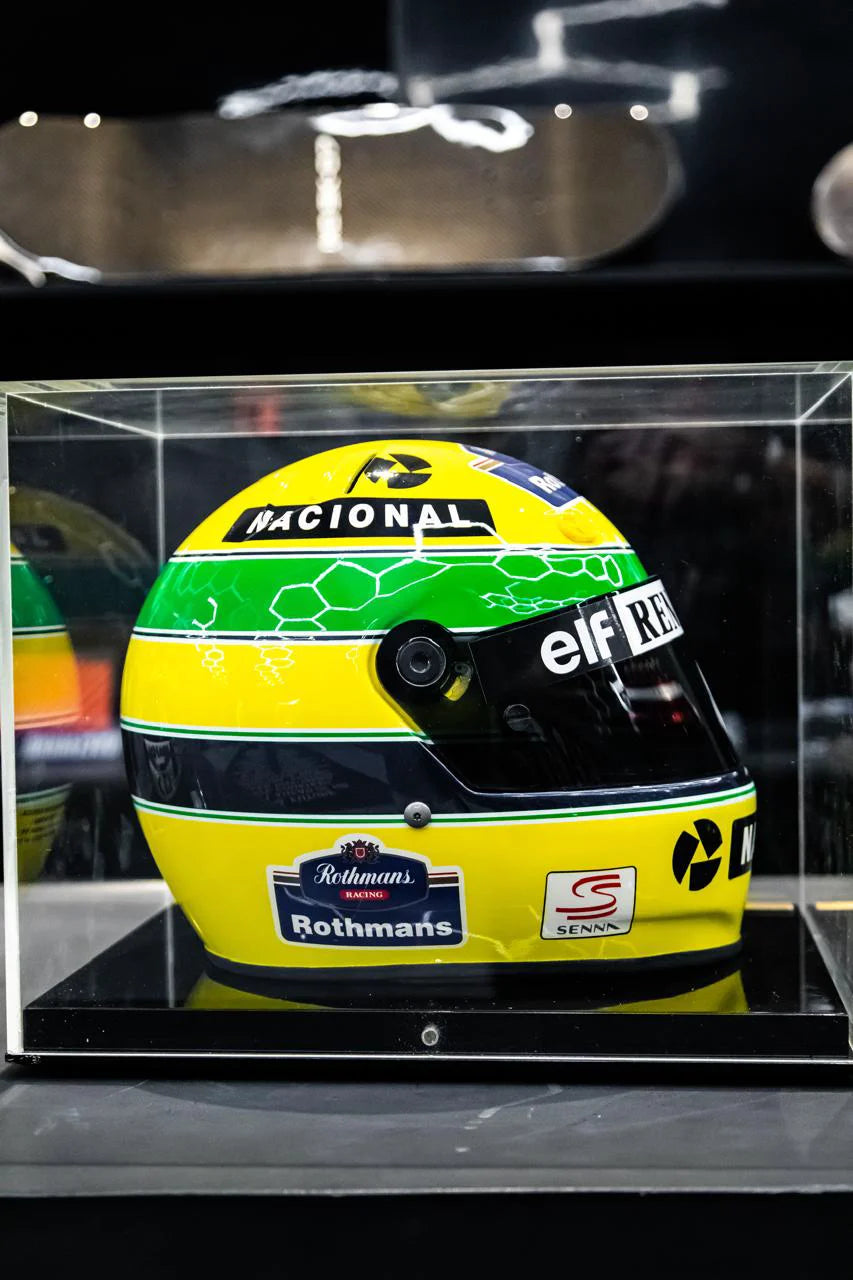
Helmets remain highly visible centrepieces because they combine driver identity, distinctive graphics, technical construction, and strong display appeal. Car parts create a different connection. Nose cones, steering wheels, bodywork, wheels, brake components, and engine pieces can appeal to collectors who value engineering as much as driver history.
TheArsenale’s collection includes driver-linked examples such as our Fernando Alonso race-used signed gloves. Our catalogue also includes the Sebastian Vettel race suit, illustrating how season, team identity, design, and driver association can combine in one piece.

How can you verify provenance before buying?
Start with the provenance trail. A credible listing should explain where the item came from, who handled it, when it was used, and why the seller can make that claim. The documentation may include a certificate, team record, event reference, acquisition history, photographs, or a specialist assessment.
Next, check whether the physical object supports the description. Compare sponsor placements, driver numbers, team colors, material construction, labels, fasteners, stitching, and period-specific details. A 2017 suit should look consistent with that season, not with a later redesign.
Photographs can provide useful evidence, but they do not replace documentation. Look for close views of wear points, signatures, labels, seams, helmet interiors, and any serial or identification marks. Be cautious when the listing shows only polished display photographs without detailed condition images.
Signatures require separate scrutiny. Ask whether the signature was added during a public appearance, private signing, or after the item was acquired. A signed race-used object can be more compelling than an unsigned example, but the signature should not distract from weak evidence about the object’s actual use.
For a structured checklist covering documentation, condition, seller questions, and purchase risks, consult our how to buy F1 memorabilia. A careful process protects you from confusing race-used, race-issued, race-style, and replica categories.
Where should you look for race-used F1 items for sale?
The right buying channel depends on the object and the level of assistance you need. Official channels may provide licensed products and selected memorabilia. Specialist dealers may focus on historical racewear, helmets, car parts, or signed pieces. Auction houses can offer unusual lots, but bidding requires careful review of fees, condition notes, and buyer obligations.
Online marketplaces provide wide choice, although listings can vary considerably in quality. A 2026 commerce snapshot counted 53 live stores using one F1 Commerce platform and reported 51% year-over-year growth in its second quarter. The 2026 commerce snapshot is platform-specific, not a complete measure of the memorabilia market, but it reflects how fragmented online discovery can become.
Private sales may provide access to rare objects, yet they usually demand more independent research. You should confirm the seller’s identity, request full documentation, clarify payment protection, and establish responsibility for shipping, taxes, and potential customs procedures.
Our role is different from an unstructured listing feed. TheArsenale connects collectors with curated mobility objects and supports high-value acquisition discussions. That approach is useful when you want assistance comparing rarity, design, driver association, and the practical details surrounding an international purchase.
How should you judge price and collector value?
There is no universal price for race-used F1 memorabilia. Two gloves from the same driver may differ substantially because of the race, season, championship importance, condition, signature, documentation, and scarcity.
Begin with sold comparables, not optimistic asking prices. A 2026 resale index based on 367 million completed transactions specifically separates completed sales from listings that have not sold. Its broader resale findings show why marketplace selection and actual transaction history can influence the interpretation of value. Review the completed-sales index as a methodological reminder, while recognizing that general resale data is not an F1-specific valuation guide.
The driver remains important, but driver identity alone is not enough. A modestly documented item connected to a famous name may be less compelling than a well-documented piece from a significant race. Championship deciders, first victories, final appearances, major team transitions, and memorable incidents can all affect collector interest.
Condition should be assessed in context. Wear can support authenticity, while severe damage, missing components, odors, unstable materials, or poor storage can reduce display quality. Ask whether any restoration has taken place, because cleaning, repainting, or replacement parts may affect both historical integrity and value.
Finally, separate emotional value from financial expectations. Collectibles are bought for identity, history, design, and personal connection. No past sale guarantees future appreciation, and a purchase should make sense even if the market changes.

How do you preserve and display an F1 collectible?
Display conditions can protect the object or accelerate its deterioration. Keep racewear away from direct sunlight, high humidity, heat sources, and unstable surfaces. UV exposure can fade fabrics, graphics, photographs, and painted components over time.
Use appropriate support for heavy or irregular objects. Helmets should rest securely without pressure on delicate visors or interior padding. Suits and gloves should be displayed in ways that avoid permanent creasing. Car parts may require custom stands that distribute weight without touching fragile edges.
Handle textiles with clean, dry hands, and avoid aggressive cleaning unless a qualified conservator recommends it. Stains and marks may form part of the object’s history. Removing them without documentation can erase evidence that collectors consider meaningful.
Keep all certificates, invoices, photographs, correspondence, and catalogues with the item. A complete chain of custody improves future research and helps the next owner understand why the object matters.
Make the evidence part of the collection
The most satisfying race-used F1 purchase combines a strong visual presence with a credible history. Focus on the exact object, its connection to competition, its condition, and the quality of its documentation. Compare completed sales carefully, ask direct questions, and plan secure storage before the item arrives. When you assess race-used F1 memorabilia this way, you are collecting a piece of motorsport history rather than simply buying a signed object.
Take action with TheArsenale
Once you have identified the driver, season, object type, and provenance standards that matter to you, the next step is to work with a curated source. A considered buying process can make international collecting more confident, especially when the item combines rarity, design, and historical significance.

At TheArsenale, our curated offer brings together rare mobility objects, collector-focused apparel, and selected Formula One pieces. For a driver-linked collectible with strong display appeal, explore our Lewis Hamilton race-used Mercedes gloves. Our team can also support enquiries involving distinctive machines and high-value acquisitions.
Frequently Asked Questions
What is the difference between race-used and race-worn?
Race-worn usually refers to apparel or equipment worn by a driver during a race weekend. Race-used is broader and can include car parts, tools, steering wheels, and other objects used in a competitive setting.
What documents should accompany an F1 collectible?
Look for a certificate of authenticity, acquisition history, event details, photographs, or records connecting the object to a driver or team. The strongest documentation is specific, consistent, and supported by physical details visible on the item.
Are signed replicas worth buying?
Signed replicas can be worthwhile when you value the driver, design, and display appeal. They should be described honestly as replicas, because a signature does not make a replica race-used.
How much do race-used F1 items cost?
Prices vary according to the driver, race, season, item type, condition, signature, scarcity, and provenance. Compare completed sales where possible, and treat unusually low prices as a reason to investigate documentation carefully.
Can international collectors buy these items?
Many collectors purchase across borders, but shipping, customs, taxes, insurance, and import requirements can affect the transaction. Before payment, confirm the delivery method, declared value, responsibilities, and documentation included with the item.